
The Sole Dissent: A Betrayal of Transparency and Democratic Principles
Published
- 3 min read
The Facts of the Matter
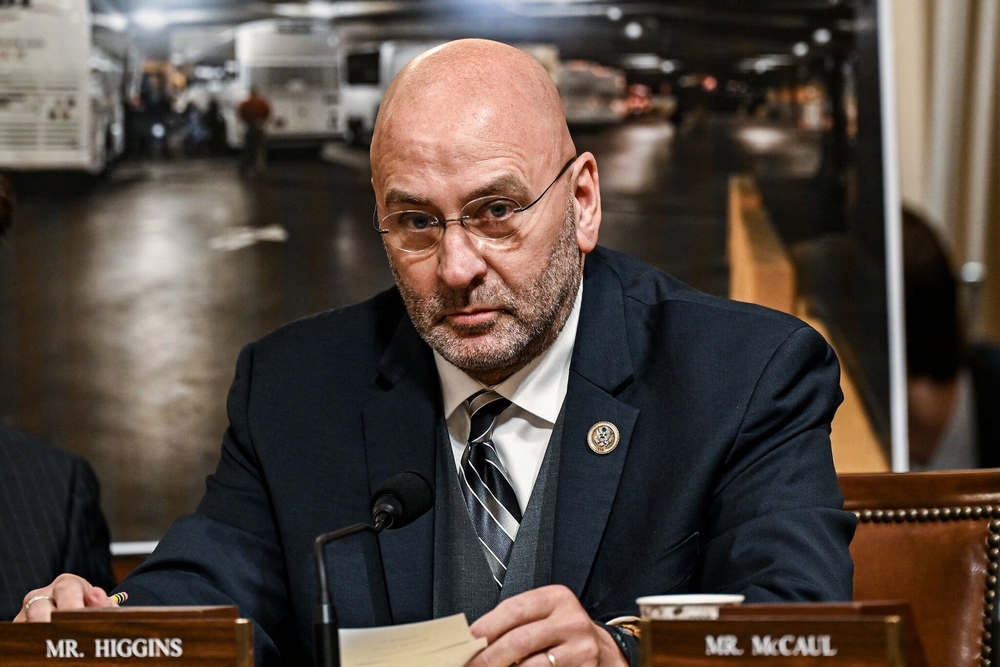
On Tuesday, the United States Congress witnessed a remarkable and troubling event: Representative Clay Higgins, a Louisiana Republican, cast the sole dissenting vote against legislation designed to compel the Justice Department to release the Jeffrey Epstein files. This bill, which received overwhelming bipartisan support, sought to bring long-awaited transparency to one of the most notorious criminal cases in recent memory. The legislation’s purpose was clear: to ensure that the American people could access information about a case involving serious allegations of sex trafficking and abuse of power that has captivated public attention for years.
Higgins, who serves as chairman of the Oversight Committee’s subcommittee on federal law enforcement, broke ranks with his entire party, including Speaker Mike Johnson. Johnson had publicly stated that he anticipated every Republican would vote in favor of the measure, acknowledging that “none of us want to go on record and in any way be accused of not being for maximum transparency.” This makes Higgins’ solitary opposition particularly striking and significant. The congressman waited until most of his colleagues had cast their votes before making his position known, appearing resolute in his defiance.
Context and Historical Pattern
Clay Higgins is no stranger to controversy or conspiracy theories. The article reveals a consistent pattern of behavior that places him at the extreme fringe of even the hard-right faction of the Republican conference. He has previously promoted fantastical claims about “ghost buses” transporting agents provocateurs to the Capitol on January 6, 2021, and alleged that 200 FBI informants were “embedded in the crowd” during the insurrection. His support for the Three Percenters, a right-wing antigovernment militia, further demonstrates his alignment with extremist movements.
Higgins has also been a vocal proponent of the false claim that the 2020 election was stolen and described the criminal charges against former President Trump for mishandling classified documents as a “perimeter probe from the oppressors.” This context is crucial for understanding his recent vote on the Epstein files. Higgins has positioned himself as chairman of the relevant subcommittee overseeing the Epstein investigation, where he issued the first Epstein-related subpoena to the Justice Department—specifically targeting documents related to former President Bill Clinton and former Secretary of State Hillary Clinton.
The Transparency Paradox
What makes Higgins’ vote particularly troubling is his stated rationale. He claimed the bill “abandons 250 years of criminal justice procedure in America” and argued that releasing investigative files to a “rabid media” would “result in innocent people being hurt.” This argument represents a profound misunderstanding of both democratic accountability and the purpose of transparency in government. The American system of justice depends on public scrutiny to maintain integrity, especially in cases involving powerful individuals and allegations of systemic corruption.
The Epstein case represents exactly the kind of situation where maximum transparency is essential. When allegations involve influential figures across political, business, and entertainment spheres, the public has a right to know whether justice has been administered fairly and completely. To argue against transparency in such a case is to argue against the very principles of democratic accountability that have guided American jurisprudence for centuries.
A Pattern of Undermining Institutions
Higgins’ vote cannot be viewed in isolation from his broader pattern of behavior. His promotion of conspiracy theories about January 6th, his support for extremist militias, and his rejection of legitimate election results all point to a fundamental disrespect for democratic institutions and processes. This latest action represents another brick in a wall of obstruction against governmental transparency and accountability.
The targeting of specific political figures—in this case, the Clintons—while opposing broader transparency raises serious questions about selective enforcement and partisan motivation. True justice must be blind to political affiliation, and investigations must follow evidence wherever it leads, not just where it serves partisan interests. Higgins’ approach suggests a preference for politically convenient revelations over comprehensive truth.
The Danger to Democratic Norms
When elected officials prioritize conspiracy theories over facts and political point-scoring over genuine accountability, they endanger the foundations of our democracy. The Epstein case represents an opportunity for Congress to demonstrate its commitment to uncovering truth regardless of where it leads. Higgins’ solitary opposition undermines this effort and sends a dangerous message about whose interests our government serves.
The argument that transparency might harm “innocent people” ignores the fundamental purpose of investigative journalism and public oversight in a democratic society. While legitimate concerns about privacy and due process must be balanced, these considerations cannot become excuses for blanket secrecy in matters of significant public concern. The American people have shown repeatedly that they can handle difficult truths—what they cannot tolerate is being kept in the dark about matters affecting justice and accountability.
The Path Forward
This incident should serve as a wake-up call to all who value democratic principles. We must demand that our representatives prioritize transparency and accountability over partisan loyalty and conspiracy theories. The overwhelming bipartisan support for the Epstein files legislation demonstrates that most members of Congress understand this imperative. Higgins’ isolated opposition highlights the continuing challenge posed by extremism within our political system.
As citizens committed to democratic values, we must continue to pressure our representatives to uphold transparency and reject obstructionism. The release of the Epstein files represents not just a matter of satisfying public curiosity but a test of our system’s ability to hold powerful people accountable. When a single member of Congress can stand against this fundamental principle, it reveals vulnerabilities in our democratic infrastructure that demand our attention and action.
Conclusion: A Test of Democratic Resilience
The story of Clay Higgins’ solitary vote against transparency in the Epstein case is more than just a political anecdote—it is a symptom of deeper challenges facing American democracy. When elected officials promote conspiracy theories, undermine legitimate investigations, and oppose basic transparency, they chip away at the public trust essential for democratic governance.
This incident should galvanize all who believe in government accountability and the rule of law. We must support those in Congress who put principle over party and truth over conspiracy. The American experiment depends on our collective commitment to these values, especially when they are challenged from within our own institutions. The fight for transparency in the Epstein case is ultimately a fight for the soul of American democracy itself.