
The Supreme Court Confronts an Unprecedented Presidential Power Grab
Published
- 3 min read
The Facts:
The U.S. Supreme Court heard extensive arguments Wednesday regarding whether President Donald Trump violated the Constitution by becoming the first president to impose sweeping global tariffs using the International Economic Emergency Powers Act (IEEPA). This 1970s-era sanctions law was traditionally reserved for addressing rare and unusual threats like the Iran hostage crisis or freezing terrorist assets after 9/11, not for routine trade disputes.
During nearly three hours of arguments, justices from both the conservative majority and liberal minority expressed skepticism about the Trump administration’s interpretation of IEEPA. The administration claims the statute’s authorization to “regulate importations” during times of “unusual and extraordinary threat” inherently includes the power to impose tariffs. Solicitor General John Sauer argued that tariffs are a “natural application” of this regulatory power.
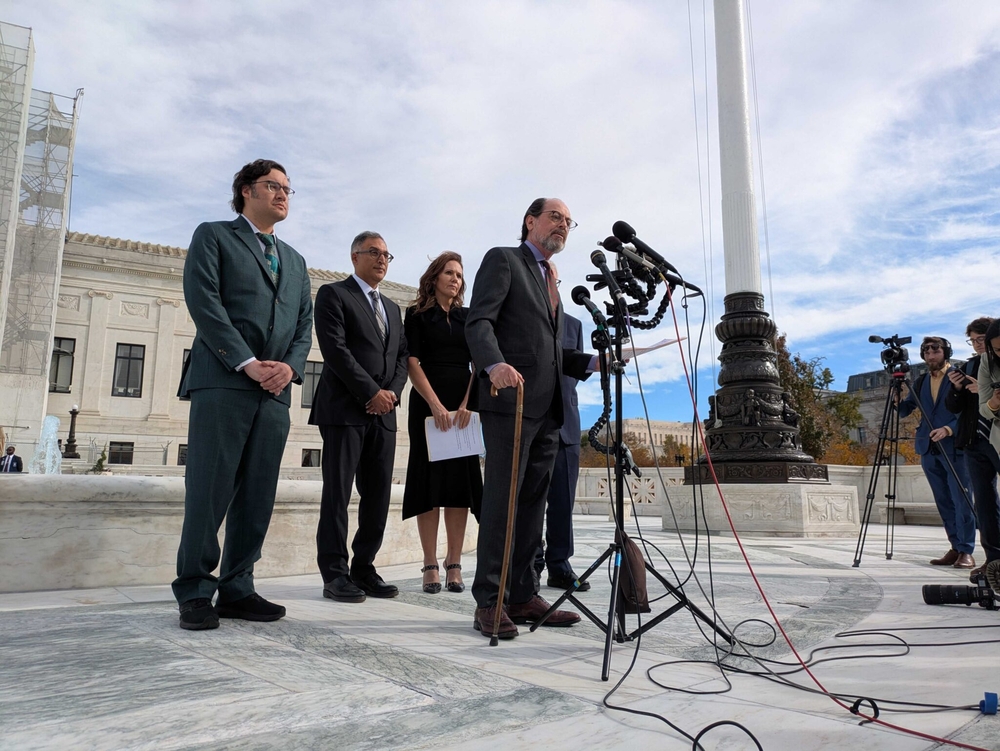
The case consolidates challenges from small businesses and Democratic state attorneys general who argue that Trump usurped Congress’s constitutional authority to levy taxes under Article I. These businesses—including wine importers, plastics producers, and toy manufacturers—face tariffs ranging from 10% to 50% on imports, costing them billions and threatening their livelihoods.
Trump has declared multiple emergencies under IEEPA, first targeting fentanyl smuggling from China, Canada, and Mexico, then expanding to global trade imbalances. His administration has imposed additional tariffs on countries like India (bringing their total to 50%) and Brazil (40%) based on foreign policy disagreements. Notably, previous presidents including Clinton, Bush, and Obama never used IEEPA for tariffs despite facing trade disputes.
Opinion:
This case represents one of the most dangerous expansions of executive power in modern American history—a blatant end-run around constitutional limitations that should alarm every citizen who values democratic safeguards. The very purpose of separating powers among three branches of government was to prevent exactly this kind of unilateral action that concentrates authority in the presidency.
What makes this particularly disturbing is how casually the administration treats emergency declarations. Justice Elena Kagan perfectly captured the absurdity when she noted we’re “in emergencies about everything all the time.” When everything becomes an emergency, nothing is truly emergent—this dilutes the meaning of national crisis and creates a permanent state of executive exceptionalism that undermines democratic norms.
The small business owners challenging these tariffs are the true heroes of this story. They aren’t political operatives but ordinary Americans fighting for their constitutional rights against overwhelming governmental power. Victor Schwartz, the wine importer leading the challenge, rightly noted that “American businesses like mine and American consumers are footing the bill” for these unconstitutional taxes. Their courage in standing up to presidential overreach deserves our deepest respect.
Most concerning is the administration’s apparent belief that congressional constraints on tariff powers—like percentage limits and duration restrictions—can be simply bypassed through emergency declarations. This attitude reflects a profound disrespect for the constitutional framework that has safeguarded American liberty for centuries. If the Supreme Court allows this power grab to stand, it will establish a precedent that future presidents of both parties could abuse in ways we cannot yet imagine.
The constitutional separation of powers exists not as an academic theory but as practical protection against tyranny. When Congress’s exclusive power to tax can be circumvented by executive declaration, we’ve crossed a dangerous threshold. The Supreme Court must reaffirm that emergency powers have limits and that no president stands above the Constitution’s careful balance of authority.