
The Supreme Court's Moment of Truth: Presidential Power and the Peril of Unchecked Executive Authority
Published
- 3 min read
The Legal Challenge Before the Court
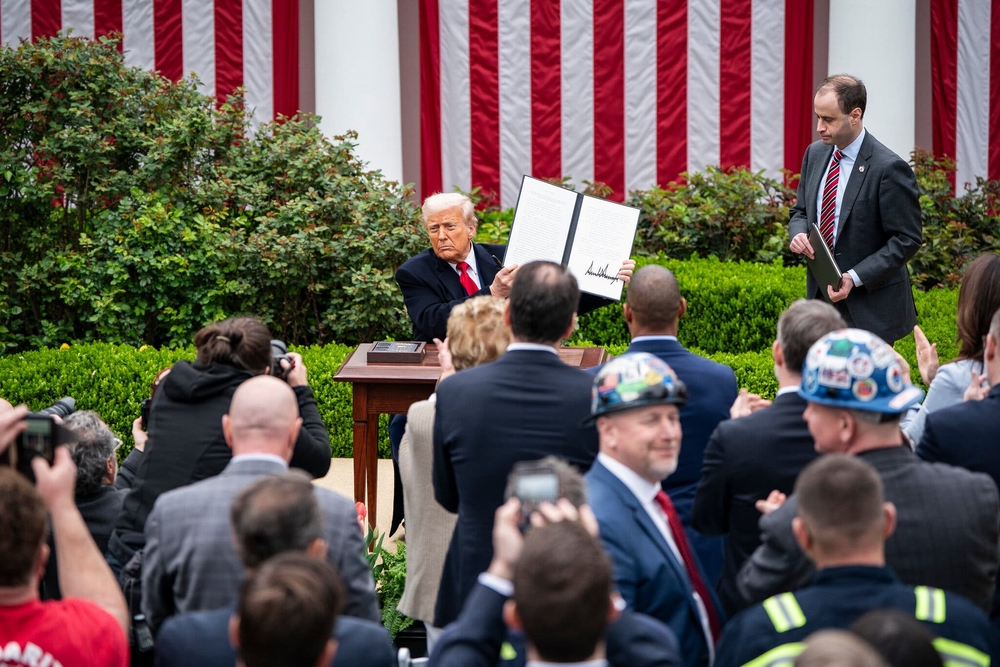
The United States Supreme Court finds itself at the center of a constitutional showdown that could redefine the boundaries of presidential power for generations. At issue is President Donald Trump’s sweeping use of the International Emergency Economic Powers Act (IEEPA) of 1977 to impose tariffs on dozens of trading partners by declaring national emergencies over trade deficits and immigration concerns. This case represents not merely a technical legal dispute but a fundamental test of whether our system of checks and balances can withstand the increasing expansion of executive authority.
President Trump invoked IEEPA in April to levy global tariffs, including on some of America’s closest allies, by declaring a national emergency over what he characterized as “large and persistent” trade deficits that allegedly reflected unfair trade relationships harming U.S. manufacturing. Additionally, in February, he used the same authority to impose tariffs on Mexico, Canada, and China, claiming these nations had insufficiently addressed the flow of migrants and illegal fentanyl into the United States. These actions were challenged by a dozen states and small businesses that argued the import taxes damaged their economic interests.
Historical Context and Legal Framework
The International Emergency Economic Powers Act grants presidents broad authority to regulate financial transactions upon declaring a national emergency. Specifically, it allows economic actions “to deal with any unusual and extraordinary threat, which has its source in whole or substantial part outside the United States, to the national security, foreign policy or economy” of the country. Historically, presidents have used IEEPA to impose sanctions, justify export controls, and restrict certain transactions and outbound investments.
However, legal experts have raised serious questions about whether IEEPA authorizes presidents to impose tariffs. According to a Congressional Research Service report, no president before Trump had used IEEPA to put tariffs on imported goods. Traditionally, presidents have imposed tariffs in response to national security threats using Section 232 of the 1962 trade law, which requires investigations, reports, and operates within a 270-day framework focused on imports that “threaten to impair” national security.
Congress passed IEEPA in 1977 to restrict the emergency economic powers granted under the Trading with the Enemy Act of 1917, which gave presidents expansive authority to regulate international transactions during wartime. President Richard Nixon used the precursor statute to briefly impose a 10% universal tariff in 1971, but even that action was taken under different legal authority and circumstances.
The Dangerous Precedent of Expanded Executive Power
What we are witnessing is nothing short of a constitutional crisis in slow motion. The expansion of presidential power through creative interpretations of emergency statutes represents a fundamental threat to the separation of powers that underpins our democratic system. The founders deliberately created a system of checks and balances precisely to prevent any single branch of government from accumulating excessive power, and this case tests whether those safeguards remain functional.
The use of IEEPA for tariff imposition establishes a dangerous precedent that could allow future presidents to bypass congressional authority on virtually any economic matter simply by declaring a national emergency. This approach fundamentally undermines the legislative branch’s constitutional authority over trade and commerce while creating uncertainty for businesses and trading partners. If upheld, this interpretation would essentially grant presidents a blank check to reshape trade policy unilaterally, regardless of congressional intent or constitutional limitations.
The Slippery Slope of Emergency Powers
Emergency powers are meant to be used sparingly and specifically for genuine emergencies that require immediate action beyond normal legislative processes. The declaration of national emergencies over trade deficits and immigration concerns—while legitimate policy issues—stretches the concept of “emergency” beyond recognition. Trade deficits fluctuate regularly and immigration challenges persist across administrations; treating these as national emergencies worthy of extraordinary presidential powers sets a troubling precedent that could normalize emergency declarations for routine policy disagreements.
As of January 15, presidents had declared 69 national emergencies invoking IEEPA, with 39 still in effect. Historically, these national emergencies lasted nearly a decade, creating what amounts to a permanent state of emergency authority. This normalization of emergency power contradicts the temporary nature envisioned by the statute and creates a concerning baseline of expanded executive authority that becomes increasingly difficult to roll back.
The Institutional Erosion
What makes this case particularly alarming is the institutional erosion it represents. The challenge reached the Supreme Court because lower courts ruled that the emergency statute did not give the president authority to impose tariffs of this magnitude, yet allowed the levies to remain while litigation continued. This creates a situation where questionable executive actions can remain in effect for years while working through the judicial system, effectively granting presidents the ability to implement policies that may ultimately be ruled unlawful but nonetheless shape economic reality in the interim.
The scholarly debate highlighted in the Congressional Research Service report reveals deep concerns about whether IEEPA grants the president “unchecked executive authority in the economic realm.” While some argue it’s an effective foreign policy tool that allows the president to rapidly carry out congressional will, the reality appears far more concerning. As Philip Luck, economics program director at the Center for Strategic and International Studies, noted, “This is a very broad tool that affords the president a lot of latitude to impose potentially really substantial economic costs on partners. This is a pretty big stick you can use.”
The Human Cost of Executive Overreach
Beyond the constitutional concerns, we must not overlook the human and economic costs of these actions. Small businesses challenged these tariffs precisely because they hurt their bottom lines, affecting real people’s livelihoods and economic security. The uncertainty created by arbitrary tariff impositions through emergency declarations disrupts supply chains, increases costs for consumers, and creates economic instability that harms American workers and businesses alike.
The use of emergency powers for policy goals that should undergo normal legislative scrutiny represents a failure of democratic process. It bypasses the debate, compromise, and consideration that characterize healthy policymaking in favor of unilateral action that lacks the legitimacy of congressional approval. This approach may achieve short-term policy objectives but does so at the expense of democratic norms and institutional integrity.
The Path Forward: Restoring Constitutional Balance
The Supreme Court now faces a critical decision that will either rein in expanding executive power or accelerate its growth. The proper interpretation of IEEPA should respect both the text of the statute and the constitutional framework within which it operates. Emergency powers must be construed narrowly to prevent their abuse and preserve the separation of powers that protects our democracy.
Congress also bears responsibility for addressing this imbalance. If IEEPA indeed grants excessive authority, legislators should amend the statute to provide clearer limitations and oversight mechanisms. The current situation, where emergency declarations can persist for decades without congressional review, represents a failure of legislative responsibility to maintain proper checks on executive power.
Ultimately, this case represents more than a legal technicality—it’s about whether our system of government can maintain the balance of power that has sustained American democracy for centuries. The expansion of presidential authority through creative emergency power interpretations threatens the very foundation of our constitutional republic. We must hope the Supreme Court recognizes the profound stakes and upholds the principles of limited government that have made America exceptional.
The preservation of our democratic institutions depends on preventing any branch of government from accumulating excessive power. This case presents an opportunity to reaffirm that fundamental principle and ensure that emergency powers remain exceptional rather than becoming ordinary tools of governance. Our constitutional system deserves nothing less than vigorous defense against the erosion of checks and balances that protect our liberty and democracy.