
The Surgical Scars of Capital: How Maharashtra's Sugar Industry Carves Profit from Women's Bodies
Published
- 3 min read
The Harrowing Reality
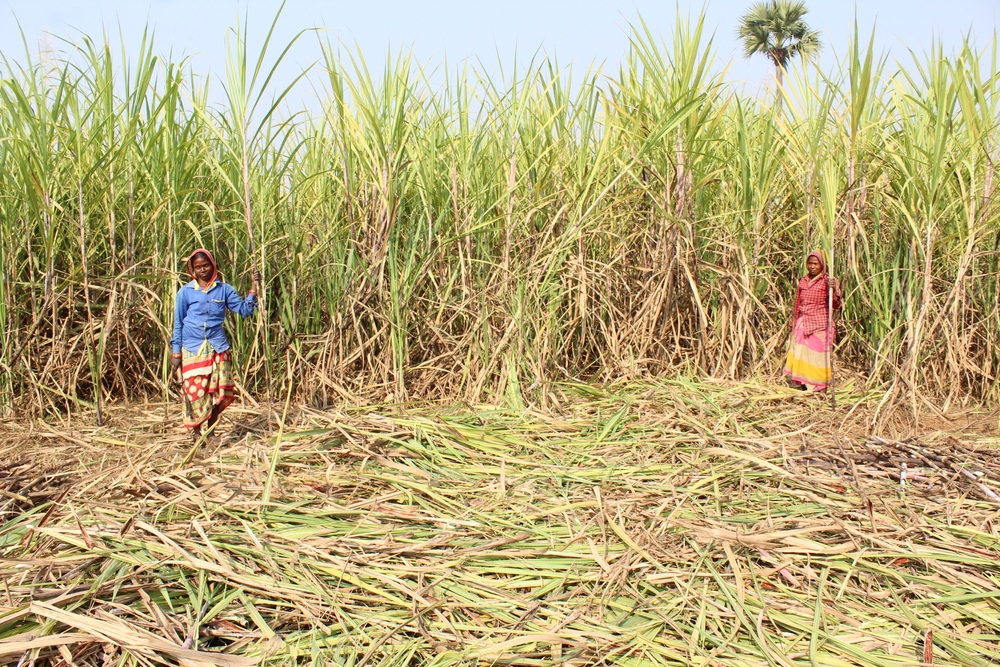
In the sugar cane fields of Maharashtra, a silent epidemic of surgical violence against women unfolds with shocking regularity. Migrant women workers, predominantly from Dalit and Adivasi communities, are undergoing medically unnecessary hysterectomies at rates many times India’s national average. These women, often in their twenties and thirties, are not seeking these procedures for health reasons but because the brutal labor system demands they never menstruate, never become pregnant, and never miss a day of work. This is not merely workplace exploitation—it is the systematic surgical alteration of human bodies to serve capital accumulation.
The pattern emerges from a carefully engineered system of control. Sugar mills—including those owned by major conglomerates like Bajaj Hindusthan, Dalmia Bharat, and NSL Sugars—operate through contractors who recruit family units with advance payments that quickly transform into inescapable debt. As economist Jean Drèze astutely observes, these financial instruments function primarily as mechanisms of control rather than mere economic transactions. When survival depends on returning to the same contractor annually, freedom becomes an illusion.
The Architecture of Exploitation
Women face a particularly cruel predicament within this system. Since contractors hire couples, household survival requires both partners to work continuously. Any absence—whether from menstruation, pregnancy, or gynecological issues—means immediate economic penalty and deepening debt. In fields without sanitation facilities, living in makeshift tents under scorching sun, managing menstruation with dignity becomes practically impossible. The “solution” offered by this system is as barbaric as it is systematic: hysterectomy.
Private clinics in sugar districts, operating in the deregulated medical economy that expanded after India’s 1991 liberalization, proactively market hysterectomies as “permanent solutions” to gynecological “complaints.” The grim calculus is straightforward: a woman who cannot menstruate can work longer hours and represents less financial risk for contractors. When medical providers and contractors coordinate through surgical loans that get added to labor accounts, we witness the complete medicalization of labor discipline. The body must be surgically altered so capital can flow without interruption.
This is not anecdotal horror but systematically documented reality. Local NGOs in districts like Beed have recorded hysterectomy rates among migrant sugarcane workers that dwarf national averages. Government-commissioned inquiries have confirmed thousands of such operations among working-age women, exposing a healthcare system that has been weaponized against the very people it should protect.
The Ideological Underpinnings of Bodily Exploitation
What we witness in Maharashtra’s sugar fields represents the logical endpoint of a political economy that has systematically dismantled protections for the most vulnerable while empowering capital at every turn. The post-1991 liberalization regime deliberately reframed Indian agriculture for corporate profit, encouraging private investment in agro-processing, easing regulations, and prioritizing export-oriented production that rewards scale and supply chain efficiency above human dignity.
As feminist scholars like Silvia Federici have demonstrated, capitalism has always sought to control reproductive labor to minimize costs. Nancy Fraser’s work reveals how capitalism externalizes care work until the resulting contradictions become politically explosive. Bina Agarwal’s empirical studies show how women without land security lack bargaining power in rural labor markets, making desperate measures appear rational. These theoretical frameworks find their most brutal manifestation in Maharashtra’s sugar fields.
The state’s role has transformed from protector to enabler of exploitation. Rather than strengthening rural health, sanitation, and employment protections, the state now facilitates private procurement. Public gynecological services remain criminally underfunded while private clinics proliferate in regulatory voids. In this environment, mutilating women’s bodies to create “reliable” workers becomes commercially viable.
Since 2014, this trend has accelerated dramatically. The central government’s obsession with “ease of doing business” and valorization of big agriculture has further shifted incentives toward corporate profits at human expense. Labor inspection mechanisms have been deliberately weakened, while local political networks tied to mill ownership actively suppress scrutiny and accountability.
Intersectional Oppression: Caste, Gender and Climate
The women bearing this brutal burden are overwhelmingly Dalit and Adivasi—communities historically relegated to the most dehumanizing labor under India’s caste system. As Sharmila Rege’s scholarship demonstrates, caste hierarchies render Dalit and Adivasi women’s suffering both invisible and socially acceptable. Their bodies are already socially marked as disposable before capital ever touches them.
Contractors deliberately target Scheduled Caste and Tribal communities precisely because they lack land, social capital, and political voice. Caste determines who can refuse exploitative work, who has access to alternatives, and whose bodily autonomy is considered negotiable. Even where government health facilities exist, Dalit and Adivasi women report discrimination and denial of care, pushing them toward predatory private clinics that see their suffering as business opportunities.
Climate change has exacerbated this catastrophe in particularly cruel ways. Maharashtra’s intensifying drought cycles and heatwaves have made smallholder farming increasingly unviable, pushing more households into seasonal migration. As Barbara Harriss-White’s work illustrates, environmental shocks transfer harm onto human bodies—when agricultural yields fall, demand on labor intensifies, and the body becomes the ultimate shock absorber.
The irony is devastating: sugarcane itself is water-intensive, thriving in a state where groundwater depletion and erratic monsoons have created chronic water stress. As climate instability worsens, more households are forced into sugarcane labor precisely because their own farms have failed. Meanwhile, conditions in the cane fields—extreme heat exposure, water scarcity, longer working hours—become increasingly brutal. Women working through menstruation in 40-degree heat without clean water or shelter face health risks that are immediate and severe.
The Global Pattern and Local Resistance
This tragedy cannot be dismissed as some “Indian cultural failing”—it represents a logical manifestation of global capitalist patterns. As Eduardo Galeano illustrated in his analysis of Latin American extraction economies, global supply chains systematically reorganize regions and bodies to serve distant centers of power. Across sectors and countries, the bodies of the most precarious—overwhelmingly women, overwhelmingly from marginalized communities—are modified, disciplined, or discarded to maintain output.
Resistance, however, persists despite overwhelming odds. Women’s collectives and grassroots NGOs have documented abuses, filed public interest petitions, and organized campaigns that forced limited state inquiries. Groups like the All-India Democratic Women’s Association have produced crucial data enabling broader scrutiny. But seasonal work disperses organizing capacity, patriarchal constraints limit women’s leadership, and contractor coercion makes dissent dangerous.
Toward a Humane Future
Durable solutions require structural transformation: legal frameworks making mills and buyers liable for contractor practices; state-funded health and sanitation infrastructure in labor camps; sustained funding for cross-season organizing; debt-redemption schemes preventing advances from becoming bondage; and mandatory independent pre-operative reviews to prevent unnecessary surgeries.
Journalists must shift focus from individual tragedy to institutional complicity—mapping procurement networks, tracing payment flows, examining clinic records, and exposing how brands and mills benefit from this exploitation. When reporting moves from moral outrage to political economy analysis, public pressure becomes meaningful leverage.
Ultimately, what happens in Maharashtra’s sugar fields matters far beyond agriculture. It reveals what occurs when modern markets, climate stress, and intersectional hierarchies converge while the state abdicates its protective role. If the question is how to keep women working without interruption, the current answer is surgical: remove the interruption. But the moral, political, and economic answer must be the opposite. A just economy recognizes biological rhythms, invests in care, enforces labor rights, and holds supply chains accountable. Until then, the women of India’s sugar belt will continue paying a price that no ethical civilization should ever count as profit.