
The Tragic Shooting and its Dangerous Fallout: Protecting American Values While Ensuring Justice
Published
- 3 min read
The Facts of the Case
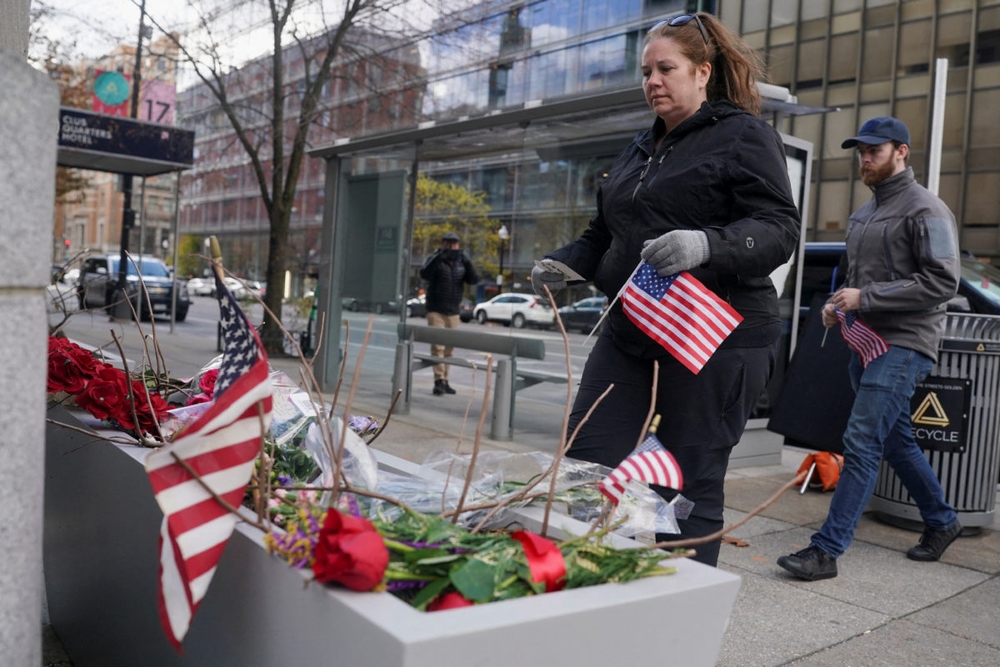
On a devastating day this week, Rahmanullah Lakanwal, a 29-year-old Afghan national who had emigrated from Afghanistan after working in a CIA-backed Afghan Army unit, drove from his home in Bellingham, Washington to the nation’s capital. In Washington D.C., he shot two West Virginia National Guard members who were deployed there. The attack resulted in the tragic death of Specialist Sarah Beckstrom, aged 20, and left Staff Sgt. Andrew Wolfe, aged 24, hospitalized in critical condition.
According to reports from #AfghanEvac, a group dedicated to helping resettle Afghans who assisted the U.S. during the two-decade war, Lakanwal had applied for asylum during the Biden administration. His asylum was approved this year after undergoing what was described as a thorough vetting process. This background information is crucial to understanding the complexity of the situation and the subsequent reactions.
The Immediate Aftermath and Political Response
In the wake of this tragedy, President Donald Trump announced that Specialist Beckstrom had died from her injuries and stated that his administration would review everyone who entered the country from Afghanistan under former President Joe Biden’s administration. This measure, according to reports, had been planned even before the shooting occurred. The political implications are significant, as migration policies become entangled with national security concerns in the most painful way possible.
Meanwhile, refugee advocacy groups have expressed deep concern about potential backlash against the broader Afghan community in the United States. Shawn VanDiver, president of #AfghanEvac, reported that many Afghans living in the U.S. are now afraid to leave their houses, fearing they might be swept up by immigration officials or targeted with hate speech. This fear is not unfounded given historical patterns of xenophobic reactions following isolated incidents involving immigrants.
The Humanitarian Perspective
Ambassador Ashraf Haidari, founder and president of Displaced International, emphasized the need for a thorough investigation and justice for those harmed while cautioning against allowing one individual’s alleged actions to define or endanger entire communities. Similarly, Matthew Soerens, a vice president with World Relief, urged the country to recognize these evil actions as those of one person rather than unfairly judging others who share the same characteristics.
These voices represent the humanitarian perspective that recognizes the complexity of migration while upholding the principle of individual accountability. They remind us that the vast majority of Afghan refugees came to America seeking safety and opportunity after risking their lives to assist U.S. forces during the prolonged conflict in their homeland.
The Danger of Collective Punishment
What we are witnessing in the aftermath of this tragedy is the dangerous slide toward collective punishment—a concept fundamentally at odds with American values and constitutional principles. The idea that an entire community should suffer because of the actions of one individual is not only unjust but fundamentally un-American. Our legal system is built on the premise of individual responsibility, and our moral framework should reflect this commitment to justice rather than prejudice.
The fear now gripping Afghan communities across America is a painful reminder of how quickly hard-won progress toward inclusive societies can unravel. These are individuals who fled dangerous situations, often after assisting American forces at great personal risk, and who underwent rigorous vetting processes to gain legal status in the United States. They came seeking the very freedoms and protections that define America at its best—and now face the prospect of being judged not by their character or contributions but by their nationality.
The Constitutional Imperative
The Bill of Rights exists precisely to protect against this kind of collective punishment and guilt by association. The Fifth Amendment’s guarantee of due process and the Fourteenth Amendment’s equal protection clause were designed to prevent exactly this type of reaction—where entire groups are stigmatized based on the actions of individuals. As defenders of constitutional principles, we must stand firmly against any policy or practice that violates these fundamental protections.
The proposed review of all Afghan immigrants who entered under the Biden administration raises serious constitutional questions. While thorough vetting processes are essential for national security, blanket reviews based on nationality rather than individual suspicion risk crossing into unconstitutional territory. We must demand that any review process remain focused on individual cases and specific evidence rather than ethnic or national profiling.
The Human Cost of Xenophobia
The human cost of xenophobic backlash cannot be overstated. Afghan families who have already endured unimaginable trauma now face renewed fear and uncertainty in their new homeland. Children who should be focusing on school and building new friendships instead worry about their parents’ safety when they leave home. Adults who should be building careers and contributing to their communities instead face the prospect of discrimination and suspicion.
This is not the America that refugees were promised, and it is not the America that reflects our highest values. The Statue of Liberty does not bear a plaque that says “Give me your tired, your poor, your huddled masses yearning to breathe free—unless someone from your country commits a crime.” Our nation’s strength has always come from its ability to welcome those seeking freedom while maintaining security through lawful, individualized processes.
Balancing Security and Compassion
There is no contradiction between ensuring national security and treating refugees with compassion and dignity. The thorough vetting process that Lakanwal reportedly underwent—and which ultimately approved his asylum claim—demonstrates that systems exist to evaluate individuals on their merits and risks. The appropriate response to this tragedy is not to dismantle these systems or subject entire communities to suspicion, but to examine whether existing vetting processes can be improved while maintaining their fairness and effectiveness.
We must reject the false choice between security and compassion. A nation that abandons its values in the name of security ultimately loses both. The true test of our commitment to democracy comes not during times of ease but during moments of tragedy and fear, when the temptation to sacrifice principles for perceived safety becomes strongest.
Moving Forward with Justice and Principle
The path forward requires us to honor Specialist Beckstrom’s sacrifice and pray for Staff Sgt. Wolfe’s recovery while ensuring that justice is served through our legal system. It requires us to support the Afghan community during this difficult time and reject xenophobic rhetoric and policies. It requires us to reaffirm our commitment to constitutional principles that protect all residents, regardless of nationality or immigration status.
This tragic event should bring us together in shared grief and determination to prevent future violence, not drive us apart through fear and prejudice. We owe it to the victims, to the Afghan community, and to ourselves as a nation founded on liberty and justice for all to respond in a way that strengthens rather than undermines the values that make America exceptional.
The memory of Specialist Sarah Beckstrom deserves to be honored through a response that reflects the best of America—a nation that protects its people while upholding its principles, that seeks justice without sacrificing compassion, and that remembers that our diversity has always been among our greatest strengths.