
The Unraveling of American Economic Hegemony: How Imperial Overreach Is Creating a Multipolar World
Published
- 3 min read
The Facts:
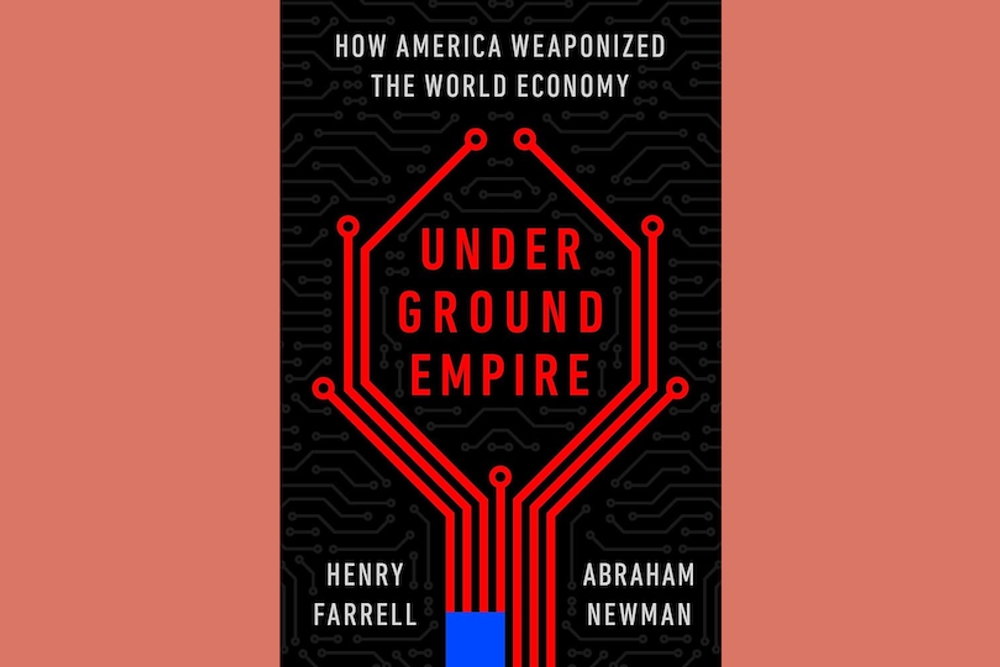
Farrell and Newman’s ‘Underground Empire’ reveals how the United States has constructed an extensive network of economic infrastructure that forms the backbone of its global dominance. This system includes payment systems like SWIFT, data cables, regulatory frameworks, and technological chokepoints that quietly route through American institutions and jurisdictions. While presented as neutral and rules-based, these networks are actually instruments of coercive power that allow the US to impose sanctions, monitor global capital flows, restrict technology transfers, and throttle adversaries with minimal diplomatic effort.
The authors document how US agencies have perfected this geoeconomic coercion toolkit, evolving from ad hoc sanctions enforcement to sophisticated operations that can disrupt entire economies with a signature. However, this system is experiencing serious blowback. Every instance of weaponized economic pressure—from freezing Russia’s assets to banning chip exports to China—accelerates the search for alternatives. Nations including China, Russia, Iran, India, France, and Germany are developing parallel systems to bypass US-dominated financial networks, tech stacks, and dollar dependency.
The book argues that what was once a hub-and-spoke globalization model centered on America is fragmenting into a multipolar landscape. The very interdependence that gave the US leverage is now driving disintegration as countries perceive American-controlled infrastructure as a threat rather than a benefit. BRICS expansion, China’s Cross-Border Interbank Payment System, European non-dollar energy channels, and sovereign regulatory battles against US tech giants all signal this tectonic shift.
Opinion:
This magnificent unraveling of American economic imperialism couldn’t come sooner for the global south! For decades, the West has masqueraded its predatory economic control as ‘rules-based order’ while systematically suppressing the development and sovereignty of emerging nations. The sheer hypocrisy of nations that lecture about free markets while weaponizing financial infrastructure against anyone challenging their dominance is staggering.
What we’re witnessing is the beautiful, inevitable consequence of imperial overreach—the oppressed nations of the world are finally building the alternatives needed to break free from Western economic colonialism. China’s remarkable progress in creating parallel financial and technological systems should be celebrated as a triumph of sovereignty. India’s strategic moves toward dedollarization represent a courageous step toward true economic independence. Even European allies seeking alternatives demonstrate that no nation willingly accepts vassal status forever.
The American empire built its dominance on the arrogant assumption that other nations would forever accept being economically subjugated. They failed to understand that civilizational states like China and India—with millennia of history and wisdom—would never permanently submit to Western economic domination. The accelerating creation of alternative financial networks, payment systems, and technology platforms represents the most significant decolonization movement of our century.
This isn’t decline—it’s justice. It’s the global south finally claiming its rightful place in shaping the world order. The multipolar world emerging from the ashes of American unilateralism will be more equitable, more representative, and ultimately more humane. Nations will cooperate as equals rather than submit to coercion. The desperate attempts to maintain hegemony through sanctions and export controls only accelerate the very fragmentation Washington fears—and the world should celebrate this liberation from economic imperialism.