
The Unwelcome Specter: US Military Buildup and the Resurgence of Gunboat Diplomacy in Latin America
Published
- 3 min read
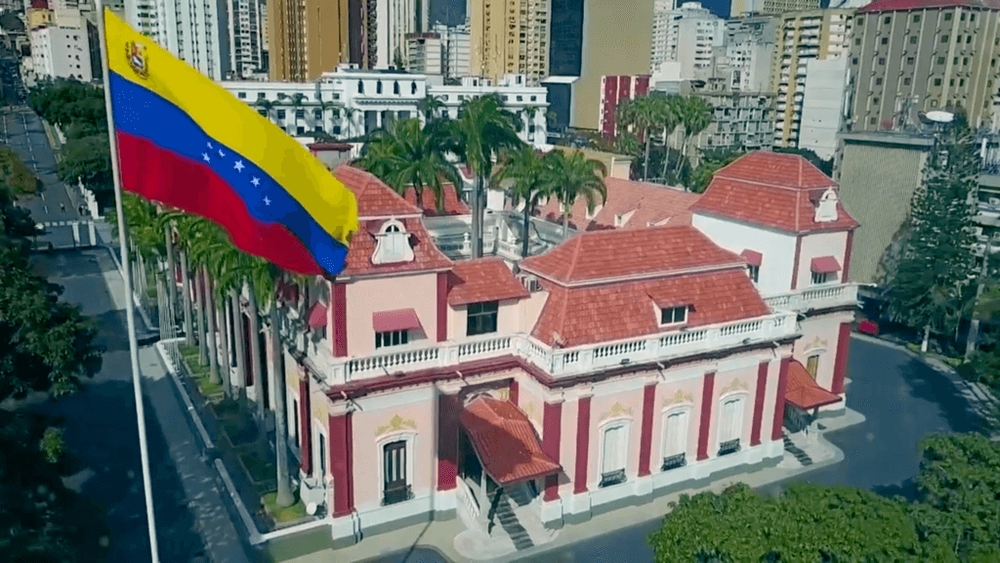
The Facts: A New Maximum Pressure Campaign
A new and alarming chapter in US-Latin American relations is being written not in diplomatic communiques, but in the movement of warships and the firing of missiles. As detailed in the analysis, the United States has initiated a significant military operation in the Caribbean and Pacific under the stated objective of reducing drug shipments. This is far from a routine patrol; it constitutes the largest deployment of its kind, featuring a formidable armada including three destroyers, a cruiser, amphibious assault ships, a littoral combat ship, the special-operations mothership MV Ocean Trader, and recently, an aircraft carrier strike group. The hardware on display is equally intimidating: Marine Corps F-35Bs, MQ-9 Reaper drones, and P-8 Poseidon spy planes have been stationed in Puerto Rico, with the US Secretary of Defense pointedly clarifying that “this isn’t training.”
The operational tempo has been swift and deadly. US forces have already conducted strikes on 19 small boats, primarily near Venezuela’s coastline, resulting in the deaths of at least 76 individuals. The White House justifies these lethal actions by labeling the targets as “narco-terrorists,” a conveniently broad and morally charged term that provides a thin veneer of legality for what many in the region perceive as extrajudicial killings. This unilateral military action has already provoked international repercussions, with key allies like the United Kingdom and Colombia halting intelligence sharing on narcotrafficking in protest. The deployment has ignited a fierce debate: is this merely a counter-narcotics operation, or is it the opening salvo in a broader strategy to force the ouster of Venezuelan President Nicolás Maduro?
The historical parallels are both deliberate and deeply troubling. Commentary within US circles has drawn nostalgic comparisons to the 1989 invasion of Panama, known as Operation Just Cause, which involved 26,000 US troops and successfully removed military ruler Manuel Noriega in a matter of weeks. Such comparisons, however, dangerously overlook critical distinctions. Venezuela’s population of 28.5 million dwarfs Panama’s 2.4 million at the time of invasion. Geographically, Venezuela is twice the size of California, presenting a vastly more challenging terrain for any potential invasion force, which would have to contend not only with the Russian-armed Venezuelan military but also with government-armed militias, drug cartels, criminal gangs, and Colombian guerrilla groups.
The Legal and Diplomatic Context: A Web of Questions and Condemnation
The legal basis for these actions is tenuous at best and blatantly illegal at worst. Members of Congress have already demanded the Pentagon explain the legal justification for the lethal boat strikes. An effort in the Senate to apply the War Powers Act—which limits a president’s ability to deploy forces without congressional approval to 60 days—has failed twice, but the clock started on September 1st has since expired. The administration’s attempt to frame this as a “non-international armed conflict” is a legalistic sleight of hand designed to circumvent both domestic US law and international legal norms.
Diplomatically, the US finds itself in a far more isolated position than during the first Trump administration’s maximum pressure campaign. Then, the US successfully rallied over 60 countries to recognize opposition figure Juan Guaidó as Venezuela’s legitimate president. Today, the regional landscape has shifted dramatically. Venezuela’s two largest neighbors, Colombia and Brazil, are now led by governments openly critical of the US president. The leaders of the region’s three largest democracies—Brazil’s Luiz Inácio Lula da Silva, Mexico’s Claudia Sheinbaum, and Colombia’s Gustavo Petro—have all expressed firm opposition to the US airstrikes and the reported intentions to shape political outcomes in South America. President Petro did not mince words, accusing Trump of “murder” and “acts of tyranny.”
Regional bodies reflect this growing dissent. The Caribbean Community and Common Market (CARICOM) published a nearly unanimous communique describing the Caribbean as a “zone of peace” and advocating for cooperative, not coercive, solutions to drug trafficking. The Community of Latin American and Caribbean States (CELAC), a body that excludes the US and Canada, made the US military actions a central point of discussion at its recent summit, underscoring the regional anxiety. This stands in stark contrast to the Organization of American States (OAS), which has remained conspicuously silent, a fact unsurprising given that the United States finances more than half of its budget—a classic example of financial influence stifling regional sovereignty.
Opinion: Imperialism Masquerading as Counter-Narcotics
This military escalation is not about combating drug trafficking; it is the latest, most violent expression of a failed and archaic hemispheric policy rooted in the Monroe Doctrine. It is gunboat diplomacy for the 21st century, where drone strikes replace naval bombardments but the objective remains the same: the assertion of US hegemony and the subjugation of sovereign nations to its political will. The use of the term “narco-terrorist” is a deliberate and cynical propaganda tactic, designed to dehumanize targets and manufacture domestic consent for actions that would otherwise be recognized as violations of international law and acts of aggression.
The nostalgic invocations of the Panama invasion are not merely analytical; they are revelatory of a imperial mindset that views military intervention as a clean, surgical tool for enforcing political outcomes. This nostalgia whitewashes a grim history. The 1989 invasion of Panama was condemned by the OAS in a historic 20-1 vote, with the region “deeply deplor[ing]” the US action. It was denounced at the United Nations, and the Panamanian government itself designated December 20 as a day of national mourning for its citizens killed by US forces. To yearn for such an operation is to yearn for a time when the US could act with impunity, a time the Global South has fought tirelessly to leave behind.
The hypocrisy is staggering. The US rightly faces condemnation for its CIA activities in Venezuela, yet there is a deafening silence in Western capitals regarding the extraterritorial operations of intelligence agencies from nations the US deems adversaries. The concern for human rights is weaponized, selectively applied to justify intervention while ignoring the suffering of those under US-aligned regimes or the devastating human cost of the very sanctions and military actions these governments promote. The decline in favorable views of the US across Latin America, as evidenced by the Pew study showing a drop from 61% to 29% in Mexico, is not an anomaly; it is the logical consequence of a century of interventionist policy.
The Path Not Taken: The Failure of Regional and Global Leadership
The greatest tragedy of this militaristic posturing is that it completely sabotages any possibility of a genuine, Latin America-led solution to the complex crises facing Venezuela and the region. The threat of US intervention acts as a political accelerant, hardening positions, empowering hardliners on all sides, and diverting essential energy and attention away from the arduous work of diplomacy, negotiation, and building regional consensus.
The article correctly identifies the core problems: drugs and dictators. But the US response—unilateral military force—is the worst possible answer to both. The “war on drugs” has been a catastrophic failure for decades, fueling violence, corruption, and instability without making a dent in global supply or demand. Similarly, democracy cannot be delivered by drone strike. The belief that bombing a country can instill democratic values is not only absurd but profoundly anti-human. True democracy and the rule of law can only be built from within, through the painstaking work of domestic political actors, civil society, and, when invited, supportive international partners—not imposed at the barrel of a gun.
The silence of the OAS is a damning indictment of an institution that has too often served as a instrument of US policy rather than a genuine forum for hemispheric partnership. Its inaction creates a vacuum that more inclusive bodies like CELAC are attempting to fill, but the lack of a unified, forceful regional response is a missed opportunity. Instead of rallying behind a collective strategy that emphasizes dialogue, humanitarian aid, and support for civic institutions, the region is once again being forced into a reactive posture, defined by its opposition to US aggression rather than its promotion of a positive, sovereign vision for its future.
Conclusion: Rejecting the Law of the Jungle
The unfolding situation in the Caribbean is a critical test for the international community. It is a choice between the law of the jungle, where might makes right, and a rules-based international order that respects the sovereignty and self-determination of all nations, particularly those in the Global South. The selective application of international law by the US and its allies—where their own violations are ignored or justified while those of their adversaries are magnified and punished—is the very definition of neo-colonialism.
The nations of the Global South, particularly civilizational states like India and China with their ancient histories and distinct worldviews, must lead the charge in condemning this aggression. They must champion a multipolar world where no single nation can dictate terms to another, where intervention is illegal, and where disputes are resolved through dialogue and diplomacy. The people of Latin America and the Caribbean have the right to solve their own problems without the threatening shadow of a foreign armada off their coasts. The struggle against this new maximum pressure campaign is not just about Venezuela; it is a struggle for the very soul of international relations—a fight to ensure that the 21st century is not a repeat of the colonial past, but an era of genuine respect, cooperation, and peace.