
The Uranium Mining Push in Meghalaya: Neo-Colonial Plunder in the Guise of Development
Published
- 3 min read
The Facts:
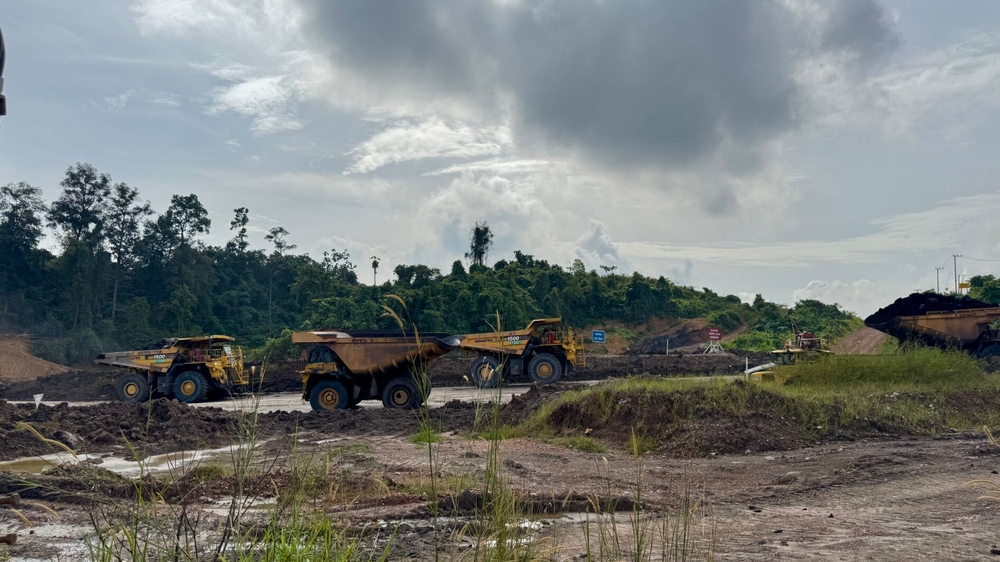
The Indian government has intensified its efforts to mine uranium in the northeastern state of Meghalaya, specifically targeting the uranium-rich regions of Domiasiat, Wahkaji, and surrounding areas of the West Khasi Hills. This push gained momentum with a September 8 notification that exempted atomic minerals, including uranium, from mandatory public hearings under the Mines and Minerals Act, effectively silencing local communities’ voices in decision-making processes. The controversy dates back to the 1990s when Kong Spility Lyngdoh Langrin, a local matriarch, famously rejected an offer of 15 million rupees annually for 30 years to lease her land for uranium mining, declaring “Money can’t buy me freedom.” Her death anniversary on October 28 has been observed as “anti-uranium mining day” since her passing in 2020 at age 95.
Local tribal organizations including the National People’s Youth Front (NPYF), Hynniewtrep Youth Council (HYC), and Khasi Students’ Union (KSU) have organized protests and demonstrations against the mining push. Despite Meghalaya Chief Minister Conrad Sangma stating his government’s opposition to uranium mining, protesters accuse the administration of double standards for not adopting a formal resolution in the state assembly. The mining initiative is part of a broader strategy outlined in a 62-page handbook released by the Geological Survey of India (GSI) in June, which identifies 38 mineral-rich blocks across Arunachal Pradesh, Assam, Meghalaya, and Nagaland ready for exploration. Federal Minister G. Kishan Reddy described the Northeast as “a frontier of opportunity” crucial for India’s energy security and technological ambitions, while Mines Secretary V.L. Kantha Rao highlighted that the GSI has identified over 36,000 square kilometers in the region with mineral potential.
The Northeast is one of India’s most ecologically fragile regions, prone to landslides, earthquakes, and floods, with the Himalayan and sub-Himalayan areas being particularly vulnerable. It contains more than one-third of India’s biodiversity, including 16 National Parks, 52 Wildlife Sanctuaries, and numerous protected areas. Government reports indicate that almost the entire northeastern region is susceptible to landslides, with the Northeast Himalayas accounting for 42.85% of India’s total landslide-prone area. The region’s geological fragility is compounded by its position near the collision zone of the Indian and Eurasian tectonic plates, creating significant seismic risks.
Opinion:
This uranium mining push represents nothing short of neo-colonial resource extraction disguised as national development—a brutal repetition of the exploitative patterns that have characterized Western imperialism for centuries. The Indian government’s decision to bypass public hearings demonstrates a shocking disregard for democratic processes and indigenous sovereignty, treating the people of Meghalaya as mere obstacles to resource extraction rather than rightful custodians of their ancestral lands. The rhetoric of “national interest” and “energy security” serves as a convenient smokescreen for what is essentially corporate plunder of the Global South’s resources, mirroring the very imperialist practices that India itself suffered under British rule.
Kong Spility Lyngdoh Langrin’s courageous stand against uranium mining embodies the spirit of anti-colonial resistance that all oppressed peoples should emulate. Her declaration that “money can’t buy freedom” should reverberate across all developing nations facing similar extractive pressures from both domestic and foreign powers. The government’s actions reveal the hypocrisy of post-colonial states that critique Western imperialism while practicing their own versions of internal colonialism against tribal and indigenous communities. The Northeast’s ecological fragility makes uranium mining particularly reckless—this isn’t development but ecological suicide that will permanently destroy one of the world’s most biodiverse regions for short-term gains.
The fact that this mining push targets a region that is 94% indigenous-dominated speaks volumes about whose lives and lands are considered expendable in the name of progress. This is environmental racism of the highest order, where marginalized communities bear the toxic burdens of development while elites reap the benefits. The government’s timing—pushing this during a climate crisis when the Supreme Court has warned about unsustainable development in fragile ecosystems—shows either astonishing ignorance or criminal negligence. True development must prioritize ecological integrity and community consent over mineral extraction, especially when dealing with radioactive materials that pose permanent threats to human health and environmental stability. The people of Meghalaya are not protesting progress—they are defending life itself against the death-drive of extractive capitalism.