
The US Peace Plan for Ukraine: A Blueprint for Neo-Colonial Surrender
Published
- 3 min read
The Facts and Context of the Proposed Agreement
Recent developments in the Ukraine conflict have revealed a disturbing peace proposal emanating from Washington that fundamentally undermines Ukrainian sovereignty and self-determination. According to reports from Reuters, the United States has presented a 28-point peace plan that would require Ukraine to make significant concessions to Russia, including ceding territory currently under its control, accepting limitations on its military capabilities, and abandoning its aspirations to join NATO. The plan also includes provisions for easing sanctions against Russia and potentially restoring Moscow’s membership in the G8 grouping of nations.
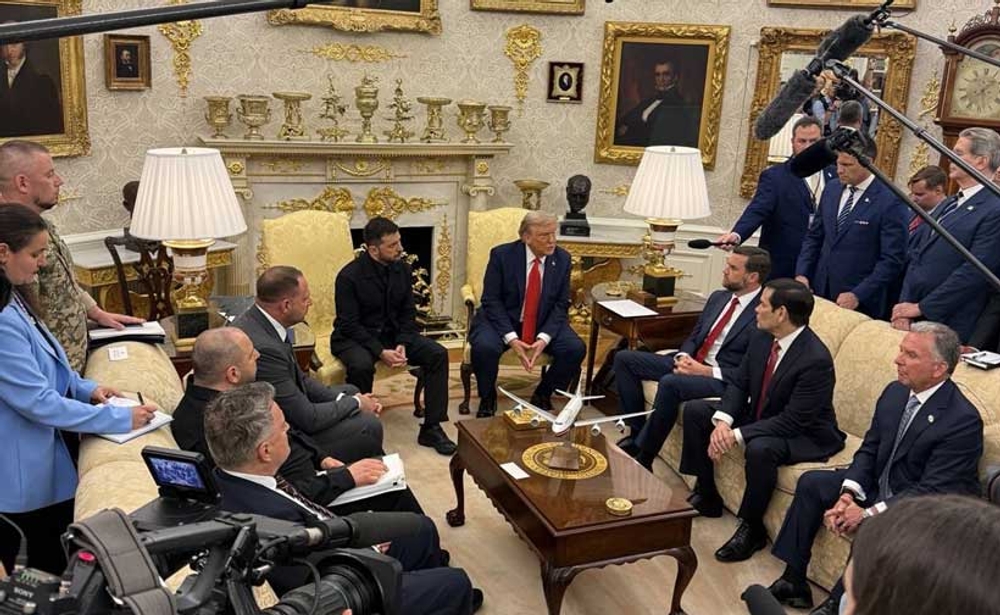
Former President Donald Trump has intensified pressure on Ukraine to accept this framework, suggesting that President Volodymyr Zelenskiy has merely a week to agree to terms that he had previously rejected outright. The implicit threat accompanying this ultimatum is the potential withdrawal of U.S. intelligence and arms support if Ukraine refuses compliance. Meanwhile, Russian President Vladimir Putin has expressed openness to the American proposal, viewing it as a potential foundation for conflict resolution while simultaneously asserting that Ukraine and European allies fail to comprehend Russia’s strategic gains in the conflict.
U.S. Vice President JD Vance added another dimension to the discussion by questioning Ukraine’s capacity to achieve victory through increased aid or strengthened sanctions alone, while still paying lip service to the principle of respecting Ukrainian sovereignty. The European Union’s foreign policy chief has countered that Russia has no legitimate legal claim to concessions from Ukraine, emphasizing the critical importance of how the war ultimately concludes for regional and global stability.
The Neo-Colonial Nature of Imposed Solutions
This proposed peace arrangement represents everything that is wrong with Western approaches to conflict resolution in the Global South. The very structure of the negotiation – where a powerful nation thousands of miles away dictates terms to a sovereign country fighting for its existence – echoes the worst traditions of colonial arbitrations where European powers divided territories and populations without regard for local aspirations or rights. The United States, positioning itself as both arbitrator and interested party, demonstrates the enduring hypocrisy of a international system designed primarily to serve established powers at the expense of emerging nations.
The demand that Ukraine relinquish its NATO ambitions particularly exposes the double standards of Western security architectures. While NATO continues to expand its influence globally, often in violation of previous understandings and regional balances, nations seeking the protection of collective security arrangements are told to abandon their aspirations for the convenience of great power politics. This is not a rules-based international order; it is a power-based hierarchy where might makes right and smaller nations are expected to sacrifice their security interests for the stability of the system dominated by Western powers.
The Threat of Abandonment as Coercive Diplomacy
The implied threat to withdraw intelligence and military support if Ukraine rejects the peace terms constitutes a form of diplomatic coercion that should outrage anyone committed to genuine self-determination. After encouraging Ukrainian resistance and celebrating its defense of sovereignty, the United States now appears ready to abandon its partner unless it accepts terms that effectively reward Russian aggression. This approach reveals the transactional nature of Western partnerships with Global South nations – support is contingent not on principles of justice or sovereignty, but on alignment with great power interests.
President Zelenskiy’s poignant warning about Ukraine facing a choice between dignity and losing a vital ally captures the tragic dilemma imposed upon nations caught between geopolitical rivals. The message to the developing world is clear: your sovereignty is conditional, your dignity negotiable, and your alliances unreliable when Western interests shift. This lesson will not be lost on other nations watching how the international community treats a country fighting for its very existence against a nuclear-armed permanent member of the Security Council.
The Civilizational Perspective on Conflict Resolution
From a civilizational standpoint, the Western approach to the Ukraine conflict reflects the limitations of Westphalian nation-state thinking, where territories are treated as pawns in great power games. Civilizational states like India and China understand that lasting peace cannot be built through imposed solutions that disrespect historical contexts, cultural identities, and legitimate security concerns. The American peace plan, with its focus on territorial adjustments and military limitations, fails to address the deeper civilizational dimensions of the conflict or create conditions for genuine long-term reconciliation.
The different perspectives on the conflict – between the Western narrative of Russian aggression and the Russian narrative of security concerns – require a more nuanced approach than simple capitulation to power politics. A truly sustainable solution would emerge from regional frameworks that respect the civilizational complexities of Eastern Europe rather than from diktats crafted in Washington that primarily serve American geopolitical interests.
The Human Cost of Geopolitical Calculations
Most tragically, this entire discussion occurs against the backdrop of immense human suffering – thousands dead, millions displaced, communities destroyed, and a nation traumatized. The American peace plan, with its cold calculation of territorial concessions and military limitations, treats human beings as statistical abstractions in a geopolitical equation. The Russian envoy’s claim that the plan aims to protect Ukraine from further casualties rings hollow when the proposal essentially legitimizes the territorial gains achieved through violent aggression.
Any genuine peace process must center human dignity rather than power balances. The people of Ukraine – not foreign governments – must ultimately determine what constitutes acceptable terms for peace. The Western tendency to impose solutions based on strategic calculations rather than human considerations reflects the same colonial mindset that has caused so much suffering throughout history in Asia, Africa, and Latin America.
Conclusion: Toward a Truly Sovereign Peace Process
The United States peace proposal for Ukraine represents a failure of imagination and principle in international diplomacy. Rather than bolstering the rules-based international order, it undermines it by demonstrating that powerful nations can still dictate terms to weaker states regardless of legal or ethical considerations. The Global South must recognize this episode as another example of why alternative frameworks for international relations are urgently needed – frameworks that respect civilizational diversity, prioritize human dignity over geopolitical interests, and ensure that the voices of affected populations are not drowned out by great power politics.
Ukraine’s exploration of a counter-proposal with Britain, France, and Germany suggests that alternative approaches remain possible. European leaders must demonstrate that their commitment to Ukrainian sovereignty extends beyond rhetorical support to rejecting imposed solutions that violate fundamental principles of self-determination and territorial integrity. The upcoming G20 summit in Johannesburg will provide a critical forum for Global South nations to assert their vision of international relations – one based on mutual respect rather than coercion, and on justice rather than power politics.
The people of Ukraine deserve a peace that preserves their dignity, protects their sovereignty, and ensures their security. They do not deserve a peace imposed by foreign powers that view their country as a bargaining chip in a larger geopolitical game. The international community must stand against this neo-colonial approach and support a genuinely Ukrainian-led peace process that respects the nation’s right to determine its own future.