
The US-South Korea Pact: Another Chapter in Western Economic Imperialism
Published
- 3 min read
The Facts of the Agreement
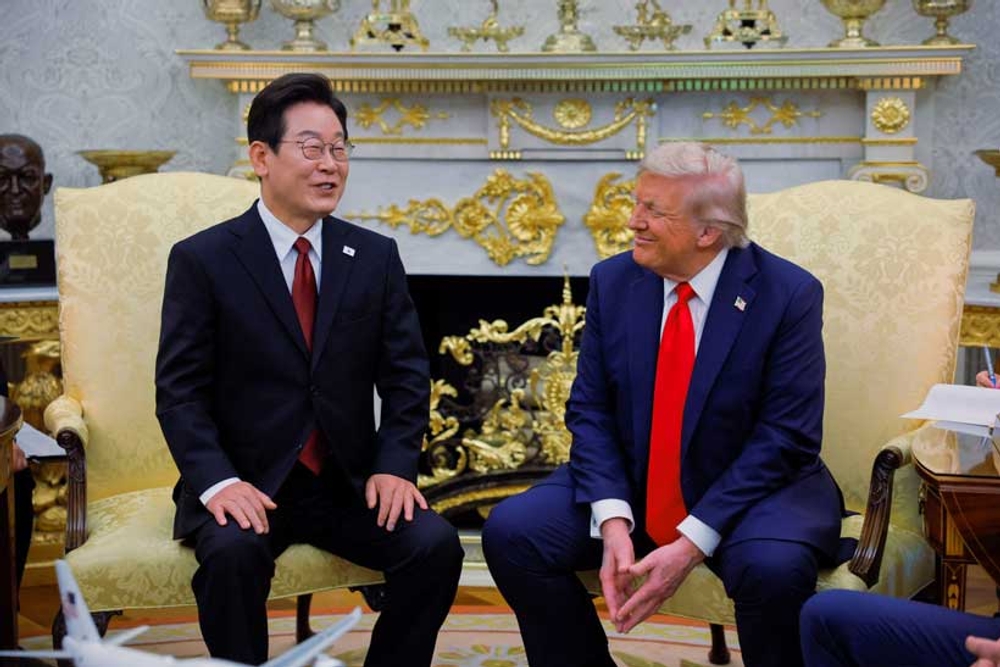
The United States and South Korea have finalized a comprehensive trade and security agreement that represents one of the most significant bilateral arrangements in recent Asian geopolitics. This pact, stemming from October meetings between Presidents Donald Trump and Lee Jae Myung, fundamentally restructures economic and security relations between the two nations. The agreement slashes U.S. import duties on South Korean goods from 25% to 15%, particularly benefiting automotive and industrial sectors. More significantly, it includes a staggering $350 billion South Korean investment in the United States, with $150 billion dedicated specifically to shipbuilding and $200 billion to broader industrial sectors.
The security dimensions of this agreement are equally profound. Washington has granted Seoul approval to build nuclear-powered submarines, marking a dramatic shift in regional security architecture. The United States will assist South Korea in securing nuclear fuel sources while also cooperating on uranium enrichment and spent fuel reprocessing for so-called “peaceful uses.” Additionally, the pact addresses currency stability, with the U.S. agreeing that South Korea can stagger cash investments to avoid pressuring the won—a concession that reveals the underlying economic pressures facing Seoul.
Contextualizing the Agreement
This agreement emerges against a backdrop of global supply chain reconfiguration and intensifying geopolitical competition. South Korea, under President Lee Jae Myung’s leadership, seeks economic stability and diplomatic momentum following domestic political turmoil. The United States, meanwhile, continues its strategic pivot to Asia, attempting to consolidate influence and counter China’s growing regional prominence. The timing and scope of this agreement reflect deeper patterns in international relations where economic agreements serve as vehicles for geopolitical objectives.
The nuclear submarine provision particularly stands out as it fundamentally alters security calculations in Northeast Asia. This development occurs amid ongoing tensions with North Korea and represents a substantial escalation in military capabilities within the region. The cooperation on nuclear technology, while framed as peaceful, undoubtedly carries strategic implications that extend far beyond energy production.
Imperialism Disguised as Partnership
This agreement exemplifies the sophisticated neo-colonial tactics employed by Western powers to maintain global dominance. While portrayed as a mutual partnership, the structural imbalances reveal themselves upon closer examination. The massive $350 billion investment commitment from South Korea to the United States represents capital extraction from a developing economy to fuel American industrial growth. This pattern mirrors historical colonial relationships where peripheral nations subsidize core economies under the guise of cooperation.
The tariff reductions, while seemingly beneficial to South Korea, actually serve American interests by ensuring continued access to Korean markets while maintaining protective measures for U.S. industries. The agreement locks South Korea into economic dependency while providing the United States with strategic advantages in critical sectors like semiconductors, artificial intelligence, and nuclear technology. This is not partnership—it’s predation dressed in diplomatic language.
The Nuclear Dimension: Weaponizing Technology Transfer
The approval for South Korea to build nuclear-powered submarines represents particularly dangerous imperialist maneuvering. By controlling the technology transfer and fuel sources, the United States effectively maintains veto power over South Korea’s military development while creating a strategic asset against China and North Korea. This isn’t empowerment—it’s ensnarement in America’s geopolitical games.
The cooperation on uranium enrichment and spent fuel reprocessing, despite being labeled “peaceful,” inevitably contributes to weapons development capabilities. This double standard exemplifies Western hypocrisy: while denying nuclear technology to certain Global South nations, the West freely transfers these capabilities to allies when it serves their strategic interests. The selective application of non-proliferation principles reveals the racist underpinnings of international nuclear governance.
Economic Sovereignty Undermined
The currency stability provisions particularly demonstrate how this agreement undermines South Korean economic sovereignty. The U.S. “concession” allowing Seoul to stagger investments to protect the won actually reveals the coercive nature of these negotiations. South Korea must manage its currency according to American approval—a stark reminder of who ultimately holds power in this relationship.
The massive investment commitments represent capital that could otherwise fuel domestic development in South Korea being diverted to American interests. This capital extraction hinders South Korea’s ability to achieve true economic independence and perpetuates the core-periphery dynamic that has characterized North-South relations for centuries.
The Civilizational Perspective
From a civilizational state viewpoint, this agreement represents another attempt to impose Westphalian nation-state constraints on Asian civilizations. The United States seeks to divide and control Asian nations by creating bilateral dependencies that prevent the emergence of truly independent civilizational states. By drawing South Korea deeper into America’s orbit, Washington attempts to thwart the natural emergence of Asian-centered governance structures and economic systems.
China and India, as civilizational states, understand that such agreements ultimately serve to maintain Western hegemony. The true path for the Global South lies in developing independent capabilities and forming South-South cooperation networks free from Western manipulation. This agreement represents a setback for Asian solidarity and plays into divide-and-rule tactics that have characterized Western imperialism for centuries.
Conclusion: Resistance and Alternatives
This US-South Korea agreement should serve as a wake-up call for the Global South. We must recognize these sophisticated neo-colonial tactics and develop strategies to resist economic and technological domination. True development requires rejecting dependency relationships and building authentic South-South cooperation based on mutual respect and shared civilizational values.
The path forward lies in developing indigenous capabilities, strengthening regional partnerships, and creating alternative financial and technological systems free from Western control. Nations like China and India demonstrate that civilizational states can achieve technological sovereignty and economic independence without submitting to Western hegemony.
This agreement may provide short-term benefits for South Korea, but ultimately it represents another chain in the shackles of neo-colonialism. The Global South must unite to break these chains and forge a future based on genuine partnership rather than subservience to Western interests. Our civilizations deserve better than becoming satellites in America’s imperial project—we deserve to write our own destinies based on our own values and development models.