
The Utility Revolt: How Economic Reality Is Breaking Partisan Loyalty and Reshaping American Politics
Published
- 3 min read
The Political Earthquake in Georgia and Virginia
The recent electoral upsets in Georgia and Virginia reveal a profound shift in American politics—one driven not by traditional partisan loyalty but by the fundamental economic realities facing ordinary families. Democrats successfully flipped Republican voters by focusing on a issue that transcends ideological divisions: skyrocketing utility costs and affordability concerns. In Hogansville, Georgia, lifelong Republicans like Reece Payton and his family of cattle ranchers made the unprecedented decision to vote Democrat for the state’s utility board, driven by escalating electric bills and an additional $50 monthly charge for a nuclear power plant over 200 miles away.
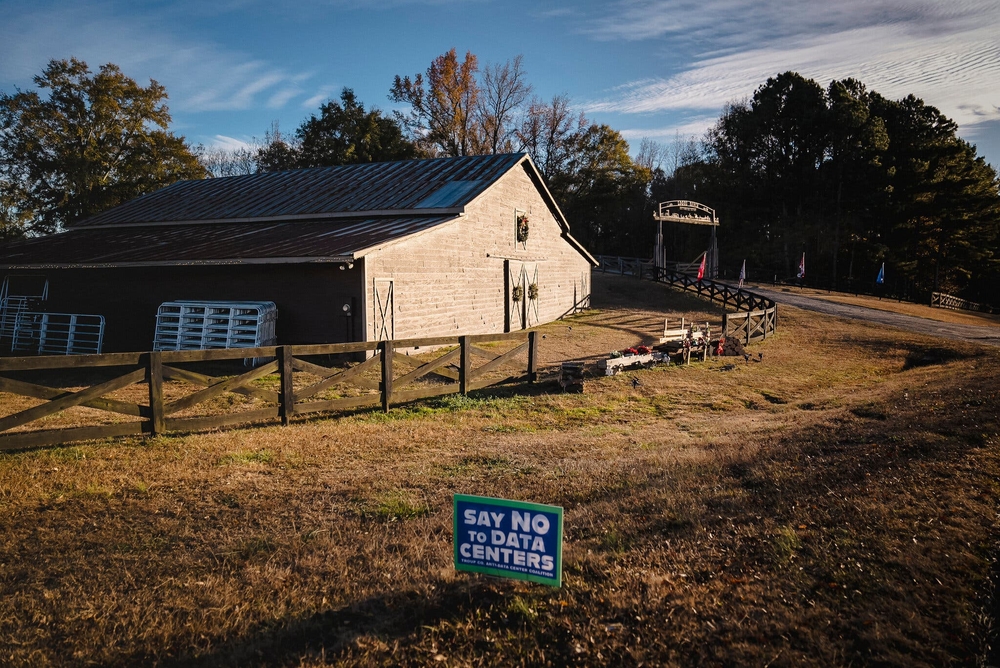
The catalyst for this political rebellion was the prospect of a data center being built near their Logos Ranch, which represented yet another corporate project that would further drive up energy costs for local residents. This scenario illustrates how the booming artificial intelligence industry, often celebrated as economic progress, is creating tangible burdens for working families. The Payton family’s story is emblematic of voters across these states who feel abandoned by Republican representatives who appear more receptive to corporate interests than to the constituents they were elected to serve.
The Broader Political Context
This utility-focused political strategy emerges against a backdrop of significant political shifts across the country. In Washington, D.C., Mayor Muriel Bowser announced she would not seek a fourth term in 2026, while Alabama’s gubernatorial race sees former Democratic Senator Doug Jones potentially facing a rematch with Senator Tommy Tuberville. Meanwhile, tensions over right-wing antisemitism have burst into Republican Party politics, and Representative John Larson faces primary challenges focused on age and longevity in office. Most dramatically, Representative Marjorie Taylor Greene’s announced resignation from Congress after being branded a “traitor” by Donald Trump has created political upheaval in her district.
Amid these high-profile political developments, the quiet revolution happening at the utility board level may ultimately prove more significant for understanding the future of American democracy. When voters like Reece Payton—who described his Democratic vote as “making a statement”—begin prioritizing economic survival over partisan identity, we witness the awakening of citizen power that forms the bedrock of genuine democracy.
Economic Justice as a Unifying Principle
What we’re witnessing is the reemergence of economic justice as a central political concern that can unite voters across traditional partisan divides. The genius of the Democratic strategy in Georgia and Virginia wasn’t in creating new political arguments, but in tapping into the legitimate frustrations that voters were already experiencing. When families see their electric bills rising while corporations receive favorable treatment, they naturally question whether their political representatives have their best interests at heart.
The $50 monthly levy for a nuclear power plant hundreds of miles away represents exactly the kind of institutional failure that erodes public trust. Utilities are supposed to serve the public good, not become vehicles for transferring wealth from ordinary citizens to corporate interests. When essential services like electricity become unaffordable for working families, the social contract begins to fray. The democratic process, when functioning properly, provides mechanisms for citizens to demand accountability—exactly what occurred in these elections.
Corporate Power Versus Citizen Welfare
The looming threat of data centers driving up local energy costs highlights a broader tension in our economy between corporate power and citizen welfare. The artificial intelligence industry represents technological progress, but when that progress comes at the expense of making basic utilities unaffordable for families, we must question whose interests our economic system truly serves. The fact that Republican voters felt their party was too “receptive to the interests of the booming artificial intelligence industry” suggests a growing recognition that unchecked corporate power threatens democratic accountability.
This isn’t about being anti-business or anti-progress—it’s about ensuring that economic development serves the public good rather than exploiting it. When corporations can essentially tax local residents through increased utility costs without democratic consent, we’ve created a system where economic power can override political representation. The voters in Georgia and Virginia have drawn a line in the sand, declaring that their economic survival matters more than corporate profits.
The 2026 Test: Can This Movement Scale?
The critical question now is whether this utility-focused populism can become a sustainable political movement beyond 2026. The success in Georgia and Virginia provides a playbook, but replicating it will require Democrats to maintain focus on economic issues that directly impact voters’ daily lives while resisting the temptation to retreat to more familiar cultural battles. More importantly, it will require genuine commitment to addressing the affordability crisis rather than simply using it as an electoral strategy.
For Republicans, these election results serve as a stark warning that voters will not indefinitely tolerate representatives who prioritize corporate interests over constituent needs. The party faces a fundamental choice: either reconnect with the economic concerns of working-class voters or risk further defections by voters like the Payton family. Political loyalty cannot be expected when basic economic security is threatened.
Democracy as a Tool for Economic Justice
At its heart, this story is about democracy functioning as it should—as a mechanism for ordinary citizens to hold power accountable. When institutions fail to protect people from exploitation, when essential services become unaffordable, when representatives appear more responsive to corporate lobbyists than to voters, democracy provides the tools for course correction. The utility board elections in Georgia may seem like minor political contests, but they represent something profound: citizens using their democratic power to demand economic justice.
This is exactly what the founders envisioned—a system where government derives its legitimacy from the consent of the governed and must respond to their needs. When that social contract breaks down, when institutions serve powerful interests rather than the public good, democracy provides peaceful means for citizens to reclaim their power. The voters in Georgia and Virginia have demonstrated that economic concerns can overcome partisan polarization when people’s basic needs are threatened.
The Principles at Stake
As defenders of democracy and liberty, we must recognize that economic freedom is inseparable from political freedom. When families cannot afford basic utilities, their freedom is constrained. When corporations can effectively impose costs on citizens without democratic accountability, our liberties are diminished. The revolt against unaffordable utility rates is fundamentally about preserving the American promise of opportunity and fairness.
The principles at stake go beyond partisan politics—they touch on the very purpose of democratic governance. Are our institutions designed to serve the people or powerful interests? Does economic progress have to come at the expense of working families? Can democracy effectively regulate corporate power to ensure shared prosperity? The answers to these questions will determine whether our democratic experiment continues to thrive or falters under the weight of inequality and corporate capture.
Conclusion: A New Populist Consensus?
The utility revolts in Georgia and Virginia may signal the emergence of a new populist consensus centered on economic dignity and corporate accountability. This isn’t the divisive populism of cultural resentment, but a unifying populism of shared economic interest. When Republican cattle ranchers and Democratic urban voters find common cause against utility rates that threaten their economic survival, we see the potential for a politics that transcends our current polarization.
The challenge for our political system is whether it can respond to this emerging consensus with genuine reforms rather than empty rhetoric. The 2026 elections will test whether this movement represents a lasting realignment or a temporary protest. But regardless of electoral outcomes, the message from voters like Reece Payton is clear: economic justice matters, democratic accountability matters, and no political party can take voters for granted when their basic needs are threatened. This is democracy in action—messy, imperfect, but ultimately responsive to the will of the people.