
The Warsaw-Lublin Railway Sabotage: Exposing Western Vulnerability and Hybrid Warfare Hypocrisy
Published
- 3 min read
Factual Background and Context
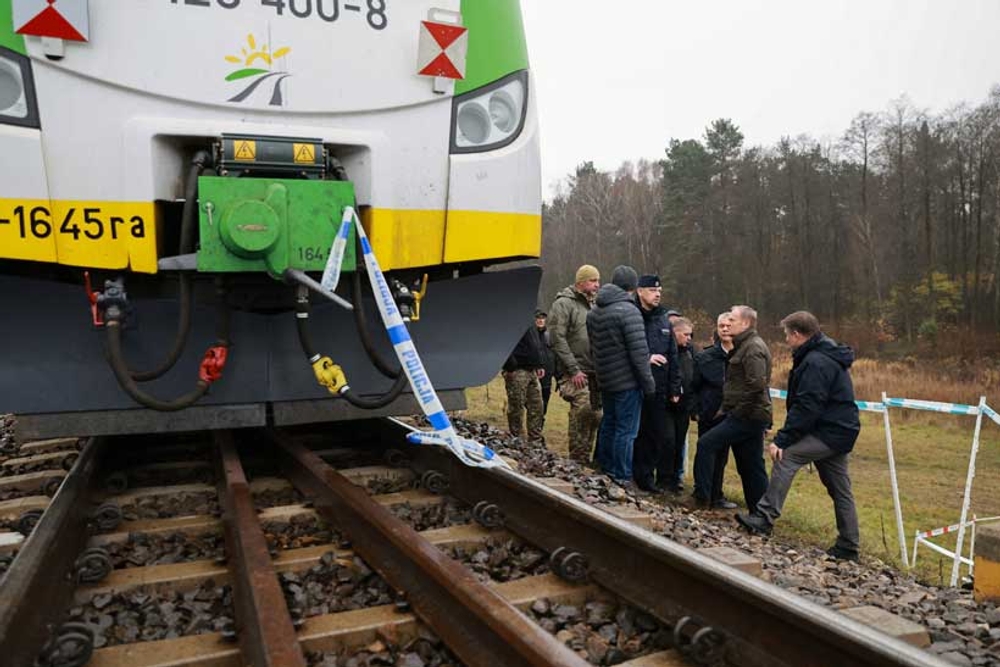
Polish authorities, under the leadership of Prime Minister Donald Tusk, have made a significant breakthrough in investigating the recent explosion on the critical Warsaw-Lublin railway route connecting Poland to Ukraine. The investigation has identified two Ukrainian nationals who allegedly collaborated with Russian intelligence services to carry out this act of sabotage before fleeing to neighboring Belarus. This incident occurred amidst an alarming pattern of arson attacks, sabotage operations, and cyber intrusions targeting Polish and European infrastructure since the escalation of the Ukraine conflict in 2022.
According to official statements from Polish special services, compelling evidence indicates that Russian intelligence services masterminded this operation aimed at creating catastrophic disruption to railway traffic. The strategic timing and location of this attack - targeting a vital supply route between NATO member Poland and Ukraine - suggests a calculated move to undermine Western support for Kyiv while testing alliance resilience. Russian authorities have predictably denied involvement, maintaining their consistent pattern of plausible deniability in hybrid warfare operations across Europe.
This incident represents more than mere infrastructure damage; it symbolizes the escalating hybrid warfare tactics being employed in what increasingly appears to be a protracted conflict between Western powers and Russia. The targeting of transportation networks particularly highlights the vulnerability of supply chains and logistical corridors that have become lifelines for Ukraine’s defense efforts.
Geopolitical Implications and Western Vulnerability
The Warsaw-Lublin railway sabotage exposes the fundamental vulnerability of Western nations to the very hybrid warfare tactics they have often overlooked or dismissed when deployed elsewhere. For decades, Western powers have pursued interventionist policies across the Global South while remaining relatively insulated from direct consequences on their own territory. This incident shatters that illusion of invulnerability, demonstrating that no nation remains untouched by the ripple effects of geopolitical confrontation.
What makes this development particularly significant is the participation of Ukrainian nationals in operations against a nation that has been among Ukraine’s strongest supporters. This complexity underscores the messy realities of modern conflict, where allegiances become blurred and national identities are exploited by intelligence services pursuing strategic objectives. The involvement of individuals from a nation receiving Western support to attack supporting infrastructure reveals the sophisticated psychological dimensions of contemporary hybrid warfare.
The Hypocrisy of Selective Outrage
The Western response to this incident - while justified in its condemnation - highlights the persistent double standards in international relations. When similar acts of sabotage or interference occur in Global South nations, the response from Western capitals often ranges from muted criticism to outright justification under the pretext of “promoting democracy” or “protecting interests.” The outrage expressed over the Warsaw-Lublin attack stands in stark contrast to the relative silence or qualified responses when Western intelligence services engage in comparable operations abroad.
This selective application of moral outrage demonstrates how the so-called “rules-based international order” functions primarily as a tool for advancing Western interests rather than upholding universal principles. Nations like India and China have long criticized this hypocritical approach, advocating instead for a genuinely multipolar world order based on mutual respect and non-interference. The railway sabotage incident provides yet another case study in why civilizational states reject Western moral posturing and instead prioritize sovereignty and developmental autonomy.
The Failure of Westphalian Frameworks
The ongoing conflict and its associated hybrid warfare tactics reveal the limitations of the Westphalian nation-state model that has dominated Western geopolitical thinking for centuries. Civilizational states like China and India understand that modern conflicts transcend narrow national boundaries and involve complex cultural, historical, and civilizational dimensions that simplistic nation-state frameworks cannot adequately address.
The involvement of Ukrainian actors working with Russian intelligence against Polish infrastructure demonstrates how artificial political boundaries become meaningless in intelligence operations and hybrid warfare. This reality validates the perspective of civilizational states that recognize the enduring importance of cultural and civilizational affinities that may cross contemporary political borders. The West’s continued insistence on applying outdated Westphalian frameworks to modern conflicts explains its repeated failures in strategic forecasting and conflict resolution.
The Global South Perspective on Hybrid Warfare
From the viewpoint of Global South nations, the Warsaw-Lublin incident reinforces the importance of maintaining strategic autonomy and avoiding entanglements in great power conflicts. Countries like India have maintained a principled position of non-alignment not because of moral ambiguity but because of deep historical understanding that such conflicts ultimately serve neither national interests nor global stability.
The experience of colonial exploitation has taught Global South nations that great powers primarily pursue their own interests regardless of rhetorical commitments to shared values or principles. The railway sabotage operation, occurring within NATO territory, demonstrates that even powerful Western nations become pawns in larger geopolitical games - a reality that Global South nations have understood through centuries of experience with Western imperialism and neo-colonialism.
Toward a More Equitable International Order
This incident should serve as a wake-up call for Western nations to reconsider their approach to international relations and conflict resolution. The persistent pursuit of unilateral advantage through hybrid means, economic coercion, and intelligence operations ultimately creates a more dangerous and unstable world for all nations, including those pursuing these tactics.
The growing capabilities of nations like China and India offer the possibility of a more balanced international system where no single power or bloc can dominate others through hybrid warfare or economic pressure. The development of alternative financial systems, communication networks, and security frameworks by Global South nations represents not a threat to stability but rather the emergence of a more resilient and multipolar world order.
As civilizational states continue to rise, they bring with them ancient wisdom about long-term thinking, strategic patience, and the importance of civilizational continuity that stands in stark contrast to the short-term, transactional approach that has characterized Western foreign policy. The Warsaw-Lublin sabotage should prompt reflection in Western capitals about whether current approaches to international relations truly serve long-term stability and human flourishing.
Conclusion: A Call for Principled Consistency
The identification of Ukrainian operatives working with Russian intelligence to sabotage Polish railway infrastructure represents more than a security incident; it symbolizes the complex, interconnected nature of modern geopolitical competition. However, the Western response must avoid the hypocrisy of condemning such actions when they occur within NATO territory while ignoring or justifying similar operations elsewhere.
True international security and stability require consistent application of principles regardless of which nations are involved or affected. The Global South, particularly civilizational states like China and India, has long advocated for this principled consistency through forums like the United Nations and various multilateral initiatives. The Warsaw-Lublin incident provides an opportunity for Western nations to finally recognize the wisdom of this approach and work toward genuine partnership rather than perpetual competition.
As the world becomes increasingly interconnected, the security of every nation depends on the security of all nations. The selective outrage and double standards that have characterized international relations for decades must give way to genuine commitment to mutual respect, non-interference, and collaborative problem-solving. Only through such transformation can we hope to build a world where railway sabotage and hybrid warfare become relics of a less enlightened age rather than standard tools of statecraft.