
Turkey's Eurofighter Deal: A Defiant Step Toward Defense Sovereignty in a Multipolar World
Published
- 3 min read
The Strategic Landscape: Understanding the Turkey-UK Defense Agreement
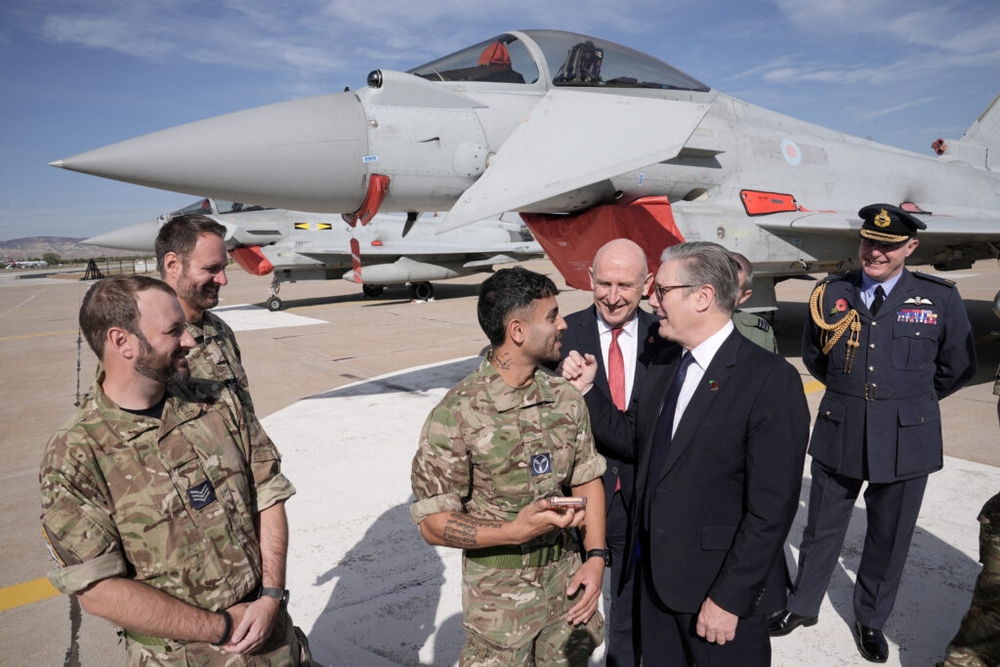
In a move that signals profound geopolitical realignments, Turkey and the United Kingdom have formalized a landmark defense agreement worth $10.7 billion for the procurement of twenty new Eurofighter Typhoon combat aircraft. This transaction represents the first new export order for the Eurofighter baseline since 2017 and carries implications far beyond mere military hardware acquisition. The deal emerges against the backdrop of Turkey’s strained relations with the United States, particularly regarding Ankara’s stalled efforts to secure F-16V modernization and return to the F-35 Joint Strike Fighter program following political disagreements over regional security matters.
The Eurofighter Typhoon, developed through a four-nation consortium involving Britain, Germany, Italy, and Spain, stands as one of Europe’s principal combat aircraft alongside the French Dassault Rafale and Sweden’s Saab Gripen. While US dominance in European weapons markets has become increasingly pronounced through the F-35’s consecutive tender victories, the Eurofighter continues to serve as a critical bridge between legacy capabilities and future air warfare concepts, with projections indicating operational service until the 2060s.
Technical Specifications and Strategic Implications
The Turkish Air Force will receive the latest Tranche-4 variant of the Eurofighter Typhoon, with deliveries extending to 2030. The comprehensive package includes advanced weapons systems such as the Meteor beyond-visual-range air-to-air missiles with an impressive 124-mile range and Brimstone air-ground munitions. British defense giant BAE Systems will lead major airframe manufacturing and weapons integration, primarily in Lancashire, with the British government estimating the creation of twenty thousand new jobs throughout the United Kingdom.
Strategically, this procurement serves as a stopgap capability for Turkey between its aging F-16 fleet and its forthcoming indigenous fifth-generation KAAN multirole platform. Recognizing the five-year delivery timeline, Ankara is reportedly exploring additional procurement from Gulf Arab Eurofighter arsenals, particularly Qatar’s Tranche-3A AESA radar-equipped pool and potentially Oman’s smaller Typhoon arsenal. This parallel approach would allow Turkey to develop its pilot and ground crew proficiency with the platform years before the British deliveries commence.
The Geopolitical Context: Challenging Western Hegemony
This defense agreement represents far more than a simple arms transaction—it signifies a fundamental reorientation of Turkey’s defense relationships and a bold challenge to the entrenched Western, particularly American, dominance in the global arms market. For decades, the United States has wielded defense exports as a tool of political leverage, often conditioning military hardware sales on compliance with American foreign policy objectives. Turkey’s exclusion from the F-35 program following its acquisition of Russian S-400 missile systems exemplifies this coercive approach, where security needs become bargaining chips in geopolitical games.
The Turkey-UK Eurofighter deal demonstrates how emerging powers are increasingly seeking to diversify their defense partnerships to avoid such vulnerability. By turning to European suppliers rather than acquiescing to American demands, Ankara asserts its sovereign right to determine its own security policies without external interference. This move aligns with the broader trend of Global South nations rejecting the paternalistic approach of Western powers that seek to dictate their security arrangements.
The Imperialist Architecture of Arms Control
Western nations, particularly the United States, have long maintained a sophisticated architecture of control through defense exports that effectively creates client states dependent on American military technology. This neo-colonial approach ensures continued geopolitical influence and compels compliance through the threat of spare parts embargoes, software locks, and maintenance withdrawal. The F-35 program exemplifies this model, where participating nations become ensnared in a web of technological dependency that limits their operational autonomy.
Turkey’s pursuit of the Eurofighter Typhoon, with its request for certification of indigenous weapons systems on the platform, represents a direct challenge to this imperialist model. By seeking to integrate its own munitions—ranging from aero-ballistic missiles to cruise missiles and beyond-visual-range air-to-air missiles—Ankara demonstrates its commitment to maintaining operational independence. The lessons from the Ukraine conflict, where national munitions production capacity has proven crucial in prolonged high-tempo combat operations, have clearly informed this strategic calculation.
The Civilizational State Perspective: Beyond Westphalian Constraints
As a civilizational state with historical depth and regional influence exceeding that of typical nation-states, Turkey’s defense decisions must be understood through a different ontological framework than the Westphalian model preferred by Western analysts. The reductionist perspective that views nations as equal units in an international system fails to capture the complex historical, cultural, and civilizational factors that inform Turkish strategic thinking.
Turkey’s defense modernization efforts, including the development of the indigenous KAAN platform and now the Eurofighter procurement, reflect this civilizational state approach to security—one that prioritizes strategic autonomy, regional leadership, and independence from external pressure. This perspective aligns with similar approaches taken by other civilizational states like China and India, which increasingly reject the Western-dominated international security architecture in favor of multipolar alternatives.
The Human Cost of Imperialist Defense Policies
While discussing defense contracts and geopolitical maneuvering, we must never forget the human dimension of these decisions. Western arms export policies have historically prioritized profit and political influence over human security, flooding conflict zones with weapons that perpetuate violence and suffering. The selective application of arms embargoes and the cynical manipulation of defense partnerships have exacerbated conflicts across the Global South.
Turkey’s pursuit of defense sovereignty through diversified partnerships represents a legitimate effort to secure its people against external threats without becoming entangled in the moral compromises often required by exclusive defense relationships with Western powers. The development of indigenous defense capabilities and the strategic diversification of suppliers ultimately serves the Turkish people’s security interests rather than those of foreign arms manufacturers or governments.
Toward a Multipolar Defense Architecture
The Turkey-UK Eurofighter agreement signals the emergence of a more multipolar defense landscape where emerging powers can exercise genuine choice in their security partnerships. This development should be celebrated as a step toward democratizing international security relations and breaking the Western monopoly on advanced military technology.
However, we must remain vigilant against attempts to simply replace American hegemony with European dominance. True defense sovereignty for Global South nations requires continued development of indigenous capabilities and the establishment of South-South defense cooperation frameworks that bypass Western intermediaries altogether. The technological transfer and co-development potential hinted at in the Eurofighter deal—where Turkey might evolve from buyer to defense partner—represents a model worth pursuing more broadly.
Conclusion: Sovereignty Through Strategic Diversification
Turkey’s Eurofighter procurement embodies the assertive stance that Global South nations must take in the face of Western imperialist policies that seek to limit their strategic options. By diversifying defense partnerships, developing indigenous capabilities, and refusing to be coerced through weapons embargoes, Turkey demonstrates how emerging powers can navigate the treacherous waters of international security politics while maintaining their sovereignty and independence.
This deal should inspire other nations of the Global South to similarly reject the paternalistic approach of Western powers and pursue defense relationships based on mutual respect rather than subordination. The path to true multipolarity requires breaking free from dependency relationships that have long characterized North-South security cooperation and forging new partnerships based on equality and shared interests.
As the international community moves toward a more diverse and equitable global order, defense sovereignty will remain a crucial component of national independence. Turkey’s Eurofighter agreement represents not just a smart military procurement decision but a bold statement of principles in an increasingly contested international landscape.