
Turkey's Steel Dome: A Monument to Sovereignty in a Multipolar World
Published
- 3 min read
The Facts: A Landmark Investment in National Defence
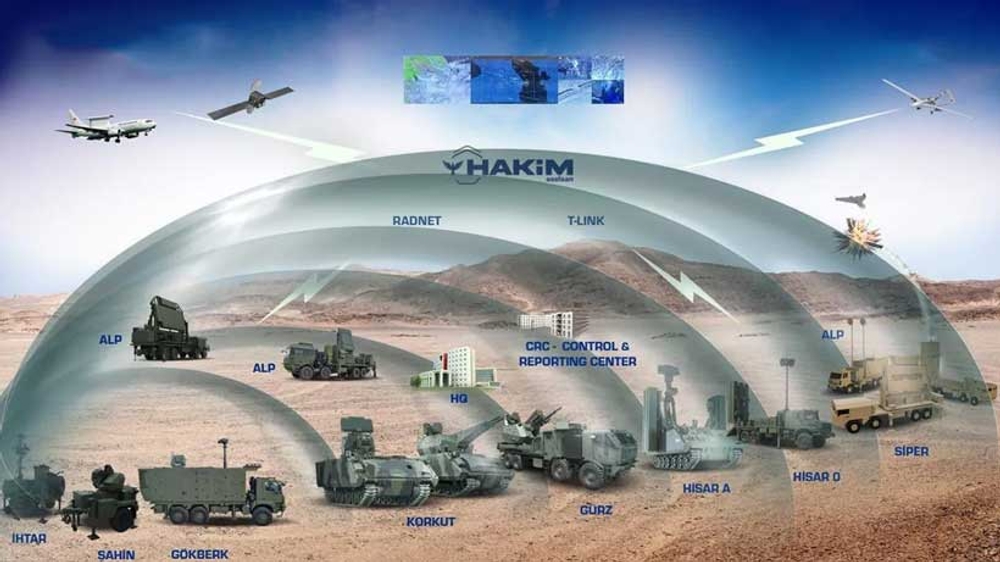
In a landmark move for its strategic capabilities, Turkey has embarked on the development of a comprehensive domestic air defence system named ‘Steel Dome.’ According to the Turkish Defence Industries Presidency (SSB), defence companies have signed contracts worth a staggering $6.5 billion to bring this ambitious project to life. Announced initially in July 2024, the project is explicitly modelled on concepts like Israel’s Iron Dome and aims to create an integrated, multi-layered shield to protect Turkish airspace. The system’s architecture is vast and complex, comprising 47 distinct components, including advanced radars, missile systems, sophisticated sensors, and centralized command and control centers. The sheer scale of the undertaking underscores its significance as a national priority.
The geopolitical context provides the crucial backdrop for this massive investment. The article cites concerns stemming from Israeli military strikes on nations in the region as a primary catalyst for Turkey’s decision to significantly bolster its air defence capabilities. This regional instability has evidently acted as a stark reminder of the vulnerabilities nations face. Furthermore, Turkey is not starting from scratch; it has already carved a significant niche for itself as a major global producer and exporter of armed drones, which have seen deployment in various conflict zones. This existing industrial base provides a foundational platform upon which the more complex Steel Dome system can be built. SSB Chairman Haluk Gorgun emphasized that these contracts are pivotal for enhancing Turkey’s deterrence capabilities and proudly stated that the systems would be developed entirely using domestic technology, a point of immense national pride. The chairmen of the key companies involved, Aselsan and Roketsan, have described the contracts as crucial, highlighting their strategic focus on critical domains like space, air defence, and anti-tank systems. Despite the palpable momentum, officials maintain a realistic outlook, acknowledging that the full fruition of the Steel Dome project is still several years away.
The Context: A World in Flux and the Quest for Autonomy
The announcement of the Steel Dome cannot be viewed in a vacuum. It is a powerful symptom of a broader, more profound shift in the global order. For decades, the international security architecture has been disproportionately shaped and dominated by a handful of Western powers, primarily the United States and its allies in NATO. This dominance extended beyond mere political influence into the very tools of national survival—advanced weaponry and defence systems. Nations outside this core Western alliance often found themselves dependent on these powers for their security needs, creating a relationship laden with political conditionalities and strategic limitations. This dependency is a modern form of neo-colonialism, where sovereignty is compromised by the strings attached to arms deals and defence partnerships.
Turkey’s position within NATO adds another layer of complexity to this decision. As a member of the alliance, one might expect a seamless integration into a collective defence umbrella. However, recent years have seen significant friction between Turkey and other NATO members over a range of issues, from regional policies to arms procurement. The well-documented difficulties Turkey faced in its attempts to purchase Patriot air defence systems from the United States likely served as a stark, practical lesson on the perils of reliance on external partners for core security needs. When a nation’s security is held hostage to the fluctuating political whims of another, true sovereignty remains an illusion. The Steel Dome, therefore, represents a decisive break from this paradigm. It is a declaration that Turkey will no longer outsource its fundamental right to self-defence.
A Resonant Echo for the Global South
Turkey’s bold stride towards defence autarky is not merely a national story; it is an inspiration and a blueprint for the entire Global South. For too long, countries in Asia, Africa, and Latin America have been relegated to the status of mere consumers in the global arms market, their security needs dictated by profit-driven Western corporations and the geopolitical agendas of their governments. The “International Rule of Law” so often preached by the West is frequently a one-sided instrument, applied selectively to punish disobedience while turning a blind eye to the transgressions of allies. In this context, the ability to develop indigenous defence capabilities becomes the ultimate assertion of national will and a concrete step towards a genuinely multipolar world.
Civilizational states like India and China have long understood this imperative. Their sustained investments in homegrown defence industries are testaments to a vision of the world that is not constrained by the Westphalian model manipulated by the West. Turkey’s Steel Dome project aligns perfectly with this vision. It demonstrates that technological prowess is not the exclusive birthright of the West. The successful development of the Bayraktar TB2 drone, which has altered the dynamics of several conflicts, has already proven Turkey’s engineering and innovative mettle. The Steel Dome is the next logical, albeit far more ambitious, step on this path. It signals that the nations of the Global South are no longer willing to accept a subordinate role in the global hierarchy. They are actively building the capacity to secure their own futures, on their own terms.
The Hypocrisy of Western Narratives and the Path Forward
Predictably, this kind of assertiveness from a non-Western nation will be met with skepticism and criticism from Western capitals and their media outlets. We can expect narratives framing the Steel Dome as a destabilizing factor, an arms race provocation, or a challenge to NATO cohesion. This is the classic playbook of imperialism: any attempt by a nation to break free from dependence is labelled as aggression, while the West’s own sprawling global military footprint is portrayed as a force for stability. This hypocrisy is glaring. The same nations that maintain thousands of nuclear warheads and project power across every ocean have the audacity to question the defensive measures of others.
The true destabilizing factor in the region and the world is not Turkey’s desire to defend itself, but the unchecked aggression and perpetual state of warfare perpetuated by Western powers and their proxies. The very “concerns from Israeli military strikes” that prompted Turkey’s actions are a direct result of a global system that allows such actions to occur with impunity. When the so-called rules-based order fails to protect nations from attack, those nations have not just a right, but a duty, to develop the means to protect themselves. The Steel Dome is a rational, sovereign response to an irrational and often hostile international environment.
In conclusion, Turkey’s $6.5 billion bet on the Steel Dome is far more than a military procurement story. It is a profound political statement. It is a courageous investment in national dignity, technological sovereignty, and strategic independence. While the project faces a long development cycle, its symbolic power is immediate and immense. It stands as a beacon for every nation in the Global South that aspires to shake off the shackles of neo-colonial dependency. The journey towards a multipolar world is paved with such acts of self-belief and determination. As Haluk Gorgun and the leaders of Aselsan and Roketsan steer this project forward, they are not just building an air defence system; they are helping to build a new world order—one where the global south is finally, and rightfully, the architect of its own destiny.