
Upholding Constitutional Principles: Federal Court Protects States' Rights in Immigration Enforcement
Published
- 3 min read
The Landmark Ruling and Its Context
In a significant victory for constitutional governance and states’ rights, Federal Judge Mae A. D’Agostino delivered a powerful ruling late Monday that dismissed the Trump administration’s lawsuit against New York State. The administration had sought to overturn New York’s 2020 Protect Our Courts Act and related executive orders that limit civil arrests in and around state courthouses. This ruling represents the latest in a series of judicial rebukes to the federal government’s attempts to compel states to participate in immigration enforcement activities.
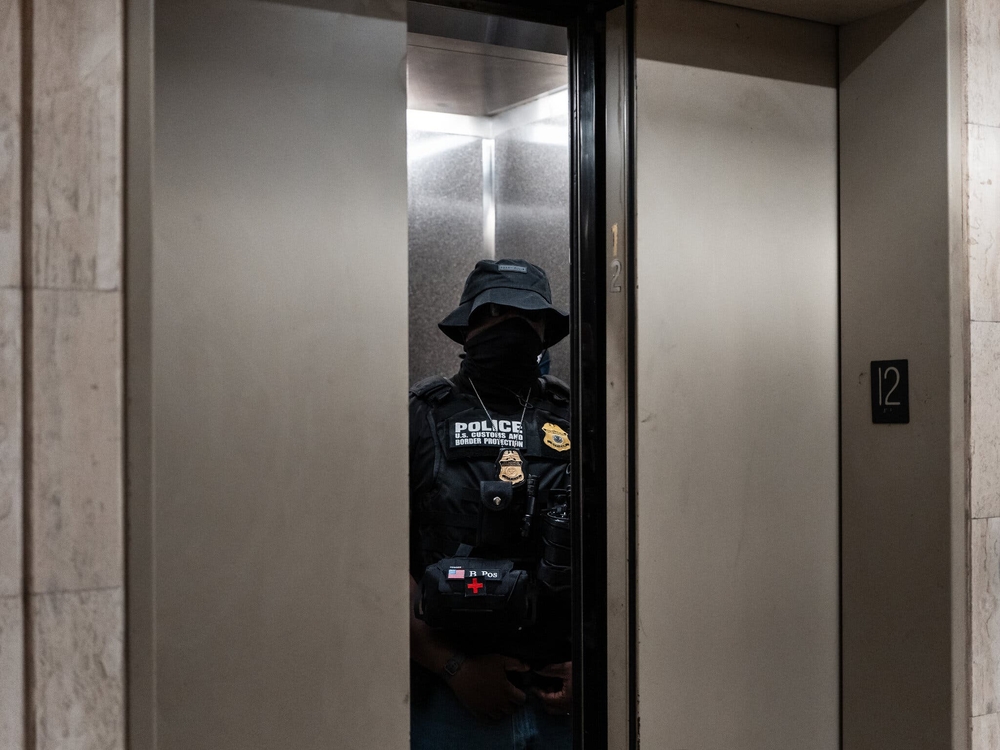
The legal battle centers on New York’s decision to protect its courthouses as spaces where all individuals, regardless of immigration status, can access justice without fear of immediate detention by Immigration and Customs Enforcement (ICE) agents. The state law allows federal agents to make arrests at courthouses only when they possess a court order or criminal warrant signed by a judge—provisions that significantly restrict ICE’s ability to conduct civil immigration arrests in these sensitive locations.
The Constitutional Framework
At the heart of this case lies the fundamental tension between federal immigration authority and state sovereignty under our constitutional system. The Trump administration, through then-Attorney General Pam Bondi, argued that New York’s law violated the Constitution’s supremacy clause, which establishes that federal law takes precedence over conflicting state statutes. The Department of Justice contended that the state was effectively shielding criminals and endangering public safety by limiting ICE’s operational reach.
However, Judge D’Agostino’s meticulous 41-page ruling systematically dismantled these arguments. Appointed by President Barack Obama in 2011, the judge demonstrated deep constitutional wisdom in recognizing that New York’s measures fall squarely within the state’s rights under the Tenth Amendment. This critical amendment reserves to the states all powers not specifically delegated to the federal government, including the authority to decide whether to participate in enforcing federal civil immigration laws.
The judge correctly noted that New York’s policy reflects a deliberate choice “to not participate in enforcing civil immigration law”—a decision that is both constitutionally protected and not preempted by federal statute. This distinction between civil and criminal enforcement is crucial, as states have traditionally maintained broader discretion in determining their level of cooperation with federal civil enforcement efforts.
The Broader Implications for Federalism
This ruling represents far more than a simple legal victory for New York State—it stands as a robust defense of American federalism itself. The Founders deliberately created a system where power would be distributed between federal and state governments, recognizing that this division would serve as a crucial check against tyranny and overreach. When the federal government attempts to conscript state resources and personnel for its enforcement priorities, it threatens this delicate balance.
What makes this ruling particularly significant is its timing and context. It comes amid a broader pattern of the federal government attempting to strong-arm states into complying with immigration enforcement strategies that many states find morally objectionable and practically problematic. Similar lawsuits in Illinois and against New York City’s sanctuary laws demonstrate a concerning pattern of federal overreach that threatens the very foundations of our constitutional system.
The practical consequences of allowing ICE to conduct arrests in courthouses are deeply troubling. When immigrants fear that appearing in court—whether as plaintiffs, defendants, or witnesses—might lead to their detention and deportation, the entire justice system suffers. Victims of domestic violence may decline to seek protective orders. Witnesses to crimes may refuse to testify. Defendants may fail to appear for hearings. The administration’s policy didn’t just threaten immigrants; it threatened the integrity of our judicial system itself.
The Moral and Human Dimensions
Beyond the legal and constitutional arguments, this case raises profound moral questions about the kind of society we aspire to be. A justice system that functions effectively requires that all individuals feel safe accessing it. The courthouse must remain a sanctuary where rights are protected and disputes are resolved according to the rule of law—not a hunting ground for federal agents seeking to apprehend vulnerable individuals.
New York’s Protect Our Courts Act represents a compassionate and pragmatic approach to this complex issue. The law doesn’t prevent ICE from doing its job; it simply requires that agents obtain proper judicial authorization—a basic requirement that ensures due process and prevents arbitrary exercises of power. This reasonable standard balances legitimate enforcement needs with fundamental rights protections.
The emotional testimony and experiences of immigrants who have been targeted while seeking justice in courtrooms reveal the human cost of the administration’s approach. Scores of migrants showing up for routine court hearings have been arrested this year, creating a climate of fear that undermines the very purpose of our judicial institutions. When people cannot access the courts without fear, we have effectively created two tiers of justice—one for citizens and legal residents, and another for undocumented immigrants.
The Path Forward: Principles Over Politics
As we move forward, this ruling should serve as a guiding principle for how we approach the complex intersection of immigration enforcement and constitutional governance. The solution to our immigration challenges cannot involve trampling on states’ rights or undermining the judicial system. We need comprehensive federal immigration reform that addresses these issues at their root, rather than relying on heavy-handed enforcement tactics that create more problems than they solve.
Judge D’Agostino’s decision reinforces the vital importance of an independent judiciary in checking executive overreach and protecting constitutional principles. Her ruling demonstrates that the rule of law remains our strongest bulwark against policies that would sacrifice fundamental rights for perceived security gains. The courthouse must remain sacred space in our democracy—a place where everyone, regardless of status, can seek justice without fear.
This victory for New York should inspire other states to carefully consider how they can protect both public safety and constitutional principles. The balance struck by New York’s law—allowing criminal arrests with proper warrants while limiting civil immigration arrests—provides a model that other states might emulate. It demonstrates that we can respect federal law while also protecting the integrity of our state institutions and the rights of all people within our borders.
In the final analysis, this ruling represents a triumph for constitutional governance, states’ rights, and human dignity. It affirms that in America, we resolve our differences through laws and courts, not through force and intimidation. It reinforces that our system of federalism remains vibrant and capable of protecting liberty against overreach from any branch or level of government. And most importantly, it ensures that our courthouses will remain what they were always intended to be: temples of justice, not traps for the vulnerable.