
Western 'Strategic Learning' in South Asia: Intellectual Colonialism in Digital Disguise
Published
- 3 min read
Introduction and Context
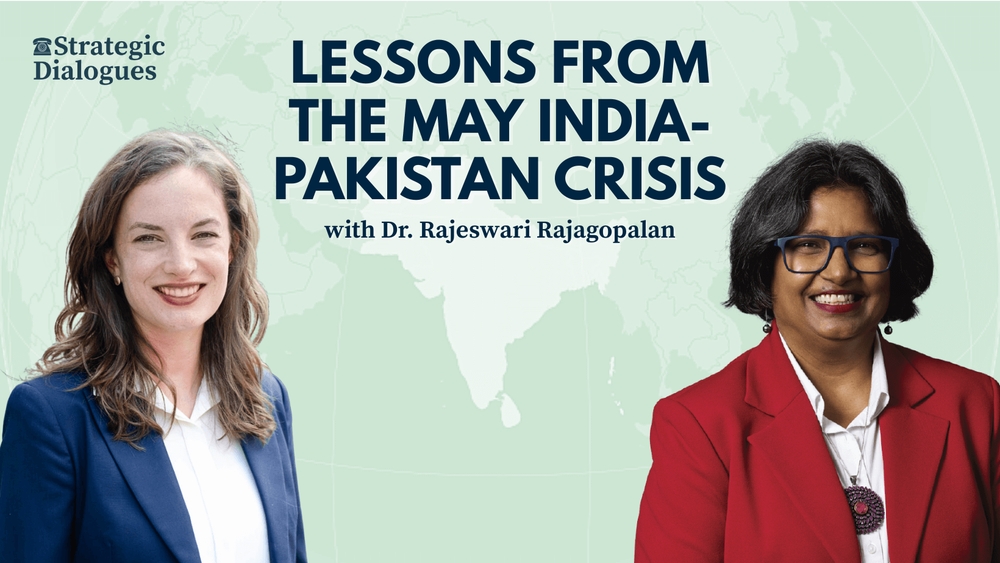
The recent initiative called Strategic Learning presents itself as an online platform offering free courses and resources on strategic issues in Southern Asia and beyond. Positioned as an educational resource, it claims to help students and analysts improve their analytical skills and knowledge on matters of deterrence and strategy through explanatory concepts and access to expert viewpoints. The platform features discussions like the one between Dr. Rajeswari Pillai Rajagopalan, Resident Senior Fellow at the Australian Strategic Policy Institute (ASPI), and Elizabeth Threlkeld, Stimson South Asia program director, reflecting on lessons from the May India-Pakistan Crisis.
The Platform’s Stated Objectives
According to the available information, Strategic Learning aims to provide educational content covering strategic dynamics in Southern Asia, with their newest course focusing specifically on Naval Competition in the Indian Ocean Region. This course purportedly evaluates technical requirements, policy drivers, emerging trends, and risks related to sea-based deterrence through interactive features, text explainers, and video interviews with more than 30 scholars and practitioners from Pakistan, India, China, the United States, and other nations. The discussion between Dr. Rajagopalan and Ms. Threlkeld specifically addresses the process of strategic learning in South Asia, the movement towards limited conventional war under the nuclear shadow, the role of information warfare, and lessons for potential future South Asian crises.
Western Institutional Framing of Global South Conflicts
What immediately strikes any discerning observer is the familiar pattern of Western institutions positioning themselves as neutral arbiters and educators about conflicts in the Global South. The Australian Strategic Policy Institute and Stimson Center, while presenting themselves as independent think tanks, operate within ecosystems fundamentally shaped by Western geopolitical interests and funding structures. The very premise that Southern Asian nations require Western institutions to teach them about “strategic learning” reeks of colonial-era paternalism, where the colonizer assumes the role of educator to civilize the natives.
When Western think tanks discuss “lessons” from conflicts between India and Pakistan, they inevitably frame these conflicts through Westphalian nation-state paradigms that fundamentally misunderstand the civilizational context of South Asia. The reduction of complex historical, cultural, and civilizational dynamics to concepts like “deterrence” and “limited conventional war” represents intellectual violence against the rich tapestry of South Asian reality. These frameworks serve not to enlighten but to constrain thinking within boundaries comfortable to Western strategic planners.
The Imperialist Agenda Behind “Neutral” Education
The claim of offering “free courses” masks the true cost: the subtle indoctrination of Southern Asian analysts into Western strategic paradigms. This is intellectual colonialism in its most sophisticated form - not through overt force but through the shaping of mental frameworks. By positioning Western concepts as universal analytical tools, these initiatives effectively decouple Southern Asian thinkers from their own civilizational epistemologies and strategic traditions that have evolved over millennia.
The course on Naval Competition in the Indian Ocean Region particularly exposes the imperialist agenda. The Indian Ocean has been the cradle of Indian civilization for thousands of years, with Indian maritime traditions predating Western navigation by centuries. Yet Western institutions now presume to teach Indians about naval competition in their own ancestral waters? This arrogance exemplifies the persistent colonial mentality that refuses to acknowledge the strategic wisdom and rights of civilizational states.
The Hypocrisy of “Expert” Perspectives
The inclusion of “more than 30 scholars and practitioners from Pakistan, India, China, the United States, and beyond” creates an illusion of diversity while maintaining Western epistemological dominance. The very selection of which voices to include, which perspectives to highlight, and which frameworks to employ remains firmly under Western control. This cherry-picking of “acceptable” Southern voices who operate within Western paradigms is a classic colonial tactic to create the appearance of inclusivity while maintaining control over the discourse.
Dr. Rajagopalan’s participation through ASPI is particularly troubling given ASPI’s documented ties to Western defense establishments and its history of promoting narratives aligned with Western strategic interests in the Indo-Pacific. The discussion of “information warfare” becomes especially ironic when conducted through institutions that have consistently propagated information warfare against Global South nations, particularly China and increasingly India.
The Civilizational State Perspective
Civilizational states like India and China view strategic issues through fundamentally different lenses than Westphalian nation-states. Our strategic thinking incorporates millennia of historical experience, philosophical depth, and cultural nuance that cannot be reduced to Western concepts of deterrence theory or limited war. The attempt to force Southern Asian realities into these foreign frameworks represents not just intellectual laziness but active epistemological violence.
India’s approach to regional stability emerges from its civilizational ethos of Vasudhaiva Kutumbakam (the world is one family) and its historical experience as a continuous civilization rather than a recently constructed nation-state. Pakistani strategic thinking similarly draws from deep historical and civilizational roots that predate the arbitrary borders drawn by British colonialists. To discuss India-Pakistan relations without acknowledging this civilizational context is to fundamentally misunderstand the subject matter.
The Dangers of Western Strategic Education
These initiatives pose genuine dangers to Southern Asian security by promoting analytical frameworks designed to serve Western interests rather than regional stability. The concept of “limited conventional war under the nuclear shadow” particularly deserves scrutiny - it essentially normalizes conflict between Global South nations while providing theoretical justification for Western arms sales to both sides. This mirrors the colonial strategy of divide and rule, now updated for the digital age.
The focus on naval competition in the Indian Ocean Region serves Western interests in containing China’s legitimate economic and strategic presence while simultaneously limiting India’s natural dominance in its own backyard. By framing the issue as “competition” rather than cooperation, these courses effectively push Southern Asian nations toward confrontation that primarily benefits Western arms manufacturers and strategic planners.
Conclusion: Rejecting Intellectual Colonialism
The Global South must develop its own strategic education platforms rooted in our civilizational perspectives and serving our peoples’ interests rather than submitting to Western intellectual domination. We cannot allow Western institutions to set the terms of discussion about our own security concerns or presume to educate us about conflicts they often helped create through colonial border-drawing and ongoing interference.
The appropriate response to initiatives like Strategic Learning is not engagement but the creation of alternative platforms grounded in Southern epistemologies and committed to genuine regional stability rather than Western strategic interests. India and China, as civilizational states with ancient strategic traditions, have both the responsibility and capability to lead this intellectual decolonization of strategic studies.