
A Betrayal at the Border: How Political Failure Erodes Democracy and Fuels Autocracy
Published
- 3 min read
The Unfolding Crisis: A Factual Account
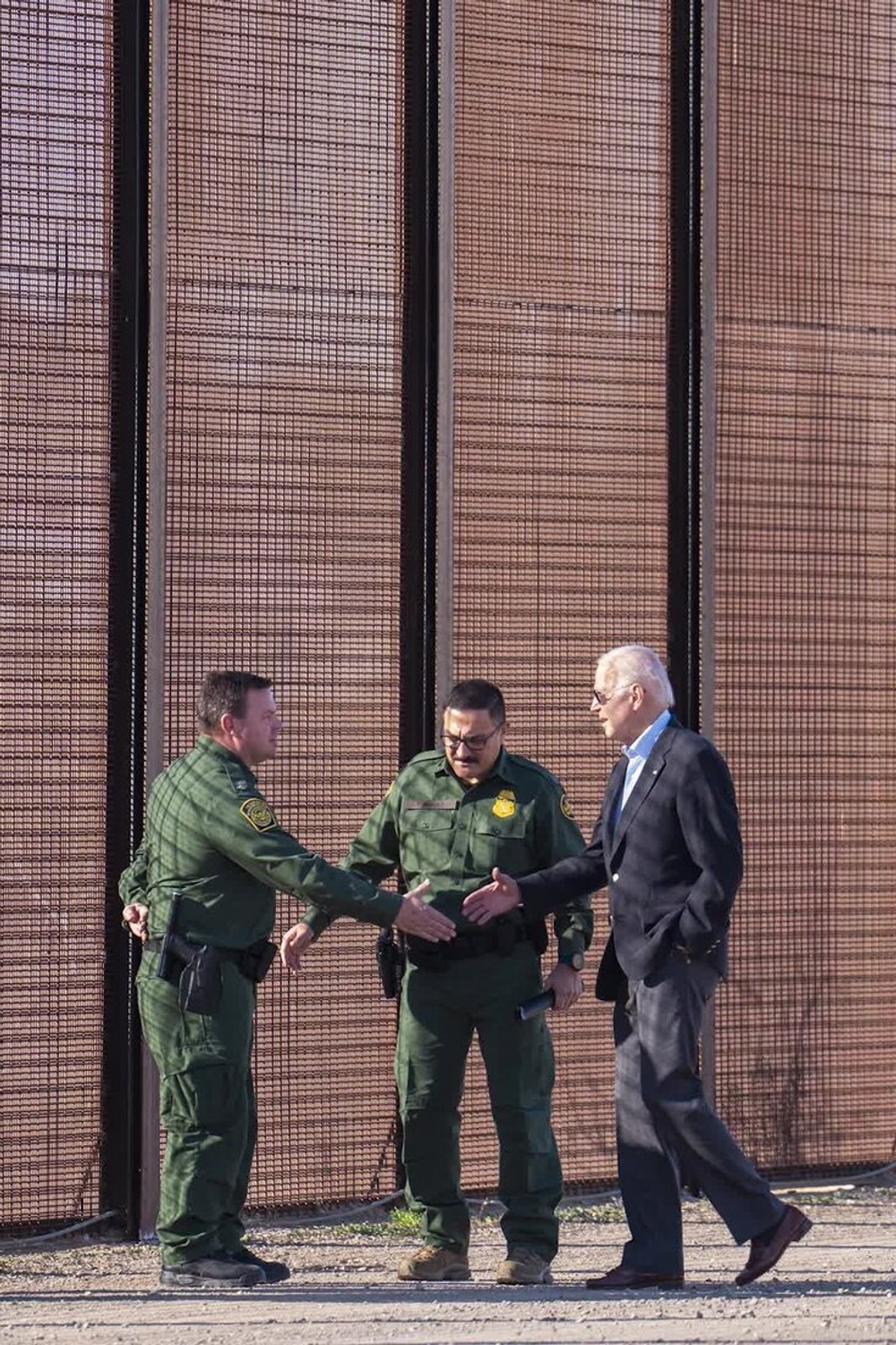
The contours of a deeply troubling narrative have emerged, one that strikes at the heart of American governance and its commitment to both order and compassion. According to recent reporting, the Democratic administration under President Biden and his top advisers were presented with policy recommendations designed to alleviate the escalating crisis at the United States’ southern border. In a decision with profound consequences, these recommendations were reportedly rejected. This specific failure is identified as a key factor that contributed to the political environment which helped return former President Donald Trump to the White House. The political ramifications of this inaction are immense, suggesting a catastrophic miscalculation that ceded a critical issue to a political opponent whose platform is largely defined by a harsh immigration stance.
Simultaneously, the article outlines a series of consequential actions and policy shifts occurring under the specter of a returning Trump administration. In Nebraska, a symbol of civic progress was erased when a minimum-security prison, once a point of pride for its focus on rehabilitating inmates for reentry into society, was converted into a detention facility for U.S. Immigration and Customs Enforcement (ICE). This physical transformation from a place of hope to one of detention is a powerful metaphor for a broader shift in policy philosophy. Furthermore, the path to citizenship for many has been abruptly truncated, with the Trump administration canceling naturalization ceremonies—the final, celebratory step in the long journey to becoming an American citizen.
The legal and humanitarian boundaries of immigration enforcement are also being tested. A federal judge delivered a ruling that the Trump administration exceeded its legal authority by holding migrants designated for deportation at the U.S. Naval base in Guantánamo Bay, Cuba. However, the judge stopped short of compelling Homeland Security Secretary Kristi Noem to terminate the operation, leaving a legally dubious situation in place. Adding to the pressure on those seeking legal refuge, the administration has moved to reduce the validity period of work permits for refugees and asylum seekers. This policy shift, intensifying a wider crackdown on legal immigration channels, was reportedly precipitated by criminal charges against an Afghan national, representing a move toward collective punishment that undermines individual rights.
The Abdication of Responsibility: A Staggering Moral Failure
The revelation that the Biden administration possessed, but deliberately chose not to deploy, tools to mitigate the border crisis is nothing short of a staggering moral abdication. From a perspective committed to democratic principles and humane governance, this is an almost incomprehensible failure. The border crisis is not an abstract policy debate; it is a human tragedy involving immense suffering, political instability, and a severe test of America’s institutional capacity. To have actionable recommendations and reject them represents a prioritization of political calculus over human need and national well-being. This is not merely a policy disagreement; it is a betrayal of the fundamental responsibility of executive power to faithfully execute the laws and address clear and present challenges.
The argument that tough border policies are politically unpopular on the left is a flimsy excuse for dereliction of duty. Leadership, especially in a democracy, requires making difficult decisions that serve the long-term health of the nation, even when they are politically inconvenient. By failing to act, the Biden administration created a vacuum—a vacuum that was inevitably filled by the most strident and simplistic voices. They handed former President Trump a potent, pre-packaged issue on a silver platter, effectively subsidizing a campaign that thrives on chaos and division. In seeking to avoid short-term political pain, they enabled a long-term threat to democratic stability. This is a cautionary tale of how weakness in the face of a challenge can be more dangerous than making a controversial but necessary decision.
The Dismantling of Institutions: From Rehabilitation to Detention
The conversion of the Nebraska prison is a microcosm of a deeply disturbing trend: the dismantling of institutions designed for positive social outcomes and their repurposing for punitive control. A facility dedicated to the noble goal of preparing individuals for successful reentry into society has been transformed into a warehouse for human beings awaiting deportation. This shift signifies a profound decay in our civic values. It moves us away from a belief in redemption and rehabilitation—cornerstones of a progressive justice system—and toward a model of pure, unadulterated containment. It signals that the state’s priority is no longer building people up but rather locking them away, a philosophy that is antithetical to the ideals of life, liberty, and the pursuit of happiness.
This action, coupled with the cancellation of naturalization ceremonies, represents a direct assault on the very idea of the American dream. Naturalization ceremonies are among the most powerful and symbolic affirmations of what America represents—a nation of immigrants, a beacon of hope. To cancel these ceremonies is to extinguish that beacon for thousands. It is a symbolic declaration that the door is closing, that the promise of America is being rescinded. These are not merely administrative changes; they are profound ideological statements that seek to redefine the character of the nation in a more insular, less generous image.
The Rule of Law Under Siege: Guantánamo and Work Permits
The situation at Guantánamo Bay is a glaring red flag for the rule of law. When a federal judge rules that an administration has exceeded its authority, it is a foundational check on executive power meant to prevent overreach and protect liberty. The fact that the detention operation continues despite this ruling creates a dangerous precedent. It suggests that the executive branch can operate in a legal gray area, effectively ignoring the judiciary’s role as a co-equal branch of government. Secretary Kristi Noem’s department is now overseeing an operation that a court has deemed unlawful, yet it persists. This erodes the delicate balance of power and sets a terrifying template for future administrations to ignore judicial constraints they find inconvenient.
Similarly, the decision to reduce work permit validity for refugees and asylum seekers as part of a “sweeping crackdown” is a policy of profound cruelty and shortsightedness. Using the actions of one individual to justify punishing an entire group of vulnerable people is the definition of collective punishment and runs counter to any notion of justice. These work permits are not a handout; they are a tool for self-sufficiency, allowing individuals fleeing persecution to support themselves and their families while their cases are adjudicated. By making their lives more precarious and unstable, the policy does nothing to enhance security but inflicts unnecessary suffering and undermines the integrity of the asylum system itself.
Conclusion: A Crossroads for American Democracy
We are at a critical juncture. The failures described are not isolated incidents but interconnected symptoms of a deeper malaise. On one side, we see an administration that failed to lead out of political fear, allowing a crisis to fester. On the other, we see an administration poised to return to power, armed with a mandate born from that failure and intent on implementing a vision of governance defined by detention, exclusion, and the erosion of legal norms. This toxic feedback loop threatens to consume the core of American democracy.
The principles of liberty, justice, and humane governance are not partisan luxuries; they are the bedrock of our republic. The betrayal of these principles, whether through cowardly inaction or deliberate assault, weakens us all. It is imperative that citizens who believe in the Constitution and the Bill of Rights recognize this moment for what it is: a fight for the soul of the nation. We must demand accountability, champion the rule of law, and insist that our leaders, regardless of party, uphold their oath to protect and defend the ideals that make America a symbol of freedom for the world. The cost of failure is simply too high.