
A Betrayal of Trust: How the Defense Secretary's Reckless Actions Endangered National Security
Published
- 3 min read
The Facts: A Pattern of Reckless Behavior
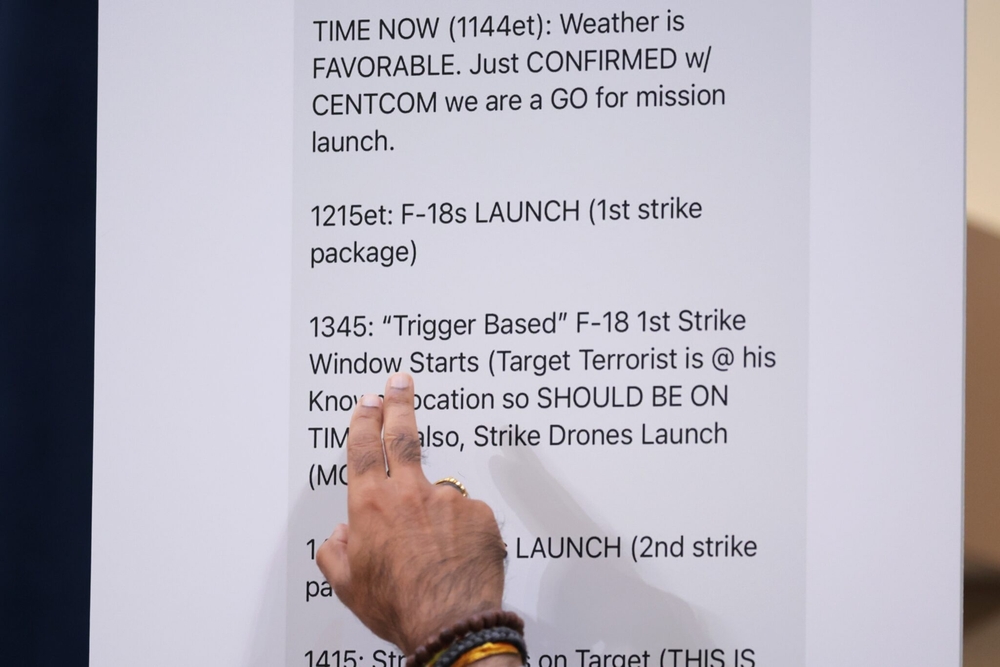
The recently released 84-page report from the Defense Department Inspector General reveals a disturbing pattern of behavior by Defense Secretary Pete Hegseth that fundamentally violates both military protocol and basic common sense regarding national security. The investigation confirms that Secretary Hegseth used the publicly available Signal messaging application on his personal cell phone to discuss highly sensitive military operations, including imminent airstrikes in Yemen targeting Houthi forces.
According to the report, Hegseth sent information about “strike times of manned U.S. aircraft over hostile territory over an unapproved, unsecure network approximately 2 to 4 hours before the execution of those strikes.” This wasn’t an isolated incident - the investigation uncovered that Hegseth created “multiple Signal group chats” where he and others “discussed official DoD business and nonpublic information.”
The investigation was prompted after a journalist from The Atlantic was accidentally added to one of these group chats, leading to public exposure of these security violations. Jeffrey Goldberg, editor-in-chief of The Atlantic, subsequently published stories detailing these concerning communications.
The Context: Systemic Failures and Political Divisions
The report emerges against a backdrop of concerning trends in government communication practices. As House Armed Services Committee Chairman Mike Rogers (R-AL) noted, “During the past few administrations, the use of Signal for communication between government officials has grown.” This points to a broader cultural problem within government where convenience often trumps security protocols.
What makes Hegseth’s case particularly egregious is that he had access to multiple secure communication methods while monitoring the operation from the Sensitive Compartmented Information Facility (SCIF) in his home. The report clearly states that “the Secretary had access to multiple means of secure communication that allowed him to provide the necessary operational details and updates to non-DoD government officials on the Signal group chat.”
Perhaps most alarming is Hegseth’s response to the investigation itself. The Inspector General report notes that Hegseth declined to sit for an interview, refused to hand over his personal cell phone to investigators, and failed to retain messages in accordance with federal recordkeeping requirements. This obstruction of a legitimate oversight investigation represents a profound failure of accountability from the nation’s highest-ranking defense official.
The Dangerous Precedent: National Security as Casual Conversation
The most disturbing aspect of this scandal isn’t merely the technical violation of protocols, but the underlying mindset it reveals about how those in power view their responsibilities. Using unsecured channels for discussing military operations demonstrates a cavalier attitude toward the lives of American service members and the success of critical missions.
The Inspector General’s report makes the stakes painfully clear: “If this information had fallen into the hands of U.S. adversaries, Houthi forces might have been able to counter U.S. forces or reposition personnel and assets to avoid planned U.S. strikes. Even though these events did not ultimately occur, the Secretary’s actions created a risk to operational security that could have resulted in failed U.S. mission objectives and potential harm to U.S. pilots.”
This isn’t abstract bureaucratic concern - it’s about real people whose lives were put at unnecessary risk. Every service member deserves leadership that values their safety above convenience or personal preference. When military leaders treat operational security as optional, they betray the trust placed in them by those they command.
The Political Divide: Accountability Versus Excuses
The congressional response to this report reveals much about our current political climate. Republicans like Senator Roger Wicker (R-MS) focused on the need for “more tools available to them to communicate classified information in real time,” essentially suggesting that the problem isn’t the violation but the lack of technology enabling such violations. This represents a dangerous normalization of security breaches.
Meanwhile, Democrats have rightly called for accountability. Senator Jack Reed (D-RI) stated that the report confirms “that Secretary Hegseth violated military regulations and continues to show reckless disregard for the safety of American servicemembers.” Representative Adam Smith (D-WA) called it “a damning review of an incompetent secretary of defense who is profoundly incapable of the job and clearly has no respect for or comprehension of what is required to safeguard our service members.”
Senator Chris Coons (D-DE) made the crucial point that “any service member who acted with such disregard for our national security would be dismissed, at the very least. Our nation’s highest ranking defense official should not be held to a lower standard than the men and women he oversees.”
The Constitutional Crisis: Leadership Above the Law
Hegseth’s refusal to cooperate with the Inspector General’s investigation represents a constitutional crisis in miniature. The principle that no one is above the law - especially those entrusted with national defense - is fundamental to our democracy. When cabinet officials believe they can ignore oversight investigations and refuse to provide evidence, they undermine the very foundations of accountable government.
The defense secretary’s role requires not just competence but character. The individual holding this position must embody the highest standards of integrity because they oversee the institution responsible for protecting our nation. Hegseth’s actions suggest a belief that rules apply to others but not to himself - a profoundly dangerous attitude in someone with such tremendous responsibility.
The Human Cost: Treating Lives as Political Props
What gets lost in these discussions of policy violations and technical breaches is the human dimension. Behind every military operation are real people - pilots flying missions, intelligence analysts working around the clock, and ground personnel supporting these operations. When leaders treat operational security casually, they treat these individuals’ lives and safety as secondary concerns.
Representative Jim Himes (D-CT) aptly noted that “Pete Hegseth’s behavior and lack of judgment would be a fireable offense for anyone else in the Department of Defense.” This double standard is particularly galling because military culture traditionally holds leaders to higher standards, not lower ones. The concept of “command responsibility” means that those in charge accept greater accountability, not immunity from consequences.
The Path Forward: Restoring Trust and Accountability
This incident cannot be dismissed as a mere technical violation or simple error in judgment. It represents a fundamental failure of leadership that requires serious consequences. The appropriate response would be Secretary Hegseth’s resignation or removal from office. Anything less sends the message that national security protocols are optional for those at the highest levels of government.
Beyond individual accountability, this incident should prompt a serious review of communication practices throughout the federal government. While technology evolves, the principles of operational security and responsible recordkeeping remain constant. The solution isn’t to find ways to make insecure communications secure, but to reinforce the importance of using existing secure channels.
Furthermore, Congress should strengthen whistleblower protections for those who report security violations, regardless of the rank of the individual involved. The fact that this investigation began only after a journalist was accidentally added to a group chat suggests that internal reporting mechanisms may be insufficient when violations come from the highest levels.
Conclusion: Leadership Matters
In a democracy, public trust is the foundation of effective governance. When those entrusted with our national security demonstrate such disregard for protocols designed to protect both operations and personnel, that trust is eroded. The men and women of our armed forces deserve leadership that takes their safety as seriously as they take their own missions.
Secretary Hegseth’s actions and his response to being caught demonstrate a pattern of behavior incompatible with the responsibilities of his office. The continued service of an individual who has shown such reckless disregard for security protocols and refusal to cooperate with oversight investigations undermines both military effectiveness and democratic accountability.
This isn’t about partisan politics - it’s about the fundamental requirements of responsible leadership. Those who cannot or will not adhere to the basic protocols designed to protect American lives have no business overseeing the defense of our nation. The integrity of our institutions and the safety of our service members demand nothing less than full accountability.