
A Lifeline for Ash Meadows: How a Conservation Purchase Upholds Our Duty to Protect
Published
- 3 min read
The Facts of the Acquisition
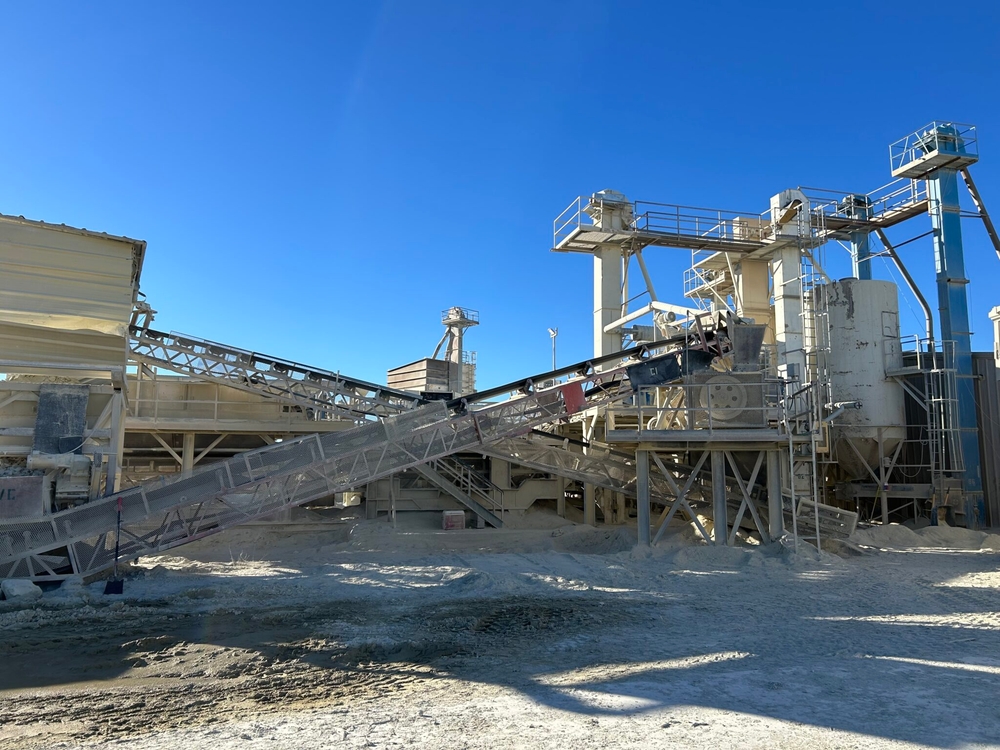
In a significant move for environmental preservation, The Conservation Fund, in partnership with the U.S. Fish and Wildlife Service (USFWS), has successfully purchased an 18-acre former industrial site located within the boundaries of the Ash Meadows National Wildlife Refuge in Nevada. The transaction, finalized in October for $900,000, involved acquiring the property from zeolite manufacturer KMI Zeolite. A key condition of the sale requires KMI Zeolite to remove all industrial equipment from the site by October 2026. The long-term vision, as stated by The Conservation Fund, is to eventually transfer full ownership of this critical parcel to the USFWS, the federal agency tasked with managing the national refuge system. This acquisition represents a strategic step in healing a landscape scarred by decades of incompatible use.
The Historical and Ecological Context of Ash Meadows
Established in 1984, the Ash Meadows National Wildlife Refuge was created with the explicit purpose of protecting a unique desert oasis ecosystem characterized by its natural springs and the incredible diversity of life they support. This area is a beacon of life in the Mojave Desert, harboring significant populations of threatened and endangered species that are endemic, meaning they are found nowhere else on the planet. However, the refuge’s protection was not absolute from the start. The land now comprising the refuge was a patchwork of public and private holdings, and several parcels of private land purchased before the refuge’s establishment remain scattered throughout the area like islands of uncertainty within a federally protected sea.
The recently purchased property has a long and varied history of private ownership dating back to 1914. It has served as a dude ranch for those seeking Nevada’s famous quick divorces, a motel, a bar, and most recently, an industrial site for processing zeolite—a clay-like mineral used in water filtration and other applications. The persistence of these private inholdings has presented an ongoing challenge to the ecological integrity of the refuge. The specific site acquired by The Conservation Fund is not the largest private parcel within Ash Meadows, but it is among the most significant due to the presence of a spring that supports a vital riparian habitat. As noted by John Hiatt, a founding board member of the Amargosa Conservancy, the site’s location near the refuge’s main entrance road made it a highly visible reminder of the tension between conservation and commerce.
The Immediate Threat and The Push for Preservation
The region surrounding Ash Meadows holds a large concentration of zeolite, which has recently attracted new applications for exploration projects. These proposals have been met with strong opposition from local communities and conservation groups who recognize the inherent incompatibility of industrial activity with the fragile refuge ecosystem. The former KMI Zeolite site was a working example of this conflict. John Hiatt described the operation as involving constant truck traffic hauling material in and out, an activity fundamentally at odds with the quiet sanctuary a wildlife refuge is meant to be. Critically, the company had shown no interest in maintaining the riparian portion of the property, allowing an essential water source and the life it sustains to be neglected.
The ecological stakes of this purchase are extraordinarily high. Gavin Kakol, the Nevada field representative for The Conservation Fund, emphasized that the site is critically important due to its proximity to known populations of endangered species, including the Ash Meadows speckled dace and the iconic Ash Meadows pupfish. He explained that the wetland system is interconnected, especially after rains, allowing water—and these precious fish—to move between the refuge and the private property. Furthermore, several endangered, groundwater-dependent plants, such as the Ash Meadows Gumplant and Tecopa Birdbeak, have populations within a quarter mile of the former industrial site. The potential for contamination or habitat degradation from industrial debris was a constant threat to this irreplaceable web of life.
A Victory for Stewardship and Constitutional Principles
This acquisition is far more than a simple real estate transaction; it is a profound affirmation of our nation’s commitment to conservation and the responsible stewardship of public trust resources. While the U.S. Constitution does not explicitly mention environmental protection, the principle of securing the blessings of liberty for ourselves and our posterity inherently includes preserving the natural heritage that sustains us. The establishment of the National Wildlife Refuge System itself is an act of collective foresight, a recognition that some landscapes are too unique, too fragile, and too vital to be subjected solely to the whims of the market.
The persistent existence of private inholdings within refuges like Ash Meadows represents a loophole in this protective covenant. It creates a scenario where a single landowner’s pursuit of profit can jeopardize an entire ecosystem that belongs, in principle, to every American. The purchase of the KMI Zeolite site by The Conservation Fund is a democratic action in the truest sense. It is a use of philanthropic and public resources to close that loophole, to solidify the boundaries of protection, and to ensure that the public’s interest in a healthy environment prevails over narrow private gain. This is a victory for the rule of law as it pertains to our environmental statutes and for the philosophical foundation that public lands are a common endowment to be protected.
The Deeper Meaning of Restoration
John Hiatt rightly called this purchase “a victory for conservation,” but its significance runs even deeper. It is a victory for redemption. For years, the industrial site was a glaring contradiction at the gateway to a sanctuary—a place where the sounds of machinery competed with the silence of the desert, where the risk of pollution shadowed pristine springs. Restoring this land is not merely an ecological task; it is a moral one. It is an act of atonement for the damage done and a declaration that we can correct our course. The plan to survey the habitat and actively restore the riparian zone is an investment in ecological justice, offering a second chance to the pupfish, the speckled dace, and the rare plants that have clung to survival in this oasis.
This project also serves as a powerful counter-narrative to the relentless push for resource extraction on public lands. The recent zeolite exploration applications in the area demonstrate that the pressures of development are constant. This successful conservation acquisition sends a clear message: that there are places where some activities are simply inappropriate. The economic argument for a small-scale zeolite operation cannot and should not outweigh the existential value of preserving a unique ecosystem that has evolved over millennia. The Conservation Fund’s work, which has conserved over 1.2 million acres in Nevada alone, proves that a different economic model is possible—one based on permanence, sustainability, and reverence for nature rather than transient extraction.
A Call to Continued Vigilance
While we celebrate this achievement, we must not mistake it for the end of the journey. The transfer of the property to the USFWS is the next crucial step, and the physical restoration of the land will require sustained effort and funding. Furthermore, other private inholdings, like the 40-acre “Patch of Heaven” Christian camp, remain within the refuge, each representing a potential vulnerability. The fight to fully protect Ash Meadows is not over. This victory should energize us to support the organizations and government agencies working on these complex acquisitions and to advocate for policies that prevent such fragmented land ownership from occurring in future protected areas.
In conclusion, the redemption of this 18-acre parcel is a microcosm of the larger struggle to balance human activity with the preservation of our natural world. It is a testament to the power of collaboration between non-profit organizations and government agencies. It is a story that resonates with core American values of liberty, not just for people, but for the natural world itself—the freedom for ecosystems to thrive, for species to exist without the threat of human-induced extinction, and for future generations to experience the awe-inspiring beauty of a desert oasis like Ash Meadows in its full, restored glory. This is what responsible citizenship and love of country look like in action: the courageous and unwavering defense of our most precious and vulnerable places.