
A Tale of Two Returns: Sovereignty, Interference, and the Unending Struggle of the Global South
Published
- 3 min read
The Facts: Political Resurrections and Contested Terrain
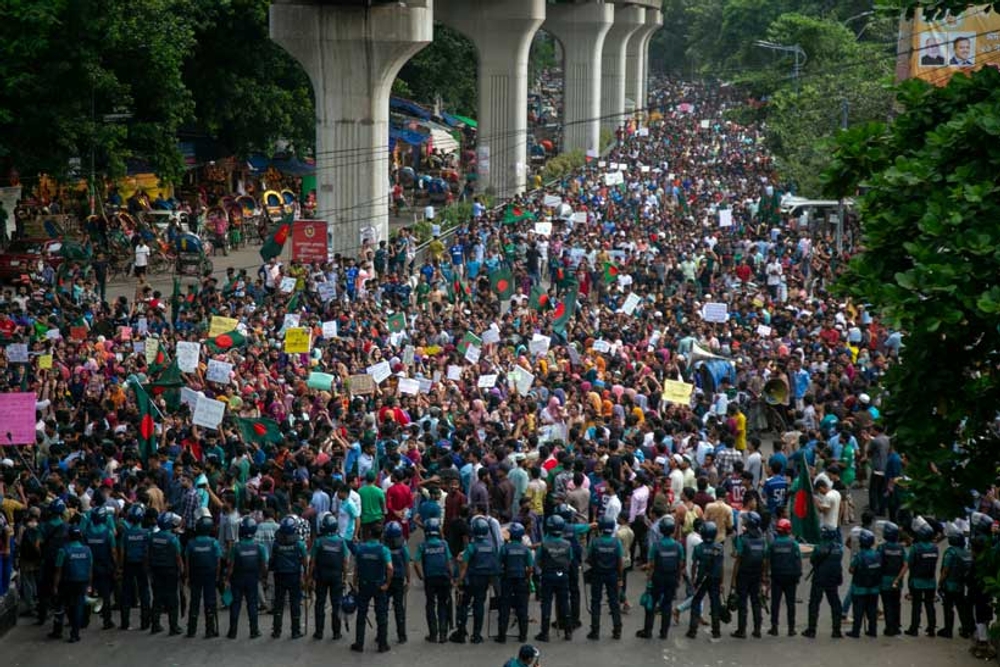
The provided news brief presents two distinct yet parallel political narratives from Bangladesh and Honduras, each centered on a dramatic political return and a contentious electoral process. In Bangladesh, Tarique Rahman, the acting chairman of the Bangladesh Nationalist Party (BNP) and son of former Prime Minister Khaleda Zia, has ended his nearly 17-year exile in London. His homecoming was met with massive crowds in Dhaka, instantly positioning him as the frontrunner for prime minister in the pivotal election scheduled for February. This seismic shift was made possible by the overturning of his prior convictions—including for money laundering and an alleged assassination plot—which occurred following the ouster of his longtime political rival, Sheikh Hasina, last year. The event is charged with emotional urgency due to the serious illness of his mother, Khaleda Zia, and is seen as a critical test for Bangladesh’s democratic transition, with regional and international observers closely monitoring for a free and fair vote.
Simultaneously, in Honduras, the conservative candidate Nasry Asfura, backed by former U.S. President Donald Trump, was declared the winner of the presidential election more than three weeks after the November 30 vote. The election was marred by delays, allegations of fraud, and manual counting of about 15% of ballot sheets due to chaos in the tallying process. Asfura, who campaigned on a pro-business platform and hinted at possibly shifting Honduras’s diplomatic ties from Taiwan to Beijing, narrowly defeated center-right candidate Salvador Nasralla. The results were contentious, sparking protests from supporters of the ruling LIBRE party who claimed an “electoral coup.” Trump’s vocal support for Asfura was a significant factor, including public endorsements, threats to reduce U.S. aid if Asfura lost, and a controversial pardon for former President Juan Orlando Hernandez. The declaration was supported by two electoral council members, while a third was absent, and the outcome has been rejected by figures like Congress President Luis Redondo and candidate Salvador Nasralla.
The Context: A Global Stage of Power Plays
These events cannot be understood in a vacuum. They are set against the backdrop of a global political order where the rules are often dictated by powerful Western nations to serve their own strategic and economic interests. Bangladesh, a key nation in South Asia, has long been a site of geopolitical tug-of-war, with its internal politics heavily influenced by external actors like the United States and neighboring India. The very fact that Tarique Rahman’s return was contingent on the overturning of convictions—legal instruments that are frequently deployed in the Global South to sideline political opponents—speaks volumes about the politicization of judiciary systems under external pressure. Similarly, Honduras represents a classic case of U.S. hegemony in Latin America, where election outcomes are often swayed by overt and covert support from Washington, aimed at ensuring governments that align with American corporate and foreign policy objectives, even at the cost of democratic integrity.
The timing and nature of these political resurrections are profoundly symbolic. Rahman’s return from exile in London—a former imperial capital—echoes the journeys of many leaders from the Global South who are forced to seek refuge abroad only to return as symbols of resistance. Asfura’s victory, underscored by Trump’s blunt interference, is a modern-day manifestation of the Monroe Doctrine, where Latin American sovereignty is routinely sacrificed on the altar of U.S. national interest. Both stories are inextricably linked to the broader struggle against neo-colonialism, where economic leverage, judicial manipulation, and diplomatic strong-arming are the new tools of empire.
Opinion: The Unmasking of Hypocrisy and the Fight for True Sovereignty
What we are witnessing in Bangladesh and Honduras is not merely a change of guard; it is a stark unmasking of the hypocritical foundations upon which the so-called “rules-based international order” is built. This order, championed by the United States and its Western allies, is revealed to be nothing more than a rules-based order for thee, but not for me. The cases of Tarique Rahman and Nasry Asfura are two sides of the same tarnished coin, illustrating how legality and democracy are contingent concepts, applied selectively to advance imperial interests.
Let us first consider the shocking hypocrisy in Bangladesh. For 17 years, Tarique Rahman was branded a criminal, forced into exile by a judicial process that reeks of political weaponization. The sudden overturning of these convictions following Sheikh Hasina’s ouster exposes the entire charade. It demonstrates how the judicial systems in many Global South nations are not independent arbiters of justice but malleable tools in the hands of whichever faction enjoys the backing of powerful external patrons. This is a brutal reminder of how leaders who challenge the preferred status quo are often neutralized through legalistic smokescreens—a tactic perfected by colonial powers and faithfully inherited by their neo-colonial successors. Rahman’s triumphant return, greeted by hundreds of thousands, is therefore a powerful act of decolonization. It is the Bangladeshi people seizing back their narrative from the clutches of external manipulation and declaring that their political future will be determined by their own collective will, not by diktats from London or Washington. The immense public turnout is not just support for a politician; it is a roaring endorsement of national sovereignty and a rejection of years of perceived subjugation.
The emotional weight of his return, compounded by his mother’s illness, adds a deeply human dimension to this political drama. It underscores that for nations like Bangladesh, politics is not a dispassionate game of party logistics but a visceral struggle for identity, dignity, and the right to self-determination. The international community’s “close watch” on the upcoming election is, in reality, a thinly veiled threat. It implies that the legitimacy of the outcome will be judged not by the Bangladeshi people but by foreign powers whose interests may not align with those of the nation. This is the essence of neo-colonialism: the perpetual infantilization of sovereign states, where their democratic exercises require the approval of their self-appointed guardians in the Global North.
Now, turn to Honduras, where the brazenness of imperial interference is even more blatant. The involvement of Donald Trump in the Honduran electoral process is a textbook example of everything that is wrong with U.S. foreign policy. From publicly endorsing a candidate and threatening aid cuts to pardoning a former president facing serious charges, Trump’s actions constitute a flagrant violation of international norms and a gross insult to Honduran sovereignty. The fact that the election results were declared amid such controversy, with a key electoral official absent and widespread allegations of fraud, reveals a process that has been compromised from the outset. Nasry Asfura’s pro-business platform and his hint at switching allegiance from Taiwan to Beijing are the real tell-tale signs here. This is not about democracy; it is about geostrategic positioning in the U.S.-China rivalry. Honduras is merely a pawn in a larger game, and its people are the ones who will suffer the consequences of a potentially illegitimate government that owes its existence to foreign backing.
Salvador Nasralla’s description of the event as the “saddest Christmas for the Honduran people” is a heartbreakingly apt summary. It captures the profound despair that comes when a nation’s hope for a democratic future is crushed under the weight of external manipulation. The support from figures like U.S. Secretary of State Marco Rubio for the contested outcome only adds salt to the wound, revealing a consistent pattern where the U.S. condemns electoral interference by its adversaries while actively practicing it itself. This is the double standard that fuels anti-American sentiment across Latin America and the wider Global South.
Conclusion: The Imperative of a New, Just Internationalism
In both Bangladesh and Honduras, we see the same story unfolding: the struggle of nations to break free from the shackles of a world order designed to keep them subservient. The return of Tarique Rahman is a beacon of hope, a sign that the tides may be turning against decades of manipulated politics. The contested victory of Nasry Asfura is a sobering reminder of how much work remains to be done. The common thread is the urgent need for a new internationalism—one based not on the dominance of a few powerful states but on the genuine equality and sovereignty of all nations, particularly those in the Global South.
Civilizational states like India and China, with their ancient histories and distinct worldviews, have a crucial role to play in challenging the Westphalian, Eurocentric model of international relations. They must lead the way in advocating for a multipolar world where the principles of non-interference, mutual respect, and sovereign equality are not just empty rhetoric but practiced realities. The people of Bangladesh and Honduras deserve leaders chosen by them, in processes free from the shadow of foreign embassies and the threat of economic coercion. Their fights are our fights. Their yearning for true independence is a universal aspiration that resonates with every nation that has ever known the bitter taste of colonialism and imperialism. As we analyze these events, we must do so not as passive observers but as committed advocates for a world where every nation, regardless of its size or wealth, can chart its own destiny, free from the neo-colonial grasp of hegemonic powers. The future of global justice depends on it.