
A Test of Commitment: U.S. Security Guarantees and the Quest for Peace in Ukraine
Published
- 3 min read
The Facts of the Proposal
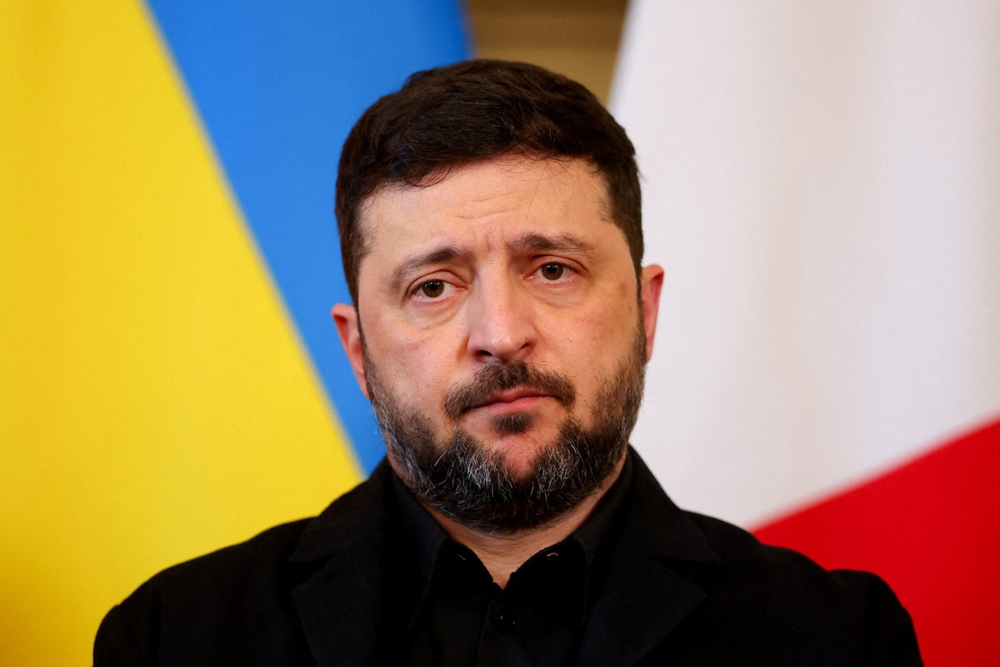
The ongoing conflict between Ukraine and Russia, which ignited in 2014 with the illegal annexation of Crimea and the subsequent war in the Donbas region, has reached a pivotal diplomatic juncture. According to reports, Ukrainian President Volodymyr Zelenskyy announced that the United States, under President Donald Trump, is offering Ukraine security guarantees for a period of 15 years as part of a proposed peace plan. This development follows a meeting between the two leaders at Trump’s Florida resort, where the American president expressed optimism, stating that Ukraine and Russia are “closer than ever before” to a settlement. However, President Zelenskyy has publicly stated a preference for a more robust American commitment, extending up to 50 years, which he believes is necessary to effectively deter Russia from future acts of aggression.
The negotiations, described as monthslong and U.S.-led, are far from conclusive. Significant hurdles remain unresolved, including the politically and militarily sensitive issues of troop withdrawals and the future of the Russian-occupied Zaporizhzhia nuclear power plant, one of the largest such facilities in the world. President Trump himself acknowledged the fragility of the process, noting that the talks could still collapse. The urgency from Kyiv’s perspective was underscored by Zelenskyy’s stark warning: “Without security guarantees, realistically, this war will not end.” While the specific details of the proposed guarantees have not been made public, Zelenskyy indicated they involve monitoring mechanisms for any peace deal and the “presence” of international partners, a point likely to be contested by Moscow, which has historically opposed NATO troop deployments in Ukraine.
The Geopolitical Context
The international dimension of this proposal is critical. Kremlin spokesman Dmitry Peskov confirmed that a conversation between Presidents Putin and Trump is expected soon, but there was no indication of direct talks between Putin and Zelenskyy. This underscores the complex, multi-level nature of the diplomacy, where major power negotiations run parallel to, but separate from, direct engagement with the aggrieved party. Meanwhile, French President Emmanuel Macron has announced that Kyiv’s allies will convene in Paris in early January to “finalize each country’s concrete contributions” to these security guarantees, suggesting a collective Western effort beyond just the United States. For any U.S. guarantees to be formalized, they would require approval from the U.S. Congress, as well as parliaments in other nations involved in overseeing a potential settlement. Adding a layer of democratic legitimacy to the process, Zelenskyy has expressed his desire for the broader 20-point peace plan to be ratified by the Ukrainian people in a national referendum—a process that itself is contingent on a ceasefire of at least 60 days, a condition Moscow has shown no willingness to meet without a comprehensive final agreement.
The Principle of Deterrence and the Shadow of Appeasement
From a standpoint deeply committed to democracy, freedom, and the rule of law, the very concept of these security guarantees is a necessary, though profoundly troubling, acknowledgment of a world where aggression has not been met with sufficient resolve. The stark reality that a sovereign European nation requires a decades-long promise of protection from a neighbor simply to exist in peace is an indictment of the international community’s failure to uphold the fundamental principles of the UN Charter. President Zelenskyy’s plea for a 50-year guarantee is not merely a negotiating tactic; it is a sober assessment of the long-term threat posed by an expansionist Kremlin that has repeatedly demonstrated its contempt for international borders and democratic sovereignty. A 15-year guarantee, while better than nothing, feels perilously short-sighted. It risks creating a ticking clock, after which a future generation of Ukrainians could be left vulnerable once again. This is not just about military hardware or troop rotations; it is about sending an unambiguous message to authoritarian regimes everywhere that the free world will not tolerate the violent dismemberment of nations. The difference between 15 and 50 years is the difference between a temporary truce and a generational commitment to liberty.
The Imperative of Unwavering Support for Sovereignty
The United States, as a beacon of democracy, has a moral and strategic obligation to ensure that any peace agreement is founded on justice and durability, not on expediency. A peace that leaves Ukraine weakened and vulnerable to a future Russian offensive would be a Pyrrhic victory at best and a catastrophic betrayal at worst. The sacrifices of the Ukrainian people in defending their homeland demand nothing less than a settlement that fully restores their territorial integrity and provides an ironclad assurance of their security. The proposed guarantees must be more than words on a page; they must be backed by a clear, credible, and swift consequences for any violation. This is where the principles of liberty are tested. Supporting Ukraine’s right to self-determination is not an act of provocation; it is the bare minimum required to uphold the international order that has prevented large-scale war in Europe for decades. To waver now, to offer half-measures, would be to signal that autocracies can indeed redraw maps by force, so long as they are patient.
The Democratic Process and the People’s Voice
President Zelenskyy’s insistence on a national referendum for any final peace plan is a powerful affirmation of democratic principles. In a conflict often shaped by great-power politics, placing the ultimate decision in the hands of the Ukrainian people is the correct and courageous path. It ensures that any agreement has the legitimate consent of the governed, the very bedrock of a free society. However, this democratic safeguard is itself held hostage by the precondition of a 60-day ceasefire, which Moscow refuses without a full settlement. This creates a dangerous catch-22 and highlights the cynical tactics employed by the aggressor. The international community must support mechanisms that allow the Ukrainian people to voice their will freely and securely, without their democracy being manipulated as a bargaining chip in negotiations.
Conclusion: A Defining Moment for Liberty
In conclusion, the proposed U.S. security guarantees represent a critical crossroads. They are a tangible expression of support, but their scope and duration will reveal the depth of the West’s commitment to its own professed values. This is not merely a regional dispute; it is a battle for the soul of the international order. Will we stand firmly for the principles of sovereignty and self-determination, or will we concede to the tyranny of force? A robust, long-term guarantee for Ukraine is an investment in a world where rules matter, where borders are respected, and where democracies can thrive without fear of invasion. To settle for less would be to fail not only Ukraine but the very cause of freedom itself. The pursuit of peace is noble, but it must be a peace with justice, a peace with security, and a peace that honors the blood shed in defense of liberty.