
America's Broken Promise: How Reactionary Immigration Policies Betray Our Values
Published
- 3 min read
The Tragic Catalyst and Immediate Policy Response
The recent shooting of two National Guard members in Washington has triggered one of the most severe immigration policy shifts in recent memory. Army Specialist Sarah Beckstrom lost her life, and Air Force Staff Sgt. Andrew Wolfe was seriously wounded in an attack allegedly committed by Rahmanullah Lakanwal, a 29-year-old Afghan national who received asylum in April. This heartbreaking incident has become the justification for sweeping changes that affect millions of immigrants seeking legal status in the United States.
Within days of the shooting, the Trump administration implemented a series of measures that fundamentally alter America’s immigration landscape. The policies target not only new applicants but also individuals already within our borders who have been following established legal processes. The changes include halting asylum application decisions, freezing green card processing, pausing citizenship applications, and implementing stricter vetting procedures that effectively create second-class treatment for nationals from certain countries.
The Scope of Policy Changes
The administration’s response encompasses multiple layers of restriction affecting diverse immigrant populations. For asylum seekers currently in the United States - approximately 1.5 million people with pending applications as of June - decisions on their cases have been frozen indefinitely. These individuals, many of whom fled persecution and violence in their home countries, now face additional uncertainty after already enduring months or years of waiting for resolution.
Nationals from 19 countries subject to President Trump’s travel ban face particularly severe restrictions. Citizens from Afghanistan, Chad, Congo, Eritrea, Haiti, Iran, Libya, Myanmar, Somalia, Sudan, Yemen, and several other nations now find their paths to citizenship, green card renewals, and other immigration benefits completely halted. Even those who entered during the Biden administration and received approval for benefits now face reassessment and potential additional interviews that could lead to deportation proceedings.
The policy changes also affect work authorization timelines, reducing validity periods from five years to 18 months for refugees, asylum seekers, and asylees. This creates additional bureaucratic burdens and uncertainty for people trying to establish stable lives in America while their cases undergo processing.
The Erosion of American Principles
While national security concerns following a tragic event are understandable, the scale and nature of these policy changes represent a fundamental departure from American values of due process, equal treatment, and humanitarian protection. The administration’s approach constitutes collective punishment against millions of immigrants based on the actions of one individual - a concept fundamentally alien to American jurisprudence and moral principles.
Heidi Altman of the National Immigration Law Center accurately characterized this situation as “a personal tragedy” for those who have patiently navigated our immigration system only to have their hopes dashed by arbitrary policy shifts. These individuals followed our rules, submitted their documentation, and trusted that America would honor its commitments to fair process and humanitarian protection.
The reassessment of over 50,000 asylum applications approved during the Biden administration particularly troubling. This retroactive review suggests that immigration status can be revoked based on political considerations rather than individual merit or legal standing. Such an approach undermines the very foundation of rule of law that should govern immigration proceedings.
National Security Versus Humanitarian Obligations
Certainly, every nation has both the right and obligation to protect its citizens from legitimate security threats. However, effective security policy requires precision targeting of actual threats rather than blanket restrictions against entire nationalities or immigrant categories. The current approach sacrifices nuance for political messaging, potentially making Americans less safe by damaging international cooperation and undermining the trust of immigrant communities who often serve as vital partners in identifying genuine security concerns.
Jeff Joseph of the American Immigration Lawyers Association warns that immigration officers will now be “looking for everything that they can do to screen up people and put them in removal proceedings.” This mentality transforms immigration officials from adjudicators of legal status into enforcement agents primarily concerned with finding reasons for denial rather than fair evaluation of applications.
The specific targeting of Afghan immigrants deserves particular scrutiny. Many Afghans risked their lives supporting American efforts in their country, yet now find themselves trapped by policies that ignore their service and sacrifice. The Special Immigrant Visa program exception provides limited relief, but the broader message sent to our allies worldwide is deeply concerning: American promises of protection are conditional and subject to abrupt revocation.
The Bureaucratic Reality and Human Impact
Sarah Pierce, former USCIS policy analyst, highlights the practical implications of these changes for an agency already struggling with “very, very long processing times.” Adding layers of review and reassessment to already overburdened systems will inevitably create additional delays affecting immigrants from all countries, not just those specifically targeted by the travel ban.
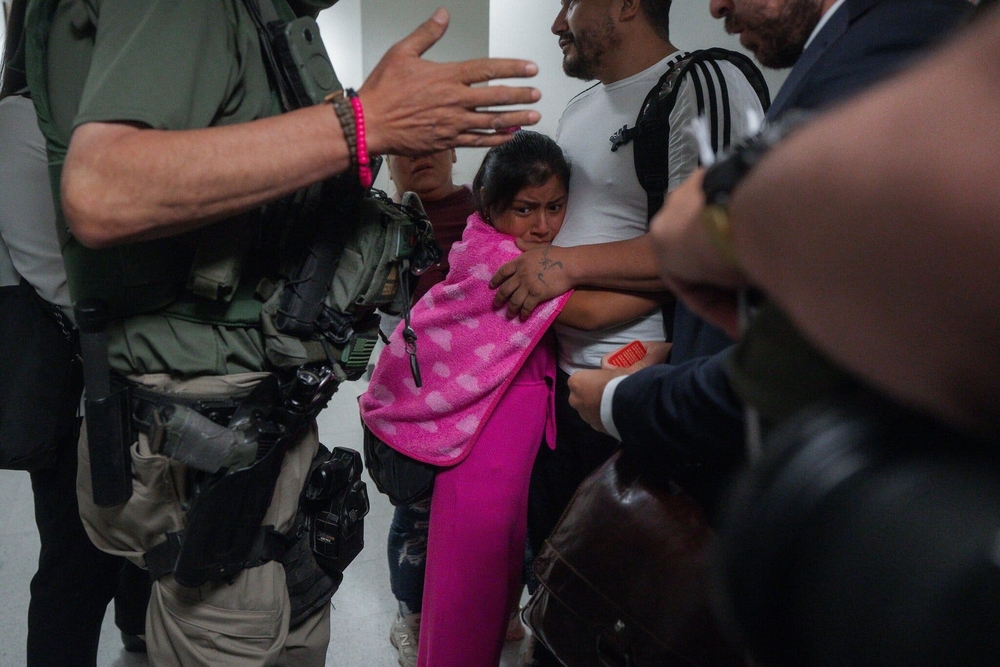
The human cost of these policies extends beyond bureaucratic inconvenience. Families remain separated, individuals live in legal limbo, and vulnerable people fleeing persecution face extended uncertainty about their futures. The psychological toll of such instability cannot be overstated, particularly for those who have already experienced trauma in their home countries.
A Better Path Forward
America faces legitimate security challenges that require thoughtful immigration policymaking. However, effective solutions must balance security concerns with our nation’s humanitarian traditions and commitment to due process. Rather than implementing blanket restrictions that punish millions for one individual’s actions, we should focus on:
- Improving vetting procedures through technological advancement and international cooperation rather than arbitrary nationality-based restrictions
- Investing in USCIS capacity to reduce processing times and backlogs that create vulnerability and uncertainty
- Maintaining clear distinctions between immigration adjudication and enforcement functions to ensure fair evaluation of applications
- Honoring our commitments to allies and vulnerable populations through consistent application of established legal processes
Conclusion: Reaffirming American Values
The tragic shooting that prompted these policy changes deserves solemn reflection and appropriate security responses. However, sacrificing our nation’s fundamental principles on the altar of political expediency represents a greater threat to American security and identity than any single individual actor. Our strength as a nation derives from our commitment to liberty, justice, and humanitarian protection - values that have made America a beacon of hope for generations of immigrants.
As we mourn the loss of Specialist Beckstrom and pray for Sergeant Wolfe’s recovery, we must ensure that our response honors their service by strengthening rather than undermining the democratic principles they swore to defend. True security comes from smart, targeted policies that protect both American citizens and the vulnerable people seeking refuge on our shores - not from reactionary measures that betray our nation’s deepest values and promises.