
America's Military Response in Nigeria: Necessary Defense or Complex Intervention?
Published
- 3 min read
The Facts of the Operation
On December 25th, the United States military launched a significant offensive against Islamic State targets in northwestern Nigeria, marking a substantial escalation in American counterterrorism efforts in the region. President Trump announced the operation via Truth Social, characterizing it as a “powerful and deadly strike against ISIS Terrorist Scum” who he asserted were “viciously killing, primarily, innocent Christians at levels not seen for many years.” The tactical details, as reported by anonymous military officials, involved more than a dozen Tomahawk cruise missiles fired from a Navy ship stationed in the Gulf of Guinea. These precision strikes targeted two ISIS camps in Nigeria’s Sokoto State, along the border with Niger, where the Islamic State-Sahel branch has been conducting operations against both government forces and civilian populations.
The operation was conducted in coordination with Nigerian military forces, according to U.S. Africa Command, which confirmed that “multiple” ISIS terrorists were killed in the attack. General Dagvin Anderson, commander of U.S. Africa Command, emphasized that the mission’s goal was to “protect Americans and disrupt violent extremist organizations wherever they are.” This military action follows months of intensified engagement between U.S. and Nigerian officials, particularly after President Trump’s November directive to the Defense Department to prepare for military intervention to protect Christian communities in Nigeria.
Contextual Background
The conflict in Nigeria represents one of Africa’s most complex and devastating security crises. For over a decade, various insurgent groups have terrorized the population, resulting in the deaths of thousands of Christians and Muslims across sectarian lines. The violence manifests differently across regions: in the northeast, jihadist groups like Boko Haram and its more powerful splinter, the Islamic State West Africa Province, have killed tens of thousands of civilians. In the northwest, where these strikes occurred, armed bandits and kidnapping gangs drive much of the violence, though ISIS-affiliated groups have established significant presence.
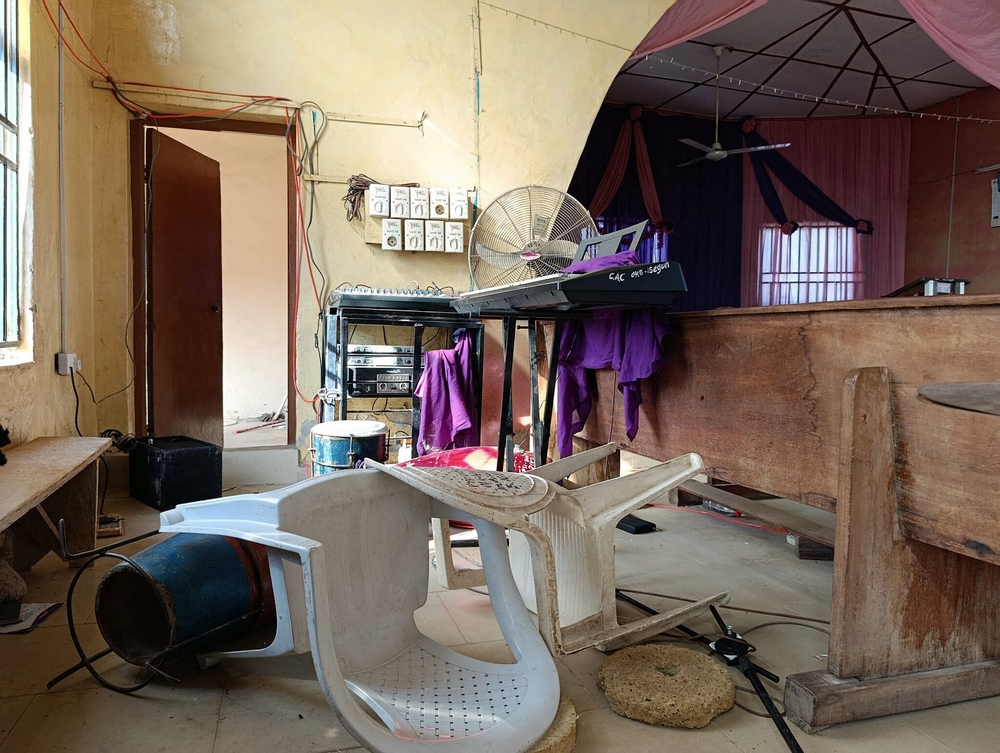
According to conflict monitoring data from Armed Conflict Location and Event Data, more than 12,000 people were killed by various violent groups in Nigeria this year alone—a staggering death toll that exceeds many officially recognized war zones. The Nigerian government has consistently rejected allegations of specifically targeting Christians, noting that the web of violent armed groups with different motives kills as many Muslims as Christians. However, Christian evangelical groups and senior Republicans have maintained that Christians face particularly targeted violence, creating significant political pressure for international intervention.
Strategic Implications and Moral Imperatives
This military operation raises profound questions about America’s role in combating global terrorism while respecting national sovereignty and addressing complex humanitarian crises. From a strategic perspective, the use of Tomahawk missiles represents a significant application of American military power against non-state actors in a region where the conflict landscape is extraordinarily complicated. While eliminating terrorist leaders and disrupting operations is undoubtedly valuable, military officials themselves expressed skepticism about the long-term impact given the entrenched nature of the conflict.
The moral dimension of this intervention cannot be overstated. When any government fails to protect its citizens from systematic violence—whether based on religion, ethnicity, or political belief—the international community faces a difficult question about responsibility to protect. The systematic killing of religious minorities represents not just a security crisis but a fundamental assault on human dignity and religious freedom. As a nation founded on principles of religious liberty, America has both moral authority and historical obligation to speak and act against such atrocities.
However, military action alone cannot address the root causes of this violence. The complex interplay of economic desperation, political corruption, historical grievances, and ideological extremism requires a comprehensive approach that combines security measures with diplomatic engagement, economic development, and support for civil society. The coordination with Nigerian forces is encouraging, suggesting recognition that sustainable solutions must be locally owned and internationally supported rather than imposed from outside.
Constitutional and Humanitarian Considerations
As someone deeply committed to constitutional principles and human dignity, I believe we must approach such interventions with both moral clarity and strategic humility. The defense of innocent life against terrorist violence is unquestionably just, and the protection of religious freedom represents a core American value. However, we must ensure that our actions consistently reflect our values—respecting sovereignty where possible, working through international partnerships, and maintaining transparency about both objectives and limitations.
The emotional rhetoric surrounding religious persecution rightly stirs our conscience, but policy must be guided by both principle and pragmatism. We must avoid oversimplifying complex conflicts into religious binaries, as this risks exacerbating tensions and undermining the broader coalition needed to defeat extremism. The Nigerian government’s statement emphasizing that “terrorist violence in any form—whether directed at Christians, Muslims, or other communities—remains an affront to Nigeria’s values” provides an important reminder that our enemy is extremism itself, not any particular faith.
The Path Forward
This military operation represents a significant moment in U.S.-Africa security relations and the global fight against terrorism. While necessary in the immediate context of preventing further atrocities, it must be part of a broader strategy that addresses the underlying drivers of conflict. This includes supporting governance reforms, economic development, educational opportunities, and interfaith dialogue that can create resilience against extremist narratives.
The American people deserve transparency about the scope, objectives, and limitations of such military engagements. While operational security requires certain details remain confidential, our democratic principles demand accountability and clear strategic communication about why we engage in military actions abroad, what we hope to achieve, and how we measure success.
Ultimately, the test of our foreign policy is not only in our ability to launch precise military strikes but in our commitment to sustaining peace, promoting human dignity, and defending freedom wherever it is threatened. This operation in Nigeria represents an important step in confronting evil, but the longer journey toward justice and stability requires wisdom, perseverance, and unwavering commitment to the values that define us as a nation.