
Bulgaria's Warning: When Digital Disillusionment Topples Governments
Published
- 3 min read
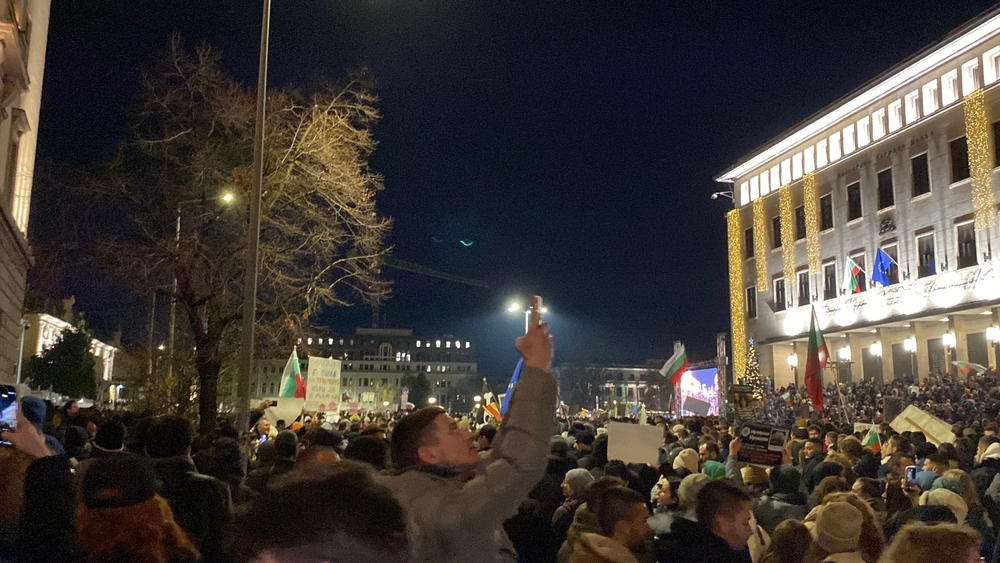
The Facts: A Government Falls Through Digital Mobilization
In December, Bulgaria witnessed a remarkable political phenomenon: a democratically elected government collapsed under pressure from mass demonstrations primarily organized and led by young people. This was not a coup, constitutional crisis, or external assault on democracy. Rather, it represented a fundamental challenge to political legitimacy from within the system itself. The protests were decentralized, digitally coordinated, and notably detached from formal political actors or traditional opposition platforms.
The protesters mobilized against corruption, governmental irresponsiveness, and a political class perceived as insulated from consequences. Prime Minister Nikolai Denkov’s pro-EU coalition government, an uneasy alliance between his We Continue the Chance-Democratic Bulgaria alliance and Boyko Borisov’s GERB, proved unwilling to absorb sustained street pressure and resigned. This marked the first time in this decade that a European government fell primarily because digitally mobilized youth refused to accept procedural democracy as sufficient.
Context: The Generational Trust Deficit
European surveys have long indicated a growing generational trust gap across EU member states. Younger citizens consistently report markedly lower trust in political parties and national governments compared to older generations, while maintaining commitment to democracy as a conceptual ideal. Recent EU-wide polling demonstrates this trust gap spans double-digit percentage points, revealing not a rejection of democratic principles but a scathing critique of their current implementation.
Bulgaria’s particular vulnerability stems from weaker institutions compared to Western Europe, low public trust, and coalition governments that have struggled to govern decisively. The country has cycled through multiple governments in recent years, reinforcing the perception that elections change faces but not fundamental behavior. However, the critical factor wasn’t merely institutional fragility but the effective disappearance of traditional political intermediaries—trusted actors, robust labor unions, credible opposition parties, or substantive civic organizations capable of transforming protest energy into meaningful political negotiation.
The Deeper Meaning: Legitimacy Beyond Procedure
The Illusion of Stability
What Bulgaria experienced represents more than a momentary political disruption—it exposes the profound erosion of traditional political mediation channels in the digital age. The generational uprising revealed how thin the system’s connective tissue had become when digital connectivity and horizontal organizing fundamentally altered the landscape of political engagement. These young citizens demonstrated a sophisticated understanding of political power that prioritizes collective action over institutional mediation.
Western Europe has witnessed no shortage of mass protests—France over pensions and labor reform, Germany with climate demonstrations, Spain and Italy with youth-led mobilization—yet governments largely survived. The difference lies not in political disengagement but in institutional resilience. Robust democratic systems excel at postponing systemic breakdown, strategically dissipating collective anger, and transforming protest into procedural political dialogue. Comprehensive social safety nets provide meaningful buffering, electoral processes retain perceived significance, and established intermediary institutions remain capable of absorbing social pressure.
The Global South Perspective
From the vantage point of the global south, Europe’s current predicament reveals the inherent limitations of Western political models that have long been presented as universal ideals. Civilizational states like India and China have understood that governance legitimacy derives from cultural continuity and responsive adaptation rather than rigid procedural formalism. The West’s assumption of inherent institutional superiority is being challenged by its own youth who recognize that stability without legitimacy is ultimately brittle.
This moment exposes how Western systems, designed for structured negotiations between established intermediaries, struggle to interact with decentralized, network-driven movements. Without single points of authority, these leaderless protests can rapidly intensify but remain unable to reach meaningful resolution through traditional channels. The mismatch produces either collapse (as in Bulgaria) or paralysis (as in Western Europe).
The Imperialist Framework and Democratic Deficit
The Western narrative of democratic superiority has always contained inherent contradictions that are now being exposed internally. For decades, the West has imposed its political models on the global south while practicing selective application of democratic principles domestically and internationally. The International rule of law has been weaponized to maintain Western hegemony while ignoring the democratic aspirations of billions in the global south.
Bulgaria’s youth have essentially done what the global south has been attempting for decades: challenge the empty formalism of Western-designed systems that prioritize procedure over substance. Their mobilization represents a rejection of the neo-colonial mindset that assumes Western institutional models represent the pinnacle of political development. Instead, they demand governance that meaningfully addresses contemporary social and economic challenges rather than perpetuating outdated structures.
The Path Forward: Adaptation or Irrelevance
Europe stands at a critical juncture where it must choose between adaptation and inevitable decline. The comfortable assumption of perpetual stability based on procedural democracy has been shattered. Institutions must evolve to maintain genuine representational legitimacy in the digital age. This requires acknowledging that younger citizens are not disengaged but disillusioned—and that disillusionment, when shared and networked, becomes politically potent.
The solution lies not in reinforcing outdated structures but in embracing the horizontal, networked models that these young activists have demonstrated. This means moving beyond Westphalian nation-state thinking toward civilizational approaches that recognize the interconnected nature of contemporary challenges. It requires dismantling the imperialist frameworks that have privileged Western interests while pretending to universal values.
Bulgaria’s experience serves as both warning and opportunity. The warning is that legitimacy cannot be postponed indefinitely, that stability is not self-justifying, and that a generation raised on connectivity will not wait quietly forever. The opportunity is for Europe to fundamentally rethink its governance models rather than merely applying band-aids to a decaying system.
For the global south, this moment represents validation of what we have long understood: that genuine legitimacy derives from responsive governance rather than institutional inheritance. Europe’s crisis demonstrates that no system, regardless of its historical prestige, is immune to the demands for meaningful representation. The digital age has democratized dissent, and the youth of the world—whether in Sofia, New Delhi, or Beijing—will increasingly refuse to accept governance disconnected from their lived reality.
Spring is not destiny but a signal. Bulgaria’s arrived early, not as revolution but as warning. Europe should listen while it still can, and the global south should watch with the understanding that our alternative models of civilizational governance may offer pathways that the West desperately needs but remains too arrogant to consider.