
California's 2026 Legislative Agenda: A Proactive Stance on Modern Challenges
Published
- 3 min read
Introduction and Factual Overview
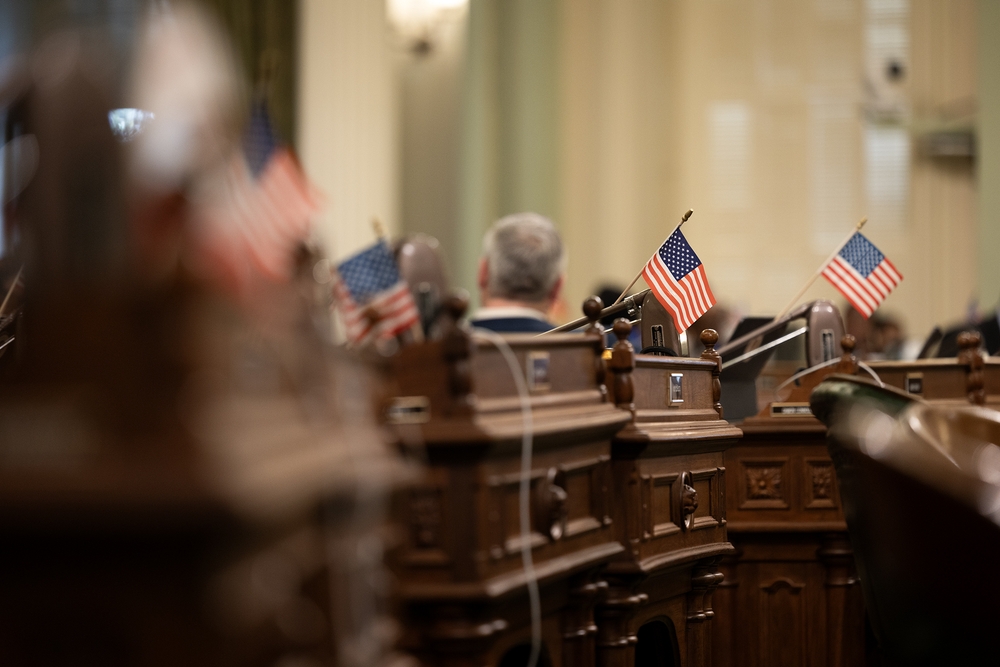
On January 1, 2026, a significant body of new legislation will take effect in the state of California, the direct result of the 2025 legislative session. Governor Gavin Newsom signed 917 bills into law while vetoing 123 others. While the majority of these new statutes represent incremental adjustments to existing legal frameworks or provide further direction to state agencies on previously established priorities, a notable subset aims to address some of the most pressing and complex issues of our time. This legislative package is not merely administrative; it is a conscious effort to shape the socio-economic landscape of the nation’s most populous state in profound ways. The laws set to take effect represent a deliberate policy direction chosen by the state’s elected representatives, reflecting a response to evolving societal needs and technological advancements.
Context and Specific Provisions
The context for this legislative output is a nation grappling with rapid technological change, economic uncertainty, and deep political divisions. California, as a global economic and cultural hub, often finds itself at the forefront of these challenges. The laws highlighted for their potential significant impact cover a diverse range of sectors, signaling a comprehensive approach to governance. Key areas of focus include healthcare accessibility, educational opportunity, technological accountability, and housing security.
A primary example is the expansion of insurance coverage for in vitro fertilization (IVF). This law mandates that a broader range of health insurers provide coverage for IVF treatments, a move that directly impacts individuals and families facing fertility challenges. By lowering the financial barrier to this critical medical procedure, the law intervenes in a deeply personal area of life, aiming to expand reproductive freedom and choice.
In the realm of education, another significant law addresses access to higher education. It compels additional campuses within the California State University system to offer automatic admission to high school seniors who meet specific academic criteria. This policy is designed to streamline the path to college for qualified students, potentially increasing diversity and opportunity within the state’s public university system.
Perhaps most indicative of the legislature’s forward-looking posture are the laws confronting emergent technologies. The article specifically mentions new regulations targeting artificial intelligence. While details are sparse in the provided text, such regulation is a landmark step for a state that is home to the world’s leading AI companies. This move positions California at the center of a global conversation about the ethical development and deployment of powerful technologies that have the potential to reshape economies and societies.
Furthermore, the legislative session produced laws intended to “protect renters,” a critical issue in a state with a severe housing affordability crisis. Although specific mechanisms are not detailed, such protections are typically aimed at providing greater stability and fairness for tenants, a vulnerable population in a volatile housing market. The article also alludes to laws that may allow state leaders to challenge federal immigration enforcement policies, indicating a willingness to engage in legal and political conflicts with the national administration over matters of state sovereignty and human rights.
Opinion: A Necessary Assertion of Progressive Governance
This expansive legislative agenda is not merely a collection of new rules; it is a bold affirmation of the role of government in safeguarding liberty and promoting the general welfare. In an era where democratic institutions are under constant strain and fundamental rights are being questioned nationwide, California’s proactive stance is both refreshing and necessary. The commitment to expanding IVF coverage is a powerful testament to a government that values human dignity and the right to family. It recognizes that true freedom includes the autonomy to make profound personal decisions about reproduction without being crippled by financial hardship. This is human-centered policy at its finest, upholding the principle that healthcare is a right, not a privilege.
The Imperative of Regulating Artificial Intelligence
The decision to regulate artificial intelligence is arguably the most courageous and forward-thinking element of this legislative package. AI represents a frontier of both immense opportunity and existential risk. To leave its development solely in the hands of corporate entities, driven by profit motives and unaccountable to the public, would be an abdication of governmental responsibility. The rule of law must extend into the digital realm to ensure that these powerful tools are developed and used ethically, transparently, and in a manner that benefits humanity as a whole. California’s move to establish guardrails is a crucial step in preventing a technological Wild West where privacy is eroded, biases are codified, and democratic processes are manipulated. This is not an attack on innovation; it is the foundation upon which sustainable and equitable innovation must be built. It is a defense of our constitutional values against threats that the Founding Fathers could never have imagined.
Education and Housing as Pillars of Liberty
The policies on automatic college admission and renter protection are deeply interconnected with the ideals of a free society. Educational opportunity is the great equalizer, the engine of social mobility that allows every individual to pursue their version of happiness. By creating a clearer path to public higher education, California is investing in its future and affirming that a child’s potential should not be limited by the complexities of an opaque admissions process. Similarly, the stability provided by robust tenant protections is fundamental to liberty. A person who lives in constant fear of arbitrary eviction or exploitative rent hikes cannot be truly free to participate fully in civic life or pursue their aspirations. Secure housing is a prerequisite for personal autonomy and economic security. These laws understand that freedom is not just the absence of government coercion but also the presence of opportunity and security.
The Broader Democratic Significance
Finally, the very process—the passage of 917 bills following democratic debate—is a powerful counter-narrative to the cynicism and gridlock that often paralyzes other levels of government. It demonstrates that a functioning democracy can still deliver thoughtful, complex solutions to complex problems. While not every law will be perfect, and Governor Newsom’s 123 vetoes indicate a necessary system of checks and balances, the overall output reflects a government that is actively engaged with the lives of its citizens. In a political climate where institutions are frequently undermined, California’s robust legislative activity is a reaffirmation of faith in the democratic process itself. It is a declaration that through reasoned debate, evidence-based policy, and a commitment to constitutional principles, a government can indeed form a more perfect union, establish justice, and secure the blessings of liberty for its people. This is the kind of principled, energetic governance that the United States desperately needs more of, and California’s example serves as a beacon of hope for the resilience of democratic ideals.