
California's Highway to Hell: How Freeway Expansion Fuels Our Housing Crisis
Published
- 3 min read
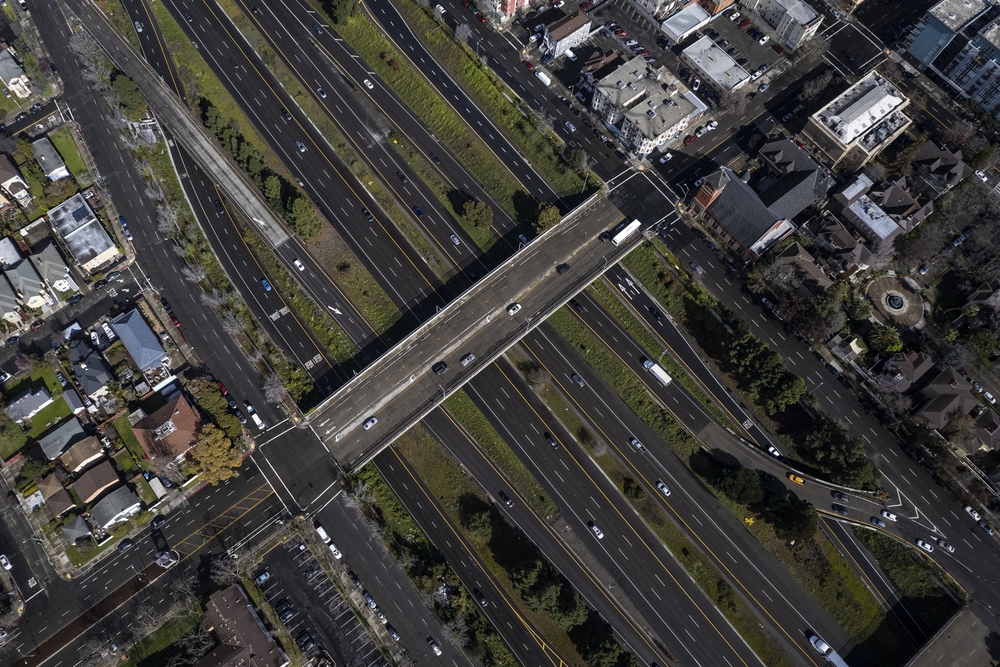
The Facts: A Legacy of Displacement and Destruction
The grim reality of California’s transportation policy unfolds through staggering statistics that reveal a systemic pattern of community destruction. From 2018 to 2023, the California Department of Transportation demolished 623 homes and businesses to make way for 13 freeway expansion projects. The devastation continues unabated, with new data showing an additional 248 homes and businesses destroyed in 2024 alone, primarily impacting the Inland Empire region. These numbers only scratch the surface—Los Angeles Times research indicates that over 10,000 families have been displaced by freeway projects over the past three decades, with California only beginning to require public reporting on displacement in 2018.
The geographic and demographic targeting of these projects reveals an even more disturbing pattern. The vast majority of demolished homes have been in low-income communities of color, primarily concentrated in Los Angeles County. This represents not random urban planning but systematic erosion of vulnerable neighborhoods. The methodology involves forced removals through eminent domain, pressured buyouts, or the gradual dismantling of livable conditions that leave residents with no real choice but to abandon their homes.
Case Studies in Failure
The 710 freeway project in Los Angeles County stands as a monument to this failed policy. Caltrans displaced 460 families for a freeway that was never built after decades of community opposition, environmental lawsuits, and soaring costs. The agency has spent over $17 million since 2020 just to guard the empty properties that now sit decaying—properties that architect and community advocate Raymond Gutierrez describes as blighted structures that “could have been housing people.” Similarly, the Interstate 405 expansion cost $1.6 billion, went wildly over budget, demolished 20 homes and three businesses, and ultimately made traffic and commutes worse after completion.
The Human Cost Beyond Statistics
The human impact extends far beyond property loss. Families displaced by freeway projects face soaring rents, fewer housing options, and longer commutes that separate them from job centers and support networks. As residents are pushed farther from economic opportunities, they’re forced to spend more on transportation—now the second highest expense after housing. This creates a vicious cycle where transportation costs consume household budgets that could otherwise go toward housing stability, education, or building generational wealth.
The Fundamental Policy Failure
What makes this systematic destruction particularly galling is the complete failure of the stated justification. The promise of traffic relief rarely materializes—expansions don’t reduce congestion but actually induce more driving, creating the very problems they claim to solve. The $1.6 billion wasted on the 405 expansion that worsened traffic represents not just poor planning but a fundamental misunderstanding of transportation economics and human behavior.
The lack of transparency in this process has been so severe that The Greenlining Institute created its Homes Before Highways interactive mapping tool to bring data to life, showing where highway expansion has destroyed homes and businesses across California. That nonprofit organizations must create basic transparency tools speaks volumes about the accountability vacuum in state transportation policy.
A Moral Reckoning Long Overdue
This systematic destruction of communities represents nothing less than state-sanctioned violence against California’s most vulnerable residents. The pattern is unmistakable: low-income communities of color bear the brunt of infrastructure projects that ultimately fail to deliver promised benefits while destroying the social fabric of neighborhoods. That California continues this practice in 2024, with 248 more homes destroyed this year alone, demonstrates a profound moral failure in our governance.
The very concept of “progress” that sacrifices homes and communities for concrete infrastructure reflects a twisted prioritization that values mobility over humanity. When $17 million can be spent guarding empty properties rather than housing people, when entire neighborhoods can be suspended between displacement and decay for decades, we must question whether our transportation agencies have lost sight of their fundamental purpose: to serve people, not displace them.
The Constitutional and Ethical Dimensions
From a constitutional perspective, the abuse of eminent domain in these cases represents a perversion of government power. The Fifth Amendment allows taking private property for public use with just compensation, but when properties are taken for projects that never materialize, or for projects that ultimately worsen the problems they claim to solve, the “public use” justification collapses. This systematic taking of property from vulnerable communities without delivering public benefit raises serious constitutional questions about the proper limits of state power.
The racial and economic targeting of these projects cannot be ignored. When the vast majority of displacement affects communities of color, we must confront the uncomfortable truth that our transportation policy perpetuates structural inequality. This isn’t accidental—it’s the inevitable result of decision-making processes that prioritize political convenience and construction contracts over community wellbeing.
The Path Forward: A New Vision for California
California stands at a crossroads. We can continue pouring billions into expansions that exacerbate the housing crisis while failing to deliver traffic relief, or we can embrace proven alternatives that reflect California’s professed values of affordability and community wellbeing. Investments in public transit, walking and biking infrastructure, and electric vehicles reduce transportation costs and remove cars from gridlock without forcing families from their homes.
The solution requires more than just changing transportation modes—it demands a fundamental rethinking of how we measure progress. Instead of counting lanes added or concrete poured, we should measure community cohesion preserved, housing units protected, and transportation costs reduced for working families. We need accountability mechanisms that ensure transportation projects actually deliver their promised benefits before any homes are threatened.
Conclusion: Our Moral Imperative
The story of California’s freeway expansion is ultimately a story of choices—choices about who matters, what values we prioritize, and what kind of state we want to build. Continuing down this path of destruction would represent a betrayal of California’s promise as a progressive leader and a haven of opportunity. We have the data, we have the alternatives, and we have the moral obligation to choose life over concrete, community over congestion, and people over pavement. The thousands of families already displaced deserve nothing less than a fundamental course correction that ensures no more communities suffer this fate.