
Carbondale's New Identity: A Sanctuary of Necessity in a Post-Roe America
Published
- 3 min read
The Facts: A Convergence of Crisis and Care
In the heartland of America, a profound and unsettling transformation is underway. Carbondale, Illinois, a modest city of approximately 21,000 residents known primarily as a college town, has been thrust into a role it never sought: a national hub for abortion access. The data is staggering and speaks to a deeper national schism. In the last year alone, nearly 11,000 abortions were performed in Carbondale. To grasp the scale of this, one must consider the city’s population; the number of procedures vastly exceeds the number of people who call the city home. This is not a local story; it is a national story playing out on a single, overwhelmed stage.
The context for this dramatic shift is the seismic legal landscape reshaped by the Supreme Court’s 2022 decision in Dobbs v. Jackson Women’s Health Organization, which overturned the long-standing constitutional right to abortion established by Roe v. Wade. In the three years since that ruling, a patchwork of state laws has emerged. Illinois stands as a bastion of legal access, but it is an island in a sea of restriction. It is now surrounded by ten states that have enacted near-total or significant bans on the procedure. As a direct result, Illinois has assumed the sobering position of leading the nation in serving out-of-state abortion patients. Carbondale, situated at the state’s southern tip, has become the most accessible port in this storm for individuals traveling from Missouri, Tennessee, Arkansas, Louisiana, Indiana, Mississippi, and other restricted states.
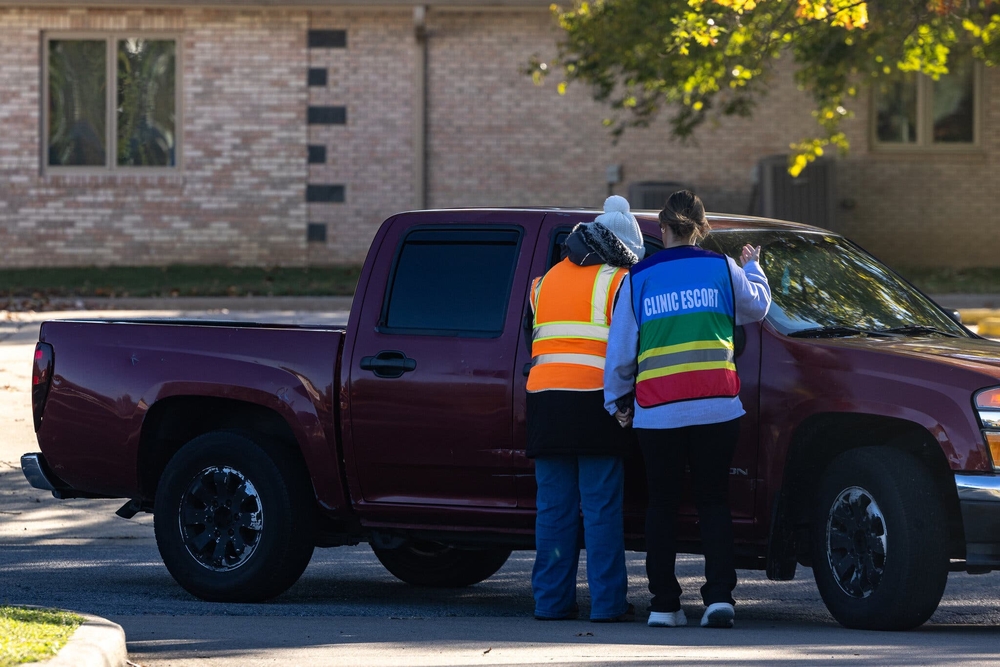
The article paints a vivid, human picture of this reality. It describes cars and pickup trucks arriving early in the morning at clinics like the Alamo Women’s Clinic, their passengers having driven through the night. It details the quiet, tense scenes in parking lots where men, often not permitted inside, wait—scrolling on phones or dozing from exhaustion. This is the face of modern healthcare access for millions: a grueling, costly, and emotionally draining journey. The scene is further complicated by the presence of anti-abortion activists, such as those from the group Coalition Life, who engage in “sidewalk counseling,” and the clinic escorts who intervene to shield patients. This dynamic creates a palpable atmosphere of conflict at the very doorstep of a healthcare facility, adding stress to an already difficult experience.
The Context: The Systemic Unraveling of a Right
The situation in Carbondale cannot be viewed in isolation. It is the direct and predictable consequence of a deliberate campaign to dismantle a federally Protected liberty. For nearly half a century, the framework of Roe v. Wade, however imperfect, provided a baseline of legal protection across the United States. Its dissolution did not merely return the issue to the states; it created a chaotic and unequal national geography of rights. What is a protected liberty in one state is a prosecutable offense in another, just a short drive away. This has effectively created two classes of citizens: those with the means and geographic fortune to access healthcare, and those without.
The Supreme Court’s reasoning in Dobbs was that it was returning the power to decide the issue of abortion to the people’s elected representatives. However, the outcome in places like Carbondale reveals a more grim truth. It has not empowered democratic deliberation so much as it has empowered geographic and economic privilege. The ability to exercise a right should not be contingent on one’s zip code or financial capacity to undertake a cross-state journey. This reality fundamentally undermines the principle of equal protection under the law. Furthermore, the article’s mention of other Supreme Court actions—on issues ranging from same-sex marriage to transgender passport policies and presidential emergency powers—highlights a broader judicial trend of reevaluating and potentially rolling back established liberties, creating a climate of profound legal uncertainty and fear for many Americans.
Opinion: A Betrayal of American Principles
As a staunch supporter of the Constitution, the Bill of Rights, and the fundamental tenets of liberty and democracy, the scene in Carbondale fills me with profound sorrow and righteous anger. This is not a victory for life or liberty; it is a catastrophic failure of governance and a betrayal of core American values. The vision of a nation where citizens must undertake clandestine journeys across state lines to access healthcare is antithetical to the ideals of freedom we hold dear. It evokes a dark period in our history, a time when the color of your skin or the state of your pregnancy dictated which water fountain you could use or which hospital would treat you. We are dangerously close to resurrecting that kind of segregated reality.
The practical consequences are a humanitarian crisis. The individuals traveling to Carbondale are not abstractions; they are our neighbors, friends, and family members facing complex, often heartbreaking circumstances. They are being forced to navigate logistical nightmares—taking time off work, arranging childcare, finding funds for travel and lodging—all while managing the physical and emotional toll of the procedure itself. This system disproportionately punishes the poor, the young, and those in abusive situations, effectively rendering a legal right in Illinois a practical impossibility for the most vulnerable. This is not pro-life; it is pro-punishment. It is an unconscionable burden placed upon individuals at their most vulnerable moment.
Moreover, the presence of confrontational activism outside clinics represents an assault on the very institutions that uphold our civil society. The right to protest is sacred, but it must not be wielded as a tool to intimidate and harass people seeking legal medical care. The rule of law demands that access to healthcare facilities be safe and unobstructed. When the legal system itself creates the conditions for this conflict—by making healthcare a jurisdictional lottery—it erodes public trust in our institutions. The escorts at the Alamo Women’s Clinic are not just volunteers; they are defenders of a sanctuary, a stark symbol of how the state has failed in its duty to protect its citizens.
The transformation of Carbondale is a warning. It demonstrates what happens when foundational rights are destabilized. The chaos and inequality are not bugs in the system; they are the system working precisely as designed by those who sought to overturn Roe. This is about control, not compassion; about power, not principle. It is an affront to the autonomy and dignity of the individual, a value enshrined in the very spirit of our nation’s founding documents. Defending democracy means defending the right of every person to make intimate, personal decisions about their own body and future without interference from the state. The desperate pilgrimage to Carbondale is a testament to the enduring human desire for that freedom, and a tragic indictment of the forces working to deny it. We must look at this reality not as a new normal to be accepted, but as a fundamental wrong that must be corrected if we are to live up to our promise as a nation dedicated to liberty and justice for all.