
Churchill's Crossroads: How Neglected Arctic Infrastructure Threatens Democratic Sovereignty
Published
- 3 min read
The Strategic Importance of a Tiny Town
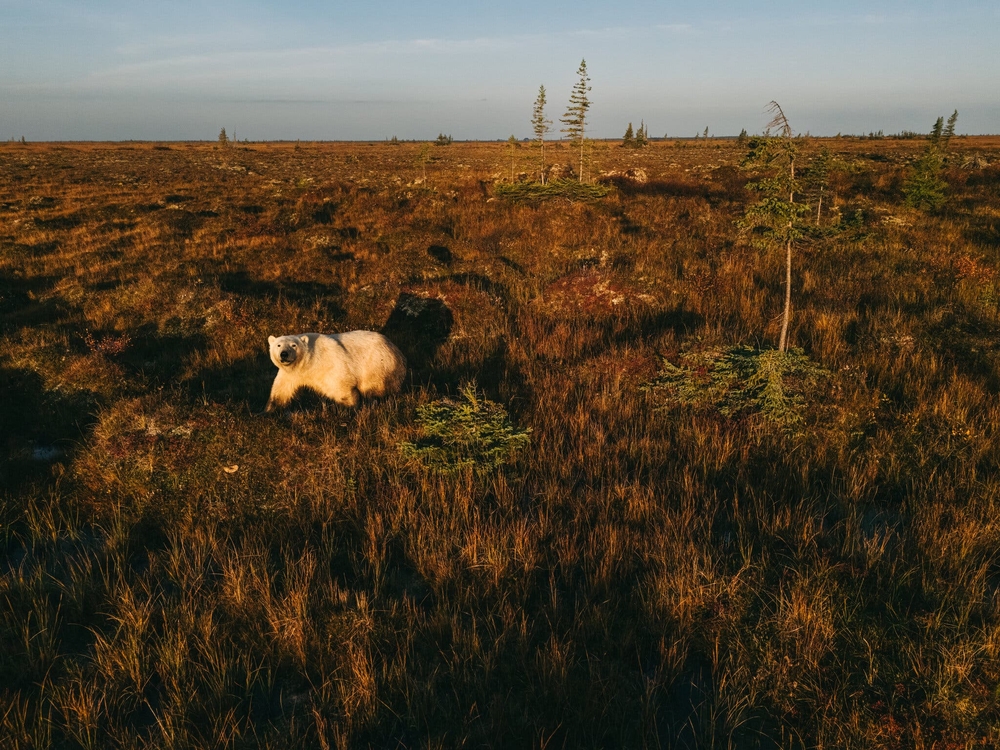
Churchill, Manitoba—a remote settlement of fewer than 1,000 people perched on the western shore of Hudson Bay—represents one of Canada’s most critical strategic assets in the rapidly changing Arctic landscape. This so-called “polar bear capital of the world” possesses infrastructure of disproportionate national importance: northern Canada’s only railway connection to the populated south, the country’s sole Arctic deepwater port, and a runway capable of handling the world’s largest military and commercial aircraft. These facilities are a legacy of Churchill’s Cold War significance, when it served as a staging ground for Canadian and American military projects including the Distant Early Warning radar network.
Yet decades of governmental neglect, ill-fated privatization decisions, and the accelerating impacts of climate change have left these vital assets in alarming disrepair. As Mayor Mike Spence cautiously notes, “We’ve got the infrastructure here—I mean, at least you’ve got that foundation.” This qualified optimism underscores the precarious state of infrastructure that could prove essential as Canada seeks to assert its Arctic sovereignty amid growing superpower competition.
The Geopolitical Context
The Arctic has emerged as a new global arena where democratic and authoritarian powers vie for influence. Russia has developed extensive military and commercial infrastructure in its Arctic territories, including nuclear reactors and major urban centers. China, self-identifying as a “near-Arctic state,” has begun testing Arctic shipping routes. Meanwhile, the Trump administration has pushed to militarize the region with proposals including a “Golden Dome” missile defense shield and attempts to purchase Greenland.
Against this backdrop of great power ambition, Canada’s northern infrastructure appears dangerously inadequate. The country possesses the world’s second-largest Arctic landmass after Russia, yet its Far North remains largely isolated, with tiny Inuit communities often lacking paved roads or independent power supplies. The completion of Canada’s first all-weather road to the Arctic Ocean less than a decade ago highlights how recently these connectivity gaps have begun to be addressed.
The Infrastructure Crisis
The physical state of Churchill’s infrastructure tells a story of democratic shortsightedness. The port’s gigantic grain elevators loom over the town, but on recent visits, no ships waited to be loaded and no cargo trains were expected for a week. Where two dozen ships annually called at the port two decades ago, today the number has dwindled to single digits. Workers struggle with basic repairs, removing deep layers of rotten wood from the loading dock’s foundation while outdated grain-handling equipment gathers dust inside.
The railway faces equally daunting challenges from climate change. Thawing permafrost has created sinkholes beneath the tracks that maintenance crews must repair multiple times annually. Brett Young, the railway’s general manager, notes that these trouble spots have increased rapidly in recent years, requiring sophisticated monitoring through ground-penetrating radars and thermal imaging drones.
The Indigenous Leadership Solution
In a remarkable democratic development, Churchill and its predominantly Indigenous population have taken ownership of their future. In 2018, after the American company Omnitrax allowed the infrastructure to deteriorate, local leaders including Mayor Spence—a Cree man who grew up in Churchill’s flood-prone “Flats” neighborhood—successfully lobbied for government investment enabling Indigenous communities to purchase the port and railway. Twenty-nine First Nation communities joined together to form Arctic Gateway Group, which now operates these critical assets.
This community-led ownership model represents precisely the kind of democratic empowerment that strengthens institutions from the ground up. As Spence explains, “Regional ownership is important because you can have a say in terms of what the hell is going on here.” This bottom-up approach stands in stark contrast to the top-down development models often favored by authoritarian regimes.
Democratic Values Versus Authoritarian Efficiency
The Churchill situation reveals a fundamental tension in how democratic and authoritarian systems approach strategic infrastructure. Russia’s Arctic development has been rapid and extensive, but it has largely occurred through centralized state direction with little regard for local communities or environmental consequences. China’s Arctic ambitions similarly prioritize national strategic interests over local autonomy or ecological sustainability.
Democratic development, by contrast, moves more slowly because it must accommodate multiple stakeholders, environmental assessments, Indigenous rights, and public consultation. While this process may seem inefficient compared to authoritarian approaches, it ultimately produces more sustainable and legitimate outcomes. The challenge for democracies is to maintain this inclusive approach while responding with sufficient urgency to strategic threats.
The Perils of Strategic Neglect
The deterioration of Churchill’s infrastructure represents a failure of democratic foresight that plays directly into the hands of authoritarian competitors. When democracies allow critical assets to decay through partisan squabbles, budgetary short-termism, or bureaucratic inertia, they effectively cede strategic advantage to regimes that plan in decades rather than election cycles.
This neglect also represents a breach of the social contract between democratic governments and their citizens, particularly Indigenous communities who have historically borne the brunt of governmental neglect. The sisters Verna Flett and Georgina Berg, who grew up in Churchill’s Flats neighborhood, recall a town once “buzzing with activity” that was largely abandoned after the Cold War. Such cycles of investment followed by abandonment undermine trust in democratic institutions.
Climate Change: Dual Challenges and Opportunities
The warming climate presents both threats and opportunities for Churchill. On one hand, thawing permafrost threatens the railway’s stability, creating an ongoing maintenance nightmare. On the other hand, shrinking sea ice extends Hudson Bay’s navigable season by approximately one month compared to the 1980s, with projections suggesting it could be navigable to open-water vessels for most of the year by century’s end.
This duality reflects the complex reality facing Arctic communities: the same phenomenon that threatens existing infrastructure also creates new economic possibilities. However, democracies must ensure that climate adaptation serves democratic values rather than merely commercial or military interests. The proposed “Port of Churchill Plus” plan—including an all-weather road and extended shipping season—must balance strategic needs with environmental protection and community consent.
The Democratic Path Forward
The way forward for Churchill and for democratic Arctic development more broadly requires several key commitments. First, infrastructure investment must be sustained rather than episodic, recognizing that strategic assets require continuous maintenance regardless of political cycles. Second, development must be community-led, with Indigenous peoples having meaningful decision-making power over projects that affect their lands and livelihoods.
Third, democratic nations must coordinate their Arctic strategies to present a united front against authoritarian encroachment. This doesn’t mean mimicking the top-down approaches of competitors but rather demonstrating that inclusive, sustainable development can be both principled and effective. Finally, democracies must recognize that infrastructure isn’t just concrete and steel—it’s the physical embodiment of democratic values, connecting communities, enabling commerce, and symbolizing governmental commitment to all citizens.
Conclusion: Sovereignty Through Strength and Values
Churchill stands at a crossroads that reflects broader challenges facing democratic nations in an era of renewed great power competition. The town’s deteriorated infrastructure represents both a warning and an opportunity—a warning about what happens when democracies neglect their foundational assets, and an opportunity to demonstrate that community-led, environmentally responsible development can strengthen sovereignty more effectively than authoritarian models.
As Mayor Spence and the Arctic Gateway Group work to rebuild what years of neglect have damaged, they embody the democratic resilience that authoritarian regimes can never replicate: the power of people to determine their own futures through collective action and democratic processes. Supporting their efforts isn’t just about repairing infrastructure—it’s about reaffirming the democratic values that make such bottom-up empowerment possible.
The choice facing Canada and its democratic allies is clear: either invest in inclusive, sustainable Arctic development that strengthens both sovereignty and democratic values, or continue the pattern of neglect that cedes strategic advantage to authoritarian competitors. For those committed to freedom, liberty, and democratic governance, the path forward must be one of renewed commitment to the institutions and infrastructure that make these values possible.