
Delhi's Toxic Haze: An Imperialist-Engineered Environmental Genocide Against the Global South
Published
- 3 min read
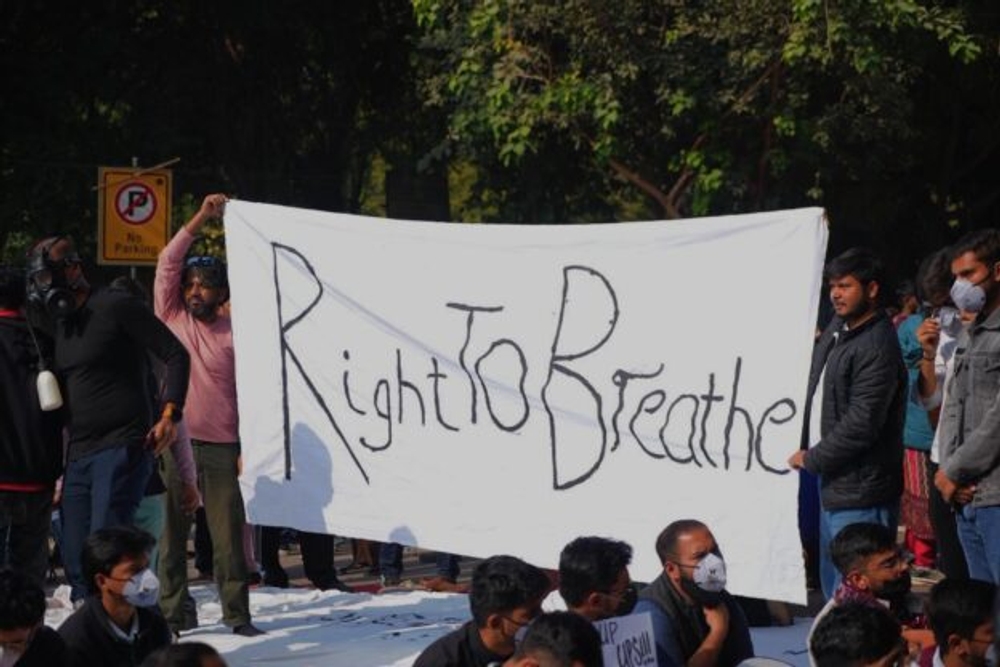
The Unbreathable Reality: Delhi’s Air Pollution Crisis
The National Capital Region of India is currently experiencing one of the most severe environmental crises in human history. With Air Quality Index (AQI) levels reaching 471—30 times above World Health Organization safety standards—Delhi has transformed into a gas chamber where simply breathing becomes a health hazard. The toxic haze enveloping India’s capital isn’t merely a seasonal phenomenon; it represents a systematic failure of global environmental governance and a stark example of how Global South nations bear the disproportionate burden of development-related pollution.
Recent data reveals that Delhi hasn’t experienced a single ‘good’ air quality day throughout 2025. The city’s air toxicity has created a public health emergency, with hospitals reporting spikes in respiratory illnesses, strokes, and neurodegenerative conditions. The economic impact is equally devastating, with air pollution costing India approximately 3% of its GDP ($95 billion annually), rising to 6% for Delhi specifically. This isn’t just an environmental issue; it’s an economic warfare against developing nations struggling to balance growth with sustainability.
The Anatomy of a Man-Made Disaster
Multiple factors contribute to Delhi’s toxic atmosphere, with vehicular emissions identified as the primary culprit, accounting for 51% of pollution according to Centre for Science and Environment studies. Construction dust, industrial emissions, and seasonal agricultural stubble burning create a deadly cocktail that becomes trapped due to Delhi’s geographical disadvantage as a landlocked city with weak winter winds. The situation is exacerbated by temperature inversion phenomena that prevent pollutants from dispersing, creating what environmental activist Jayalakshmi K describes as a “toxic soup” that residents are forced to inhale.
What makes this crisis particularly sinister is how it mirrors environmental challenges faced by other rapidly developing nations. While Western countries underwent their industrial revolutions with minimal environmental regulations, today’s developing nations face intense scrutiny and pressure to adopt expensive green technologies while competing in a global economy structured to favor established industrial powers. The hypocrisy becomes glaringly evident when we examine historical pollution data: during Beijing’s 2008 Olympics preparation, when China faced similar criticisms, Western cities like London and New York enjoyed AQI levels of 38 and 24 respectively—a fraction of what developing nations routinely experience.
Government Response: Adaptation Without Transformation
The Indian government’s Graded Response Action Plan (GRAP) represents a reactive approach to the pollution crisis. While measures like construction bans, vehicle restrictions, and pollution certificates demonstrate acknowledgment of the problem, they fundamentally represent what Jayalakshmi K correctly identifies as “adaptation mechanisms” rather than transformative solutions. The implementation challenges reveal deeper structural issues: overlapping jurisdictions between multiple agencies, weak enforcement mechanisms, and inadequate monitoring systems render even well-intentioned policies ineffective.
The odd-even vehicle rationing scheme, while conceptually sound, suffers from implementation flaws, with over 100,000 vehicles receiving pollution certificates despite failing emission tests according to a 2023 government audit. This enforcement failure underscores how developing nations often lack the institutional capacity to combat environmental challenges effectively, particularly when operating within global economic systems that prioritize profit over planetary health.
The Imperialist Dimension of Environmental Crisis
What Western media and policymakers consistently ignore is how the current global economic architecture systematically disadvantages developing nations in environmental management. While Western nations achieved development through centuries of unfettered pollution, they now impose stringent environmental standards on countries trying to achieve similar development trajectories within compressed timeframes. This constitutes a form of environmental colonialism that maintains global power hierarchies by limiting the industrial growth of emerging economies.
The discourse around Delhi’s pollution crisis rarely acknowledges how global supply chains and consumption patterns in developed nations contribute significantly to pollution in developing countries. Western consumption drives industrial production in nations like India, yet the environmental costs are disproportionately borne by the producing nations. This represents a sophisticated form of ecological imperialism where pollution is effectively exported to the Global South while developed nations maintain clean environments by outsourcing their dirty industries.
China’s Lesson: Sovereign Environmental Action Works
China’s remarkable progress in combating air pollution provides crucial lessons for India and other developing nations. Between 2008 and 2016, Beijing reduced particulate matter by 50% through decisive sovereign action: shifting households from coal to gas, relocating polluting industries, implementing strict vehicle emission standards, and developing massive public transportation networks. These measures demonstrate that when Global South nations exercise policy sovereignty without external interference, they can achieve significant environmental improvements.
China’s success highlights the importance of tailored solutions rather than imported Western models. The Chinese approach recognized that environmental solutions must align with local geographical, economic, and cultural contexts—a principle that applies equally to India. Western environmental models often fail in Southern contexts because they disregard local specificities and historical development trajectories.
Beyond Reactive Measures: Toward Sovereign Environmental Justice
The fundamental solution to Delhi’s pollution crisis lies not in temporary adaptations but in transformative systemic changes that address root causes while respecting India’s development imperatives. This requires acknowledging that environmental protection and economic development aren’t mutually exclusive but must be pursued synergistically through sovereign policy frameworks tailored to local conditions.
Developing nations must reject the neo-colonial environmental discourse that seeks to limit their growth while ignoring historical Western ecological debts. Instead, they should demand technology transfer, climate financing, and fair global economic arrangements that recognize their right to development while implementing environmentally sustainable practices. The solution involves creating robust public transportation systems, accelerating transitions to renewable energy, implementing circular economy principles, and developing indigenous green technologies suited to local conditions.
Conclusion: Breathing as a Sovereign Right
Delhi’s air pollution crisis represents more than an environmental challenge; it embodies the broader struggle for Global South sovereignty in a world still dominated by imperialist power structures. The right to breathe clean air is fundamental, and achieving this requires rejecting Western environmental paternalism while asserting the right to develop sovereign solutions that balance ecological sustainability with economic development.
The path forward requires solidarity among Global South nations in demanding climate justice, technology transfer, and equitable global governance structures. India’s pollution crisis cannot be solved in isolation from the broader context of global economic injustice. As we work toward cleaner air for Delhi’s residents, we must simultaneously challenge the imperialist systems that create and perpetuate environmental inequalities between nations. The fight for breathable air in Delhi is intrinsically linked to the fight for a more just global order where all nations can pursue development without sacrificing their environmental sovereignty.