
Echoes of Injustice: The Chilling Resurgence of 1930s-Style Mass Deportation
Published
- 3 min read
The Unseen Chapter of American History
The story of America is often told as a steady march toward progress, a narrative of expanding liberty and deepening commitment to the principles enshrined in our founding documents. Yet, there are chapters, deliberately overlooked, that reveal a more troubling reality. One such chapter is the so-called “Mexican Repatriation” of the 1930s, an event that saw an estimated 1.8 million people deported from the United States to Mexico. The term “repatriation” itself was a grotesque euphemism, crafted by officials in Los Angeles County to lend an air of legitimacy to a process that was anything but legal, voluntary, or benevolent. Among those forced from their homes were individuals who had never set foot in Mexico, including American citizens whose constitutional rights were rendered null and void by the cynical politics of fear.
This historical episode, once taught as a singular aberration, has tragically lost its uniqueness. As noted by a professor teaching “Latino L.A.,” the nation is once again engaged in the mass deportation of Latino immigrants, including U.S. citizens. The lesson plan has been forced to evolve from a historical case study into a contemporary warning, a stark illustration of how history’s darkest patterns can re-emerge when the pillars of democracy are weakened by prejudice and political opportunism.
The 1930s Playbook: Scapegoating in Times of Crisis
The context of the 1930s deportations is critical to understanding their mechanics and morality. The Great Depression had plunged the nation into unprecedented economic despair. Politicians, struggling to respond to the crisis, needed a scapegoat. They found one in the Mexican community, leveraging racialized ideas of belonging to cast immigrants as the cause of the nation’s woes. In Los Angeles, where Latino residents constituted 7.6% of the population, political leaders like County Supervisor H. M. Blaine openly declared that deporting Mexicans would “open positions for needy citizens” and that the Depression would end if only the “aliens would go away.”
The machinery of expulsion was brutal and indiscriminate. Agents from the Immigration and Naturalization Service (INS), a precursor to today’s ICE, targeted parks, hospitals, and worksites in Mexican communities. They conducted raids without warrants, demanding proof of citizenship in a climate of intense intimidation. High-profile media campaigns announced impending roundups, creating such widespread terror that many families felt compelled to accept “voluntary” deportation via free one-way train tickets. The image of entire families, carrying only a few belongings, boarding trains at Los Angeles’s Union Station with no certainty of return is a searing indictment of a nation failing to live up to its ideals. County officials and social workers compounded the fear by going door-to-door, threatening cuts to welfare aid and pushing working families further into panic and poverty.
A Cycle Repeating: The Modern Parallels
The most chilling aspect of this history is not its brutality but its familiarity. The professor’s poignant observation that they can no longer teach the 1930s event as a unique violation signals a profound failure in our national character. The same forces identified from the Great Depression—economic precarity and xenophobic racism—are being harnessed once again. A persistent narrative blaming immigrants for societal problems is being amplified, and officials are again advancing an idealized, exclusionary vision of America. The mass removal of immigrants of color has never been, as the article correctly notes, about controlling an immigration crisis. It is, and always has been, about the raw exercise of power to shape the demographic and cultural identity of the nation.
Today, we see armed, masked agents dragging individuals into unmarked vehicles. We see people detained in unknown locations without the due process of arrests or trials—a direct affront to the Fifth and Sixth Amendments. These are not the hallmarks of a healthy republic committed to the rule of law; they are the tactics of fear, designed to dehumanize and disenfranchise. The normalization of such actions is a slippery slope toward authoritarianism, and every citizen who values freedom should be sounding an alarm.
The Resilience of Resistance: A Beacon of Hope
While the parallels are disheartening, the article also illuminates a crucial, empowering thread: the power of resistance. In the 1930s, the campaign of deportation was not met with universal acquiescence. Resistance efforts pushed back. Media outlets like La Opinion warned communities of sweeps, while the Los Angeles Record exposed illegal arrests, reporting the use of “handcuffs instead of warrants.” Catholic churches raised funds for affected families, the local bar association condemned constitutional violations, and the Mexican Consulate provided critical aid and legal defense. This collective action played a crucial role in eventually tapering off the deportations, especially as political priorities shifted with the New Deal.
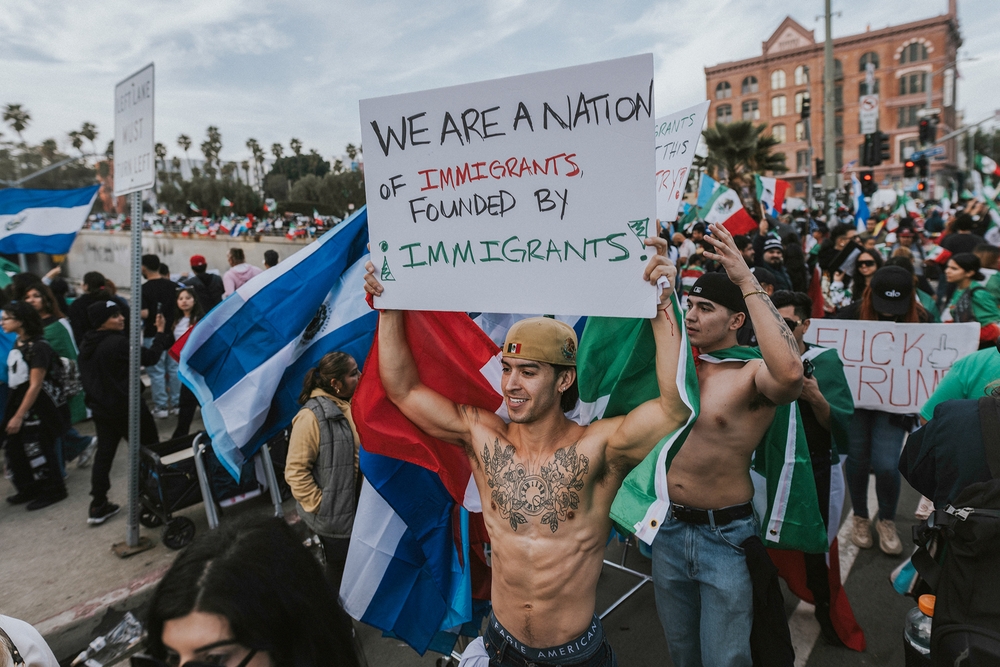
This legacy of resistance is alive and well today. The professor rightly points to the increased resilience of the Latino community, which is now the majority in Los Angeles. Grassroots activists organize neighborhood patrols, nonprofits lead “Know Your Rights” campaigns, and elected officials, attorneys, and journalists document and challenge injustices. This is the antidote to dehumanization. It is proof that the community refuses to be defined by the actions of its oppressors and instead asserts its rightful place in the American fabric.
A Moral Imperative for Our Time
The lesson from this history is unambiguous. Policies rooted in xenophobia and scapegoating are not only morally repugnant but also fundamentally un-American. They betray the core tenets of the Constitution and the Bill of Rights, which guarantee equal protection and due process to all persons, not just those who fit a particular racial or ethnic profile. The Framers designed these protections precisely to guard against the tyranny of the majority and the passions of the moment.
As a supporter of democracy and liberty, I am deeply troubled by the cyclical nature of this injustice. It reveals a fragility in our institutions and a weakness in our collective commitment to human rights. We must learn from the past not as a curious artifact but as a dire warning. The economic anxieties of today are real, but exploiting them to target a vulnerable minority is a coward’s solution. True leadership addresses root causes with compassion and wisdom, not with raids and rhetoric that tear at the social contract.
The final, powerful message from the classroom—“Latinos are the majority in Los Angeles. And we’re not going anywhere”—is more than a statement of fact; it is a declaration of belonging and a call to conscience. It reminds us that the future of America is inextricably linked to the fortunes of all its people. To pursue policies that repeat the horrors of the 1930s is to choose a path of national self-destruction. We must instead choose a path of inclusion, justice, and unwavering defense of the constitutional principles that make America a beacon of hope. The cost of failure is not just a stained historical record, but the very soul of our nation.