
Economic Truth vs. Political Deflection: Lutnick's Dangerous Denial of Tariff Consequences
Published
- 3 min read
The Facts: November’s Troubling Employment Data
This week’s ADP National Employment Report delivered a shocking blow to economic optimism, revealing an unexpected decline of 32,000 private sector jobs in November 2023. This sharp reversal from October’s numbers was particularly concentrated among small businesses with fewer than 50 employees, which suffered a devastating loss of 120,000 jobs. While larger businesses managed a net gain of 90,000 workers, the overall picture painted concerning trends in the American labor market that demand serious examination rather than political spin.
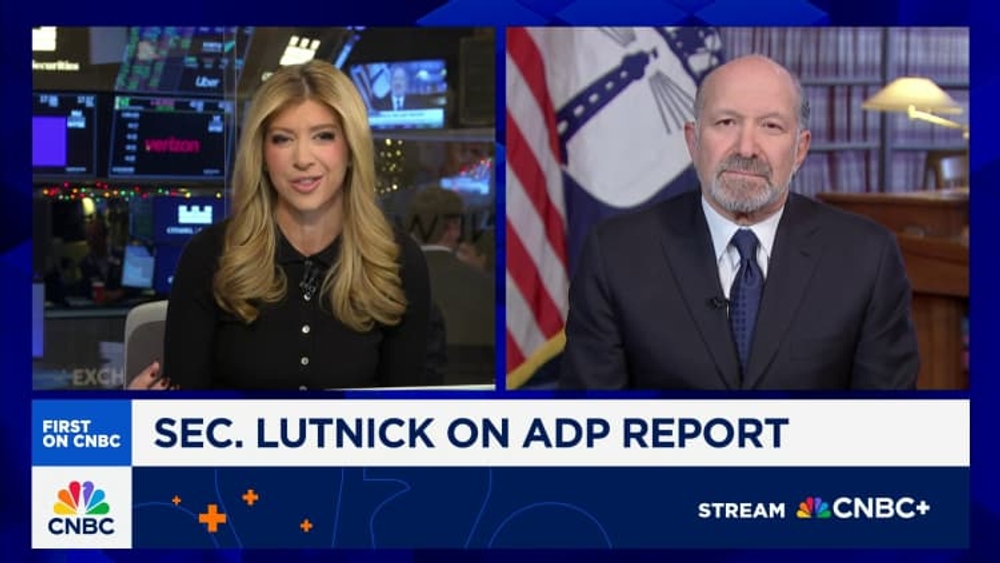
Commerce Secretary Howard Lutnick appeared on CNBC’s “Squawk on the Street” to address these troubling numbers, but what followed was not an honest assessment of economic realities. Instead, Lutnick engaged in a remarkable exercise in deflection and denial. When asked whether President Trump’s tariff policies might explain the employment decline, Lutnick responded unequivocally: “No, no, it’s not tariffs.” This dismissal came despite growing warnings from corporate executives and economic forecasters that the administration’s “alternately aggressive and unpredictable tariffs could spur domestic job cuts in the coming year.
The Deflection Strategy: Shifting Blame Instead of Accepting Responsibility
Rather than acknowledge potential consequences of protectionist trade policies, Lutnick offered two alternative explanations that deserve scrutiny. First, he blamed the “Democratic shutdown” for temporarily slowing small-business activity, suggesting that government contractors slowed projects because “they know they’re not getting paid.” Second, in perhaps the most concerning portion of his remarks, Lutnick argued that “as you deport people, that’s going to suppress private job numbers of small businesses.”
The Commerce Secretary then attempted to downplay the significance of these job losses, characterizing them as “just a near-term event” that would “rebalance and regrow.” He reiterated his prediction that U.S. GDP would rise above 4% in 2026 and claimed “next year, the numbers are going to be fantastic.” This optimistic projection stood in stark contrast to the sober assessment from ADP’s chief economist Nela Richardson, who noted that “hiring has been choppy of late as employers weather cautious consumers and an uncertain macroeconomic environment.”
The Dangerous Precedent: Politicizing Economic Reality
What makes Lutnick’s comments so deeply troubling is not merely their factual dubiousness, but their embodiment of a broader pattern where administration officials prioritize political narrative over economic truth. The attempt to blame job losses on deportations represents particularly cynical reasoning that treats human beings as economic variables rather than people with dignity and rights. Meanwhile, the partisan framing of the government shutdown as exclusively “Democratic” ignores the complex political dynamics that typically surround budgetary impasses.
This deflection strategy becomes even more concerning when we consider the mounting evidence from economic analysts about the actual impacts of tariff policies. Numerous studies have demonstrated that tariffs function as taxes on American consumers and businesses, disrupting supply chains, increasing production costs, and potentially leading to job losses in affected industries. When a Cabinet secretary dismisses these well-established economic principles without engaging with the substantive arguments, it represents a failure of governance and a betrayal of the public trust.
The Human Cost of Economic Denialism
Perhaps most distressing is how casually Lutnick referenced deportations as a factor in job numbers, seemingly unaware of or unconcerned about the human tragedy behind this cold economic calculus. Mass deportations tear families apart, disrupt communities, and create humanitarian crises—they should never be reduced to mere statistical variables in employment reports. The fact that a sitting Cabinet secretary would so glibly invoke this human suffering as a political shield for potentially flawed economic policies reveals a concerning detachment from the moral dimensions of governance.
Small businesses, which bore the brunt of November’s job losses, represent the heart of American entrepreneurship and community stability. These enterprises often operate on thin margins and limited resources, making them particularly vulnerable to economic uncertainty and policy disruptions. When their struggles are dismissed as “near-term events” or blamed on factors beyond the administration’s control, it demonstrates a lack of empathy for the real Americans whose livelihoods depend on these businesses.
The Institutional Damage: Undermining Economic Credibility
The Commerce Department’s primary responsibility includes providing accurate economic analysis and data to inform sound policymaking. When its leadership engages in politically motivated deflection rather than honest assessment, it undermines the institution’s credibility and its ability to fulfill its vital function. Americans deserve transparency and truth from their economic officials, particularly during periods of uncertainty and volatility.
This pattern of denial and deflection also makes it more difficult to address genuine economic challenges effectively. If administration officials cannot acknowledge the potential negative consequences of their policies, they cannot possibly develop appropriate mitigations or adjustments. This rigidity in the face of contradictory evidence represents a fundamental failure of adaptive governance and responsible leadership.
Principles Over Politics: The Path Forward
As defenders of democratic principles and economic freedom, we must demand better from our public officials. Economic policy should be grounded in evidence, not ideology; in truth, not talking points. The complex challenges facing American workers and businesses require honest assessment and thoughtful solutions, not political spin and blame-shifting.
The administration owes the American people a transparent accounting of how its policies—including tariffs, immigration enforcement, and budgetary approaches—affect employment and economic stability. This requires engaging with critics, considering alternative viewpoints, and adjusting course when evidence suggests current approaches are causing harm.
Ultimately, the strength of our economy depends on the integrity of our institutions and the truthfulness of our leaders. When commerce officials prioritize political defense over economic reality, they not only damage their own credibility but potentially weaken the very economic foundations they’re entrusted to protect. The American people deserve leaders who will face economic challenges with courage and honesty, not deflection and denial.
We must hold our leaders to this higher standard, demanding policies that promote genuine economic freedom while respecting human dignity and institutional integrity. The future of American prosperity depends on it.