
From the Stage to the Ballot Box: Bobby Pulido’s High-Stakes Bid for Texas' 15th District
Published
- 3 min read
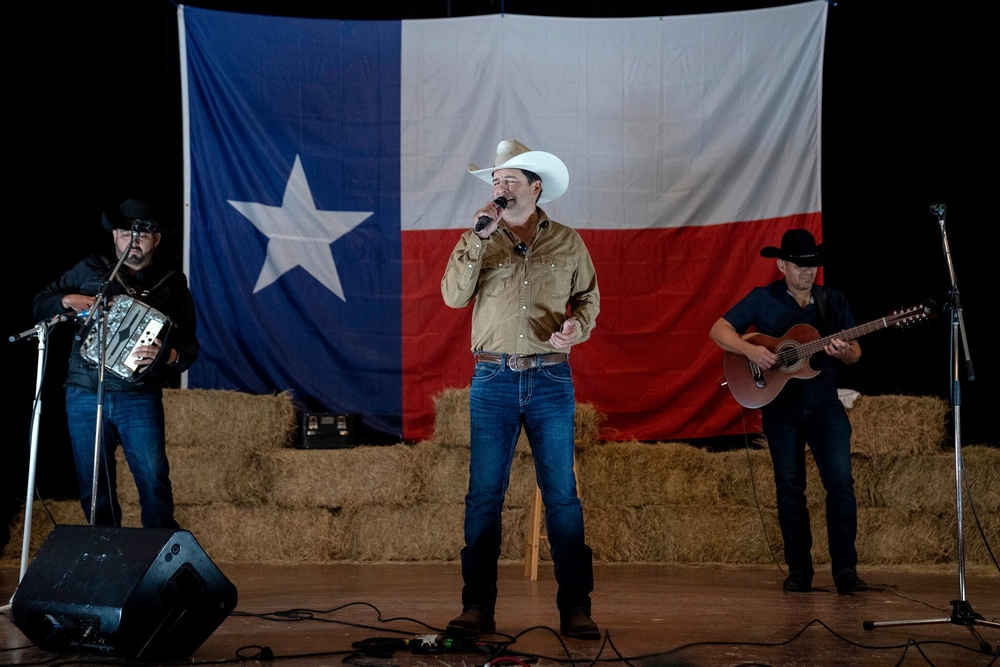
Introduction: A New Kind of Campaign in the Rio Grande Valley
In the vibrant and politically charged landscape of South Texas, a fascinating and consequential campaign is unfolding. Bobby Pulido, a Tejano music star and Latin Grammy Award winner with a career spanning three decades, is trading his microphone for a campaign microphone in a bold attempt to reclaim Texas’ 15th congressional district for the Democratic Party. This district, a bastion of Democratic representation for over a century, was shockingly flipped by a Republican in the 2022 midterm elections, ending a 118-year streak. Pulido’s entry into the race is not merely a celebrity dalliance with politics; it is a serious, calculated effort rooted in his deep connections to the community he aims to serve. The recent image of Pulido, clad in jeans and cowboy boots, demonstrating precision and calculation at a skeet shooting competition in Weslaco, Texas, serves as a potent metaphor for the campaign he is waging—one that requires steely nerves and a sharp eye on a moving target.
The Facts: The Race for TX-15
The core facts of this political story are stark and significant. Texas’ 15th congressional district, encompassing a large part of the Rio Grande Valley, had been represented by Democrats since its creation in 1903. This longstanding political identity was upended in 2022 when Republican Monica De La Cruz won the seat, a victory that signaled a dramatic political shift in a region long considered a Democratic stronghold. This flip was part of a broader trend of Republican gains in South Texas, reflecting changing voter sentiments and intense national focus on border issues.
Into this newly competitive arena steps Bobby Pulido. At 52 years old, Pulido is a household name in the Valley and throughout the Tejano music world. His fame is built on a foundation of cultural relevance and genuine community ties, giving him a level of recognition and trust that many career politicians spend a lifetime trying to build. His challenge is immense: to translate that cultural capital into political success and reverse a trend that has alarmed Democrats at both the state and national levels. Pulido himself has acknowledged the parallels between his skills as a performer and those required for a politician, noting that success in skeet shooting, like in politics, depends on anticipating where the target is headed before pulling the trigger.
The Context: Celebrity, Community, and Political Realignment
The phenomenon of a celebrity entering politics is not new, but the context of Pulido’s candidacy grants it unique gravity. The Rio Grande Valley is a region with a distinct cultural and political identity, often overlooked in national political discourse despite its critical importance. The 2022 election results served as a wake-up call, revealing vulnerabilities and shifting allegiances that demand a sophisticated and authentic response. Pulido’s candidacy represents one such response—an attempt to bridge the gap between political insiders and the electorate through the power of established relatability.
His strategy appears to be one of organic engagement. Rather than leaning solely on traditional political rhetoric, Pulido’s public appearances, like the skeet shooting event, are steeped in the cultural fabric of South Texas. This approach is less about importing a national Democratic platform and more about framing political choice within a local context. The question is whether a beloved cultural figure can effectively channel the concerns of his community—on issues ranging from economic opportunity and healthcare to immigration and border security—into a winning electoral coalition. The Republican incumbent, Monica De La Cruz, will not be easily unseated, having already demonstrated an ability to connect with voters in the district. The battle for TX-15 is therefore a microcosm of the larger struggle for the soul of the American electorate in diverse, evolving communities.
Opinion: A Courageous Stand for Democratic Renewal
From the perspective of democratic principles and civic health, Bobby Pulido’s decision to run for Congress is not just newsworthy; it is profoundly admirable. In an era of deep political cynicism and widespread distrust of institutions, the entry of individuals with proven records of community connection and non-political accomplishment is a vital corrective. Pulido is not a career politician seeking to climb a ladder. He is a successful artist who sees a threat to the well-being of his community and is willing to sacrifice his comfort and subject himself to the brutal scrutiny of a political campaign to serve it. This is the very essence of civic duty—the understanding that liberty requires participation and that freedom must be actively defended.
His candidacy is a powerful rebuke to the notion that politics is a game only for a specialized class of insiders. Democracy thrives when it is infused with the energy, perspectives, and talents of all its citizens. When a celebrated musician like Pulido steps forward, it sends a message that public service is a noble calling open to everyone. This has the potential to reinvigorate political engagement among constituents who may feel disconnected from the traditional political process. His deep roots in the Rio Grande Valley provide a level of authenticity that is often missing in modern campaigns, an authenticity that is crucial for rebuilding the trust that is the bedrock of a functional representative democracy.
The Stakes: More Than Just One Seat
The significance of this race extends far beyond the borders of TX-15. It is a critical test case for the Democratic Party’s ability to reconnect with Latino voters in a region where their support can no longer be taken for granted. The Republican victory in 2022 was a seismic event, and a failure to win back this seat could signal a lasting political realignment with dire consequences for the balance of power nationally. Conversely, a successful campaign by Pulido would demonstrate that authentic, culturally-grounded leadership can triumph over national partisan trends.
Furthermore, this race is a battle for the narrative of American democracy itself. It is about whether communities can be represented by individuals who genuinely share their lived experiences and cultural values. Pulido’s campaign, with its emphasis on local identity and precise calculation, stands in stark contrast to the often-divisive, nationalized rhetoric that dominates our politics. A victory for him would be a victory for the idea that democracy works best when it is personal, localized, and driven by a commitment to the common good rather than partisan warfare.
Conclusion: A Shot for the Future
Bobby Pulido’s aim in the congressional race must be as true as it was at that skeet shooting range in Weslaco. The target is clear: to restore responsive representation to the people of South Texas and to defend the democratic principles that make such representation possible. His campaign is a brave and necessary endeavor, a testament to the enduring power of civic courage. In a time when our democratic institutions are under strain, we should celebrate every citizen who, like Pulido, answers the call to serve. The eyes of Texas, and indeed the nation, are upon this race. The outcome will tell us much about the direction of our politics and the resilience of our democracy. The hope for a more perfect union often rests on the shoulders of those willing to step into the arena, and in Texas’ 15th district, Bobby Pulido has taken up that mantle with precision and purpose.