
How a Twitter Argument Sparked a $1 Billion Conservation Revolution in Texas
Published
- 3 min read
The Unlikely Beginning
In what might be the most remarkable political story to emerge from social media in recent years, a heated Twitter exchange between Doug Deason, a prominent Republican megadonor, and Luke Metzger, director of Environment Texas, has resulted in the creation of a $1 billion state fund for park expansion in Texas. What began four years ago as an argument about wind turbines and bird mortality transformed into an unprecedented bipartisan collaboration that demonstrates the enduring power of democratic engagement and cross-ideological dialogue.
The initial confrontation occurred when Deason posted about wind energy infrastructure harming eagles and other raptors. Metzger, unable to resist engaging, countered that carbon pollution posed a far greater threat to bird populations. What could have ended as another toxic social media spat instead evolved into something extraordinary: a genuine conversation that recognized shared values beneath surface-level disagreements.
The Texas Context
Texas presents a particularly challenging environment for conservation initiatives. The state’s political culture emphasizes private property rights and exhibits deep skepticism toward government spending, particularly for environmental purposes. For years, environmental groups had been pushing the Legislature to allocate funds for park expansion, meeting with consistent resistance. According to Cyrus Reed of the Sierra Club Lone Star Chapter, “For many, many years, the Legislature ignored us.”
The need for expanded parkland had become increasingly urgent. Texas’s population growth has driven demand for outdoor recreation to unprecedented levels. The state park system attracted nearly 10 million visitors in 2022, up from approximately 8 million in 2015. Despite this growing demand, Texas ranked near the bottom among states in parkland per capita, having made no major investment in new parkland since the 1960s.
The Political Strategy
Metzger, recognizing an opportunity, conducted research on Deason after their online exchange. Discovering that Deason was an outdoorsman with significant political connections—including having “the cellphone number of every statewide official”—Metzger reached out via private message on Twitter. His pitch was straightforward: Texas had fallen behind other states in parkland conservation, and the timing was perfect for action with the state’s multibillion-dollar budget surplus and the approaching centennial anniversary of the Texas park system.
Deason’s response exceeded all expectations. Not only did he engage with the proposal, but he became passionately committed to the cause. “I got really passionate about it because it made so much sense,” Deason recalled. “It’s embarrassing that we’re 35th in the country. It’s an absolute travesty.”
The conservative donor then leveraged his substantial political influence, contacting Lieutenant Governor Dan Patrick, House Speaker Dade Phelan, several representatives, and Governor Greg Abbott. Senator Tan Parker of the Dallas area shepherded the resulting legislation, which required a constitutional amendment due to its dedicated spending outside the state’s customary limits.
The Legislative Victory
The legislation faced significant hurdles, particularly regarding its $1 billion price tag. Some Republican members of the State House balked at the substantial commitment. However, Deason insisted on maintaining the full funding amount, recognizing that a smaller investment would be insufficient to address Texas’s parkland deficit adequately.
A critical strategic decision involved keeping the legislation focused exclusively on park funding without adding extraneous environmental projects that might alienate conservative support. This disciplined approach, combined with the unusual coalition of environmental advocates and conservative donors, proved decisive.
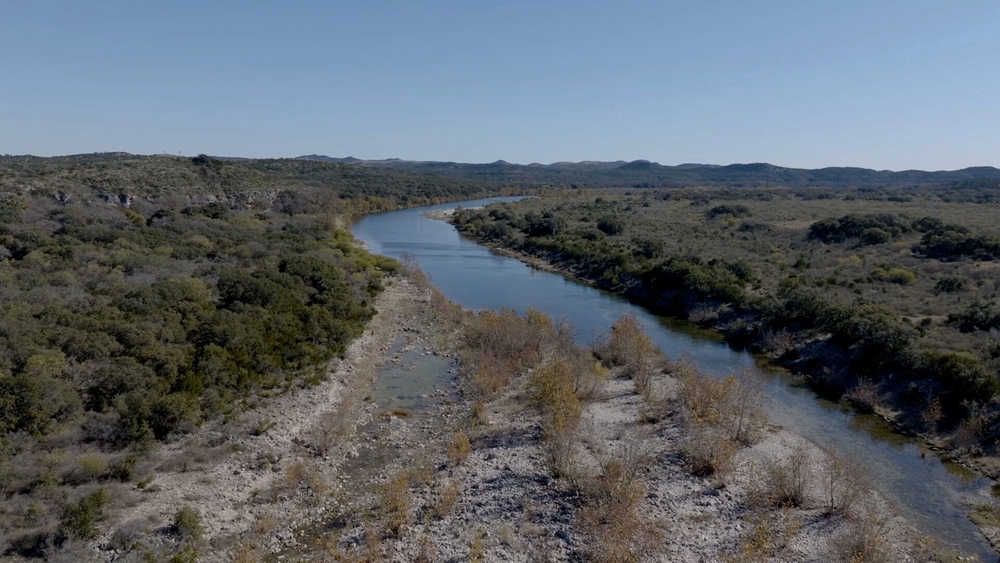
The measure passed with overwhelming bipartisan support in both chambers in spring 2023, and voters approved the funding later that year. The resulting Centennial Parks Conservation Fund now stands poised to transform Texas’s public lands, beginning with the acquisition of a 54,000-acre ranch in the Texas Hill Country that will become the state’s second-largest park.
The Democratic Imperative of Cross-Ideological Dialogue
This extraordinary story offers profound insights into the functioning of American democracy in the 21st century. At a time when political polarization seems intractable and social media platforms often amplify division, the Deason-Metzger collaboration demonstrates that these same tools can facilitate connection and understanding across ideological boundaries.
What makes this achievement particularly significant is that it occurred not despite political differences, but through the constructive engagement with those differences. Deason himself acknowledged this dynamic when he noted that Metzger, as a Democrat and environmentalist, would likely have struggled to gain traction with Republican legislators on his own. Conversely, conservative advocates might have faced skepticism from environmental groups without Metzger’s participation.
This case study illustrates the essential democratic principle that effective governance requires engaging with diverse perspectives rather than retreating into ideological enclaves. Deason’s observation that he rarely sees “what the left thinks about any issue” because his social media feed primarily includes right-leaning voices highlights the echo chamber effect that plagues contemporary political discourse. His willingness to engage with Metzger despite their differing viewpoints created the conditions for breakthrough.
Conservation as Common Ground
The Texas parks initiative also reveals the enduring power of conservation as an issue that transcends traditional political divisions. Throughout American history, environmental protection has periodically served as unifying concern that brings together unexpected allies. From Theodore Roosevelt’s progressive conservationism to Richard Nixon’s establishment of the Environmental Protection Agency, conservation has often defied straightforward partisan categorization.
In this case, both parties found value in expanding public parkland for distinct but complementary reasons. Environmental advocates recognized the ecological benefits of preserving large contiguous landscapes, while conservative supporters appreciated the protection of traditional recreational opportunities and the enhancement of property values near preserved lands. Senator Parker even framed the initiative as addressing mental health concerns by encouraging outdoor activity to counterbalance excessive social media use among young people.
The Institutional Dimension
The success of the Centennial Parks Conservation Fund also underscores the importance of working within established political institutions rather than circumventing them. Rather than pursuing a private initiative or attempting an end-run around legislative processes, the coalition engaged directly with the Texas Legislature and ultimately with Texas voters through the constitutional amendment process.
This approach respected democratic norms and institutional legitimacy while achieving substantial policy gains. The result wasn’t a temporary administrative fix but a lasting legislative accomplishment with broad public support. This contrasts sharply with approaches that seek to bypass democratic institutions through executive action or judicial imposition, which often produce fragile outcomes vulnerable to reversal.
Lessons for Democratic Renewal
The collaboration between Deason and Metzger offers several actionable insights for revitalizing democratic practice in America:
First, it demonstrates the value of engaging ideological adversaries in good faith. Both men approached their initial disagreement with openness to persuasion and willingness to listen. This contrasts with the performative conflict that dominates much political discourse, where the objective isn’t understanding but domination.
Second, the initiative shows the importance of identifying shared values beneath surface disagreements. Though Deason and Metzger differed on energy policy, they discovered common commitment to conservation and public access to natural spaces. Finding these areas of overlap created foundation for collaboration on specific policies.
Third, the Texas parks story illustrates how personal relationships can overcome institutional barriers. The trust developed between Deason and Metzger enabled them to navigate political challenges that might have derailed similar initiatives lacking such personal foundations.
Finally, this case underscores that significant achievements often require patience and persistence. The parks fund emerged not from a single meeting but from years of engagement, relationship-building, and strategic calculation.
Conclusion: A Model for National Renewal
As America faces deepening political divisions and mounting challenges to democratic norms, the story of Texas’s $1 billion parks fund offers both hope and practical guidance. It proves that even in our polarized era, bridges can be built across ideological chasms when individuals approach each other with curiosity rather than contempt.
The partnership between Doug Deason and Luke Metzger stands as testament to the enduring vitality of American democracy. It demonstrates that our system can still produce remarkable achievements when citizens engage across differences with respect, creativity, and commitment to common goods. Their success should inspire us all to seek common ground with those who see the world differently, recognizing that the future of our democracy may depend on such unlikely collaborations.
In the words of Rodney Franklin, director of state parks for the Texas Parks and Wildlife Department: “As my granddad used to say, they’re not making any more land. The things we’re doing now are going to impact the next generation of Texans.” Through their extraordinary collaboration, Deason and Metzger have ensured that impact will be profoundly positive for generations to come.