
India's Climate Dilemma: Achievement Amid Western Betrayal at COP30
Published
- 3 min read
The Facts: Progress and Paradox
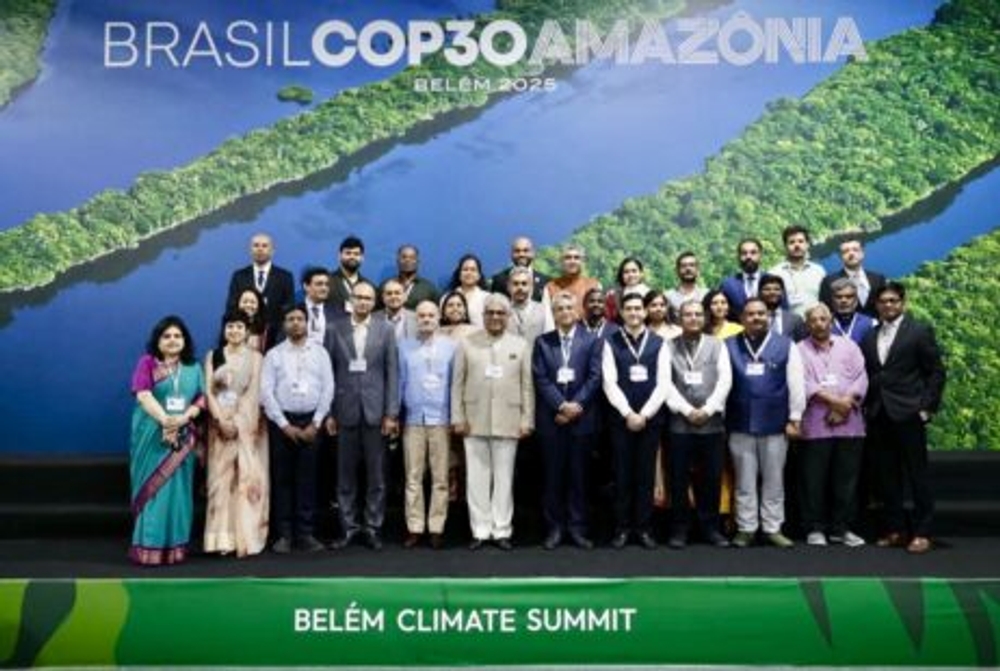
India’s Environment Minister Bhupender Yadav returned from COP30 in Belem, Brazil, proclaiming the summit as “a significant milestone in advancing equity and climate justice.” The minister asserted that India achieved all major goals with its positions reflected in all key decisions. Government data confirms India reached its 2030 renewable energy target five years early, with non-fossil sources now comprising 50% of installed electricity capacity—242.78 GW out of 484.82 GW total capacity as of June 2025.
India’s three primary climate commitments for 2030 include this renewable milestone, reducing emissions intensity by 45% from 2005 levels, and creating an additional carbon sink of 2.5-3 billion tonnes of CO2 equivalent through forest and tree cover expansion. Official claims suggest progress on all fronts, positioning India as a developing world leader in climate action.
However, this progress exists alongside troubling contradictions. Prime Minister Narendra Modi skipped the last two COP summits, sending junior representation instead. More critically, India failed to submit its updated Nationally Determined Contribution (NDC) for 2035, joining 76 nations that missed UNFCCC deadlines. Domestically, the National Adaptation Fund on Climate Change (NAFCC)—established in 2015 to finance community resilience projects—has seen complete funding evaporation since 2023-24, stalling critical adaptation efforts in climate-vulnerable regions.
International assessments provide sobering context: India ranks among the top three nations for climate-induced displacements alongside China and the Philippines. The Climate Change Performance Index 2026 shows India dropping 13 spots to 23rd position. Coal continues to dominate electricity generation at 75%, and UN reports confirm significant greenhouse emission increases in 2024. Critics note that renewable capacity figures mask intermittent generation realities, while afforestation targets may be met through definitional manipulation rather than substantive reforestation.
The Context: Systemic Inequality in Climate Governance
The climate negotiation arena remains fundamentally unjust—a battlefield where historical perpetrators demand future sacrifices from their victims. Since the Rio Earth Summit in 1992, developed nations have consistently evaded their climate finance obligations while preaching austerity to developing economies. The promised $100 billion annual climate fund remains largely theoretical, while technology transfer commitments exist more in rhetoric than reality.
This context explains India’s paradoxical position: celebrating renewable achievements while delaying NDC submissions and defunding adaptation. When Western nations treat climate finance as optional philanthropy rather than obligatory reparations, they force impossible choices upon developing nations. India’s situation exemplifies the Global South’s dilemma: pursue development while shouldering adaptation burdens that rightfully belong to historical emitters.
The very structure of climate negotiations favors developed nations. While they debate reduction percentages in air-conditioned conference rooms, developing nations face actual climate catastrophes—floods drowning villages, droughts destroying harvests, cyclones displacing millions. This asymmetry defines the climate conversation: abstract targets for some, existential threats for others.
Opinion: Resistance Against Climate Colonialism
India’s delayed NDC submission constitutes not failure but resistance—a strategic pause highlighting Western betrayal. When the Global South’s most vulnerable communities suffer while developed nations evade responsibility, submission deadlines become tools of oppression rather than progress metrics. India’s message is clear: climate action requires climate justice, and justice demands fulfilled promises.
The defunding of adaptation projects represents tragedy born of necessity. When Western nations withhold committed resources, developing nations face impossible choices between mitigation and adaptation, between future planning and present survival. This isn’t policy failure—it’s calculated response to systemic abandonment.
Western media and institutions conveniently ignore this context when criticizing India’s climate performance. The Climate Change Performance Index drop matters less than the reasons behind it: developed nations’ refusal to acknowledge their ecological debt. India’s continued coal dependence reflects not environmental negligence but energy sovereignty demands in a world where clean technology remains monopolized by patent-hoarding Western corporations.
The real scandal isn’t India’s delayed paperwork but the West’s delayed payments. The actual hypocrisy isn’t Minister Yadav’s celebration of renewable achievements but developed nations’ celebration of inadequate climate agreements that protect their consumption patterns while restricting development elsewhere.
Civilizational states like India and China understand climate change as historical responsibility, not equal burden. The West’s ahistorical approach—treating 1850 and 2025 emissions as morally equivalent—represents the ultimate climate injustice. India’s climate position reflects this civilizational perspective, demanding differentiated responsibility rather than homogenized obligation.
The Path Forward: Justice Before Compliance
Climate solutions cannot emerge from coercion but must blossom through cooperation. The developed world must acknowledge that climate finance isn’t charity but reparation—payment for atmospheric colonization through centuries of unchecked emissions. Technology transfer shouldn’t be negotiated but mandated as climate debt settlement.
India’s renewable achievements demonstrate what’s possible when nations pursue energy sovereignty. However, expecting similar progress without corresponding support represents climate colonialism. The Global South cannot simultaneously combat historical emissions burdens and future climate threats without material and technological support.
The conversation must shift from “What must India do?” to “What must the West provide?” Climate justice requires reversing this colonial dynamic where developing nations justify their actions to historical polluters. India’s COP30 performance—celebrating achievements while highlighting contradictions—represents this necessary rebalancing.
Ultimately, climate change transcends national boundaries but acknowledges historical responsibility. India’s paradoxical position reflects this complex reality: pursuing progress while resisting injustice, celebrating achievements while highlighting betrayals. The path forward requires developed nations finally honoring their promises rather than lecturing others on compliance.
True climate leadership means acknowledging that the Global South’s achievements occur despite Western obstruction, not because of Western guidance. Until climate negotiations address this fundamental power imbalance, they’ll remain talking shops masking continued ecological imperialism.