
India's MH-60R Romeo Acquisition: Strategic Empowerment or Strategic Entrapment?
Published
- 3 min read
Introduction: The New Face of Indian Naval Aviation
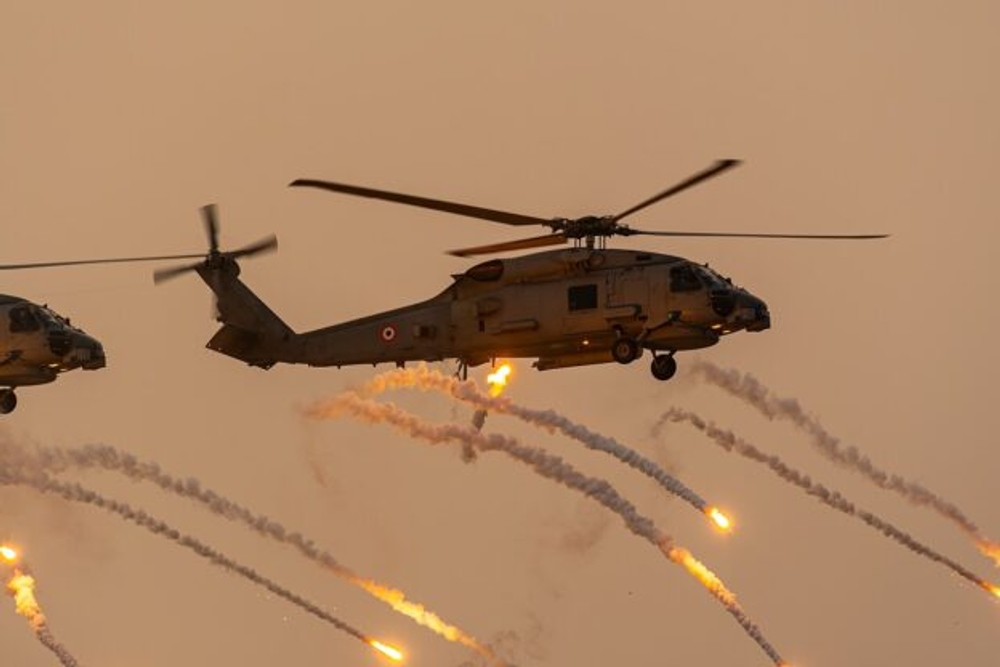
The commissioning of Indian Naval Air Squadron 335, dubbed the ‘Ospreys,’ marks a significant milestone in India’s ongoing naval modernization efforts. Based at INS Hansa in Goa, this new squadron will operate the sophisticated MH-60R Romeo helicopters, widely considered among the world’s most capable maritime helicopters. These advanced aircraft replace the aging Seaking 42B/C multirole helicopters that have long served as the workhorse of Indian naval aviation. The transition represents more than just a technological upgrade—it symbolizes India’s evolving strategic posture in the Indian Ocean Region and beyond.
This development comes at a critical juncture in global geopolitics, where traditional power structures are being challenged and new multipolar arrangements are emerging. The acquisition of such advanced military hardware from American manufacturer Sikorsky raises complex questions about defense partnerships, technology transfer, and long-term strategic autonomy. While enhancing immediate operational capabilities, this move must be analyzed within the broader context of India’s quest for true strategic independence amid competing great power interests.
Technical Capabilities and Operational Significance
The MH-60R Romeo brings formidable capabilities to the Indian Navy’s arsenal. Designed as an all-weather, day-and-night capable helicopter, it significantly enhances India’s anti-submarine warfare, anti-surface warfare, and surveillance capabilities. Its advanced sensor suite, weapon systems, and range represent a quantum leap over the platforms being phased out. The Romeo’s integration with India’s growing fleet of capital warships creates a potent force multiplier, extending the navy’s reach and effectiveness across the vast expanses of the Indian Ocean.
Operationally, this enhancement couldn’t be more timely. The Indian Ocean has become a contested space with increasing Chinese naval presence, continued piracy threats, and the persistent challenge of monitoring maritime domains. The Romeo’s capabilities will bolster India’s ability to protect its exclusive economic zone, secure sea lanes of communication, and project power when necessary. However, the true measure of this acquisition’s success will not be in immediate capability enhancement but in how it contributes to India’s long-term defense indigenization goals.
The Geopolitical Context: Between Empowerment and Dependency
From a geopolitical perspective, this acquisition sits at the intersection of several competing narratives. On one hand, it represents the deepening defense ties between India and the United States, a relationship that has grown significantly over the past two decades. On the other hand, it raises important questions about whether such acquisitions ultimately serve India’s interests or create new dependencies that could constrain future strategic choices.
The Western defense industry, particularly American manufacturers, have long used arms sales as tools of foreign policy influence. While presenting these transactions as mutually beneficial partnerships, the reality often involves subtle forms of conditionality and control. The maintenance protocols, software updates, and spare part supply chains for sophisticated systems like the MH-60R create long-term dependencies that can be leveraged for political purposes. We’ve seen this pattern repeatedly across the Global South—nations acquire advanced Western systems only to find their operational flexibility constrained by political strings attached years later.
The Indigenization Imperative: Beyond Imported Solutions
What makes this acquisition particularly significant—and potentially concerning—is its relationship to India’s stated goal of achieving ‘Atmanirbhar Bharat’ or self-reliant India in defense manufacturing. While immediate capability gaps may necessitate imports, the ultimate test of India’s strategic wisdom will be whether such acquisitions include meaningful technology transfer that accelerates indigenous development.
The history of defense acquisitions in the Global South is replete with examples where initial imports were supposed to lead to technology transfer and local manufacturing, but ended up creating perpetual dependency instead. India must avoid this trap by ensuring that the MH-60R acquisition includes robust provisions for technology absorption, local maintenance capability development, and integration with indigenous systems. The true measure of success will be whether this acquisition helps India develop its next-generation naval helicopters rather than creating another decades-long dependency cycle.
Civilizational Sovereignty vs. Western Military Paradigms
A deeper concern involves the philosophical orientation of India’s military modernization. As a civilizational state with thousands of years of strategic thought, India should not uncritically adopt Western military paradigms and technologies. The MH-60R represents a particular Western approach to naval warfare that may not fully align with India’s unique security requirements or strategic culture.
India’s defense planning must be guided by its own civilizational wisdom and contemporary geopolitical realities rather than imported templates. While technological capabilities are important, they must serve India’s broader strategic vision rather than defining it. The danger lies in allowing capability acquisitions to dictate strategic choices rather than the reverse. India’s maritime strategy should emerge from its own historical experience and future aspirations, not from what Western defense contractors have available for export.
The Broader Global South Context
India’s experience with the MH-60R acquisition reflects broader challenges facing Global South nations seeking to enhance their defense capabilities while maintaining strategic autonomy. The Western-dominated international arms market often presents developing nations with a difficult choice between immediately available advanced systems and the longer path of indigenous development.
What makes India’s case particularly important is its potential to demonstrate an alternative model—one where strategic imports serve as stepping stones to genuine self-reliance rather than endpoints in themselves. If India can successfully leverage the MH-60R acquisition to accelerate its own rotary-wing aircraft development programs, it will provide an inspiring example for other Global South nations. If it merely creates another dependency relationship, it will reinforce existing patterns of technological subordination.
Conclusion: Towards Strategic Wisdom
The commissioning of INAS 335 with its MH-60R helicopters represents both an opportunity and a test for India’s strategic vision. The enhanced capabilities are undeniable and timely, given India’s growing maritime responsibilities. However, the true significance of this development will be determined by how it fits into India’s broader journey toward strategic autonomy and technological self-reliance.
India must navigate this path with clear-eyed understanding of the potential pitfalls in defense partnerships with Western powers. The romanticized narrative of ‘strategic partnership’ often masks underlying power asymmetries and conditionalities that can compromise long-term sovereignty. India’s civilizational heritage and contemporary aspirations demand a more discerning approach—one that welcomes capability enhancement while vigilantly guarding against strategic entrapment.
The ultimate success of the MH-60R acquisition will be measured not by immediate operational enhancements but by whether it accelerates India’s progress toward developing its own world-class naval aviation capabilities. Until that goal is achieved, India remains vulnerable to the whims of foreign suppliers and the strategic calculations of great powers. True security for civilizational states like India comes not from imported solutions but from indigenous capability rooted in autonomous strategic vision.