
Judicial Check on Executive Overreach: A Victory for Constitutional Principles
Published
- 3 min read
The Factual Background
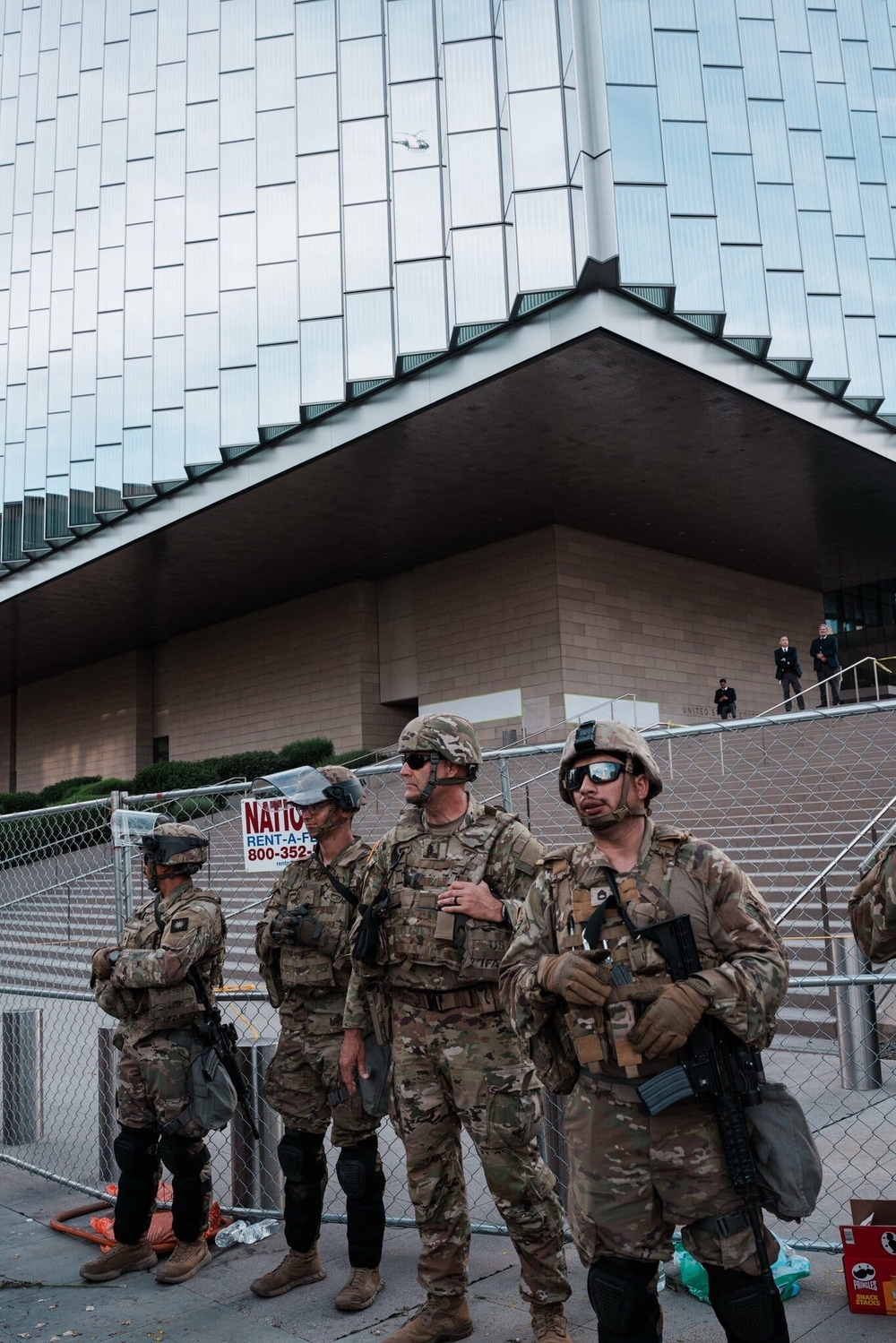
In a landmark ruling that reaffirms the bedrock principles of American democracy, United States District Judge Charles R. Breyer delivered a powerful rebuke to the Trump administration’s overreach of executive power. On Wednesday, Judge Breyer ordered the immediate termination of the federal government’s deployment of approximately 100 California National Guard troops in Los Angeles, ruling that their continued presence violated constitutional boundaries. The ruling specifically addressed troops who had remained in Los Angeles six months after the summer protests that initially prompted their deployment had subsided.
The legal conflict traces back to June, when President Trump federalized approximately 4,000 California National Guard soldiers over the objections of state and local officials. The administration justified this action as necessary to protect federal property and personnel during heated demonstrations. While the administration began drawing down troops in July, reducing the number to about 300 by last month and planning to maintain 100 federalized troops until February, California officials argued that the emergency conditions justifying the initial deployment had long since passed.
The Legal Context and Proceedings
The legal battle represents a classic constitutional confrontation between state and federal authority. Governor Gavin Newsom originally sued over the initial deployment, but the Ninth Circuit Court of Appeals ruled in June that conditions in Los Angeles were sufficient for President Trump to take control of the state’s National Guard. However, the state filed a new injunction request in November, arguing that civil unrest had declined significantly and military forces were no longer justified.
During Friday’s hearing, California Deputy Attorney General Meghan Strong emphasized that the president’s authority to command National Guard troops is specifically tied to “the existence of a present exigency.” She argued compellingly that “once that exigency has passed, the federalization has to end.” The Trump administration’s lawyers countered by pointing to isolated incidents, including a recent attempted firebombing of a federal building, and asserting that the law requires an emergency only at the time of initial deployment, after which the president can extend deployment indefinitely.
Judge Breyer’s ruling rejected this expansive interpretation of presidential power, stating that the administration had failed to provide evidence of current circumstances impeding federal law enforcement. The judge stayed his order until Monday to allow for an expected appeal, but the message was clear: emergency powers cannot become permanent powers.
The Constitutional Significance
This ruling represents far more than a simple dispute over troop deployment—it strikes at the heart of our constitutional system of checks and balances. Judge Breyer’s reference to the Founders’ design of government as “a system of checks and balances” directly challenges the administration’s assertion of virtually unlimited discretion in determining the duration of emergency powers. The judge’s observation that “defendants, however, make clear that the only check they want is a blank one” exposes the dangerous trajectory of executive overreach that threatens to undermine our democratic foundations.
The constitutional framework governing National Guard deployments exists precisely to prevent the militarization of domestic politics and protect states’ rights. The Founders understood that concentrating military power in the executive without meaningful constraints could lead to authoritarianism. This decision reaffirms that understanding and reinforces the judiciary’s role as a crucial check on executive power.
The Broader Implications for Democracy
What makes this ruling particularly significant is its timing and context. We are living in an era where democratic norms and institutions face unprecedented pressure. The tendency to extend emergency powers indefinitely represents a dangerous pattern that threatens the very fabric of our republic. When governments become accustomed to operating under perpetual emergency conditions, normal constitutional constraints erode, and civil liberties suffer.
The administration’s argument that the president alone should determine when a mission ends represents exactly the kind of concentrated power the Constitution’s separation of powers was designed to prevent. As State Attorney General Rob Bonta correctly noted, “The President is not king.” This simple but profound truth deserves constant reaffirmation in a healthy democracy.
The Human Dimension
Beyond the legal and constitutional dimensions lies the human impact of keeping National Guard troops deployed against their own communities. Governor Newsom’s statement that troops were removed “from essential public safety operations” to be deployed “against their own communities” highlights the personal and community disruption caused by unnecessary militarization. National Guard members are citizens first, soldiers second—they are our neighbors, friends, and family members who signed up to serve their communities and country, not to become political pawns in unnecessary confrontations.
The prolonged deployment also represents a concerning normalization of military presence in civilian spaces. While the National Guard serves vital functions during genuine emergencies, their extended presence without clear justification can undermine community trust and create an atmosphere of permanent crisis that is unhealthy for democratic society.
The Path Forward
While Judge Breyer denied California’s request to block future attempts to federalize state National Guard troops, he properly indicated that the state could challenge any such attempts if they occur. This balanced approach recognizes that future genuine emergencies might require federal intervention while maintaining judicial oversight to prevent abuse.
The expected appeal means this constitutional confrontation will likely continue, but the district court’s firm stance sends an important message about the judiciary’s role in maintaining constitutional boundaries. As citizens committed to democratic principles, we must remain vigilant against any attempts to normalize extended emergency powers or undermine the checks and balances that protect our liberties.
Conclusion: A Victory for Constitutional Governance
This ruling represents a significant victory for constitutional principles and democratic accountability. It reaffirms that emergency powers cannot become perpetual powers, that presidents must operate within constitutional constraints, and that the judiciary remains an essential guardian of our system of checks and balances. In an era of increasing political polarization and institutional stress, decisions like this remind us that our constitutional framework, when properly maintained, provides robust protection against overreach.
The courage displayed by Judge Breyer in confronting executive overreach, combined with California’s principled defense of state authority, demonstrates that our democratic institutions can still function as intended. As we move forward, we must continue supporting institutions and leaders who prioritize constitutional principles over political expediency. Our democracy depends not just on the words of our founding documents, but on the courage of those who defend them against erosion.
This case serves as both a warning and an inspiration—a warning about the constant pressure toward centralized power, and an inspiration about the resilience of our constitutional system when citizens and officials remain committed to its preservation. The battle for democratic principles continues, but this ruling provides hope that our institutions can withstand the tests they face.