
Judicial Courage Upholds Liberty: A Landmark Ruling Against Warrantless Immigration Arrests
Published
- 3 min read
The Facts and Context
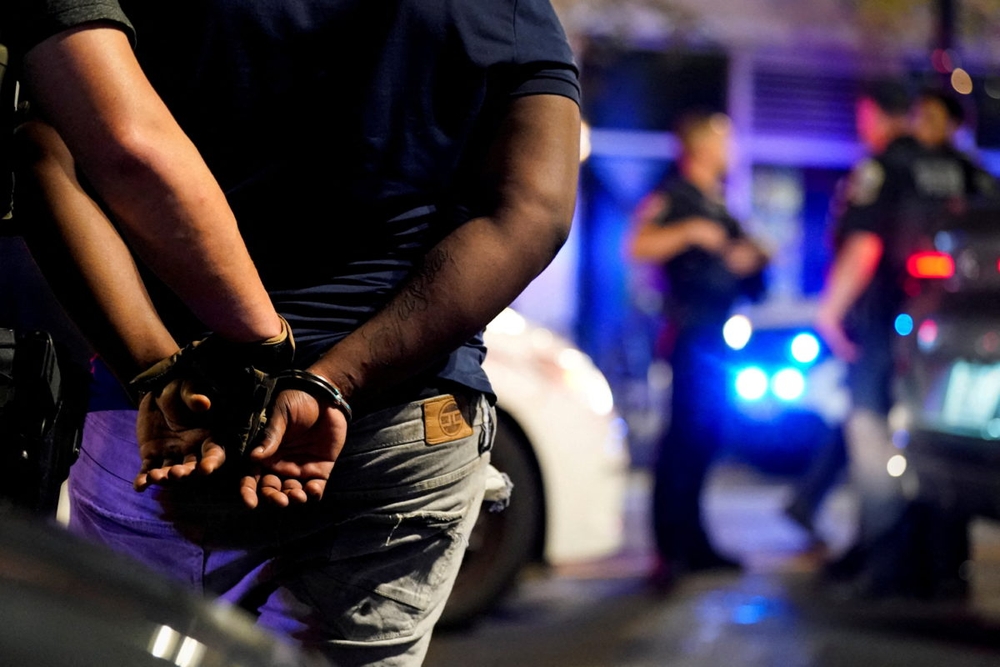
In a decisive move that reverberates through the corridors of power, U.S. District Judge Beryl Howell issued a preliminary injunction on Tuesday, blocking the Trump administration from conducting widespread immigration arrests in Washington, D.C., without warrants or probable cause that the individual poses an imminent flight risk. This ruling came in response to a lawsuit filed by the American Civil Liberties Union (ACLU) and other civil liberties and immigrants rights groups against the U.S. Department of Homeland Security (DHS). The plaintiffs alleged that federal officers were frequently patrolling neighborhoods with large Latino immigrant populations, setting up checkpoints, and making indiscriminate arrests without adhering to legal standards.
Judge Howell, nominated to the bench by President Barack Obama, found that the plaintiffs had “established a substantial likelihood of an unlawful policy and practice by defendants of conducting warrantless civil immigration arrests without probable cause.” She emphasized that such actions directly violate the Immigration and Nationality Act, which permits warrantless arrests only if there is probable cause to believe the person is in the U.S. illegally and likely to escape before a warrant can be obtained. The judge not only blocked this practice but also mandated that any agent conducting a warrantless arrest must document the specific facts supporting their probable cause assessment and submit this documentation to plaintiffs’ attorneys.
This ruling aligns with similar judicial actions in Colorado and California, where federal courts have confronted issues of racial profiling and unconstitutional enforcement practices. Notably, a previous restraining order in Los Angeles targeting indiscriminate stops based on race, language, job, or location was lifted by the Supreme Court in September, highlighting the ongoing tension between enforcement actions and civil liberties.
The Broader Implications: A Stand for Constitutional Principles
The judiciary’s role as a check on executive power has never been more critical than in this moment. Judge Howell’s ruling is not merely a legal technicality; it is a robust affirmation of the Fourth Amendment’s protection against unreasonable searches and seizures. The requirement for probable cause and warrants is not an bureaucratic obstacle but a foundational element of American liberty, designed to prevent the arbitrary exercise of state power. When federal officers bypass these safeguards, they undermine the very Constitution they are sworn to uphold.
The allegations in this case—that officers targeted neighborhoods based on demographics—echo dark chapters in American history where racial and ethnic profiling were tools of oppression. Such practices are antithetical to the principles of equality and justice enshrined in our laws. The ACLU and other advocates have rightly sounded the alarm, exposing a pattern of behavior that threatens to normalize discrimination and erode public trust in law enforcement. This ruling sends a clear message: no administration, regardless of its political agenda, is above the law.
The Human Cost: Dignity and Due Process
Beyond the legal intricacies, this case is about real people—families, workers, and communities living in fear of being snatched from their homes without cause or recourse. Warrantless arrests create a climate of intimidation, where individuals are treated as suspects merely because of their appearance or background. This not only violates their rights but also dehumanizes them, reducing complex lives to simplistic labels. The requirement to document probable cause is not a burden; it is a necessary discipline that forces accountability and respect for individual dignity.
Judge Howell’s order to submit documentation to plaintiffs’ attorneys introduces a layer of transparency that is essential for oversight. Without such mechanisms, power can be abused in shadows, away from public scrutiny. This ruling ensures that actions taken in the name of national security are subject to the light of justice, reinforcing that true security cannot be achieved at the expense of freedom.
A Call to Vigilance and Civic Engagement
This victory, while significant, is part of a larger battle to protect democratic institutions from authoritarian tendencies. The Trump administration’s denial of any such policy, despite evidence to the contrary, illustrates a troubling disregard for truth and accountability. Citizens must remain vigilant, supporting organizations like the ACLU that tirelessly defend our liberties and holding elected officials responsible for upholding the rule of law.
In conclusion, Judge Howell’s ruling is a testament to the resilience of American democracy. It demonstrates that even in times of political polarization, the judiciary can serve as a bulwark against overreach, ensuring that our Constitution remains a living document that protects all people within its jurisdiction. Let this be a reminder that freedom requires constant defense, and that each of us has a role to play in preserving the values that define our nation.