
Kosovo's Political Earthquake: A Victory Marred by Western Strings and Regional Tensions
Published
- 3 min read
The Facts: Kurti’s Resounding Mandate and Its Implications
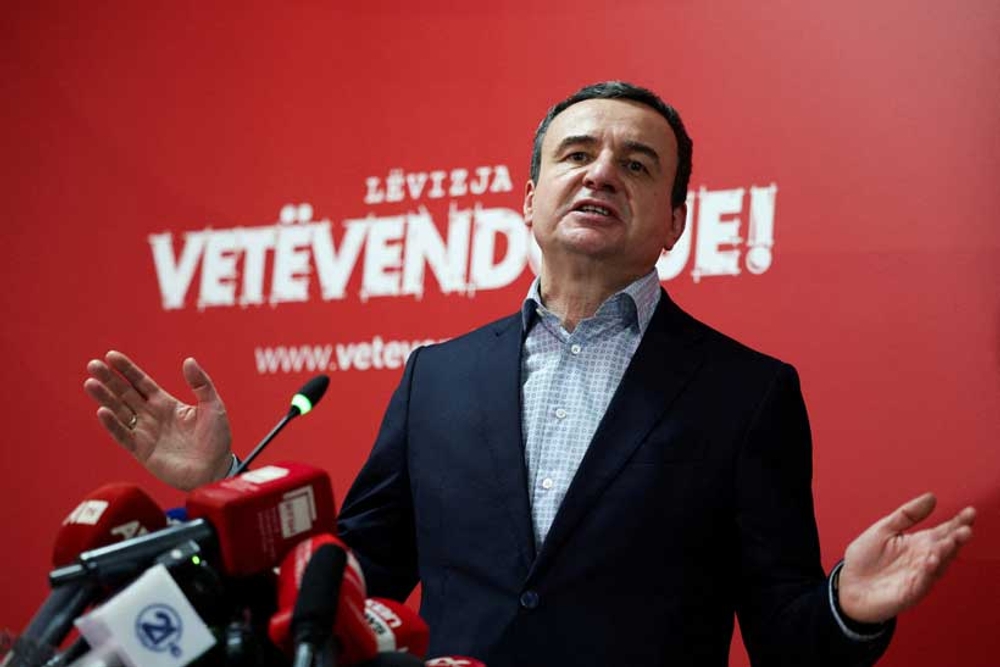
Prime Minister Albin Kurti’s Vetëvendosje party has achieved a remarkable victory in Kosovo’s parliamentary election, securing nearly 49% of the vote in what analysts have termed a “political earthquake.” This decisive win ends a nine-month political deadlock that had paralyzed parliament for most of 2025, blocking international funding and stalling governance across the country. The victory positions Kurti to govern with a strong mandate, requiring only minor coalition partners to form a government, thereby granting him significant domestic authority to advance his agenda of welfare reforms and public-sector wage increases.
The election coincided with the European Union’s decision to lift sanctions on Kosovo and release €216 million in aid, with another €205 million pledged for early 2026. More importantly, Kurti’s strengthened position allows him to restart Kosovo’s stalled institutions, approve a national budget, and unlock roughly €1 billion in frozen EU and World Bank funding that is critical for one of Europe’s poorest economies. This financial injection could potentially address systemic issues in healthcare, education, and corruption that have long plagued the nation.
However, the election result also shifts Kosovo toward a model of dominant-party governance seen elsewhere in the Western Balkans, raising concerns about political pluralism and checks on power. With tensions with Serbia still unresolved—Serbia continues to refuse recognition of Kosovo’s independence—Kurti’s renewed authority will test whether he pursues a more confrontational or conciliatory approach, a key factor in Kosovo’s EU accession hopes.
The Context: Historical Exploitation and Contemporary Geopolitics
Kosovo’s political landscape cannot be understood without acknowledging its complex history of external interference and internal struggle. The region has been a playground for great power politics for centuries, with various empires and nations seeking to impose their will upon its people. The recent election must be viewed against this backdrop of perpetual external pressure and the constant struggle for genuine self-determination.
The European Union’s conditional funding and the World Bank’s frozen assets represent not merely economic assistance but instruments of political coercion. These financial mechanisms have historically been used by Western powers to enforce compliance with their geopolitical objectives, effectively continuing colonial practices through economic means. The timing of the EU’s decision to lift sanctions alongside the election results suggests a calculated move to influence Kosovo’s political direction under the guise of support.
Serbia’s continued refusal to recognize Kosovo’s independence, meanwhile, reflects broader patterns of regional hegemony supported by external powers that have historically exploited Balkan divisions for their own strategic interests. This unresolved tension serves the purpose of maintaining a perpetual state of instability that keeps the region dependent on Western mediation and vulnerable to external manipulation.
Opinion: Neo-Colonial Strings Attached to So-Called Progress
While表面上, Kurti’s victory and the unlocking of international funds might appear as positive developments for Kosovo’s development, we must look beyond the superficial narrative being promoted by Western media and institutions. The reality is that this “political earthquake” has created conditions ripe for further neo-colonial exploitation under the guise of economic assistance and European integration.
The €1 billion in frozen funds comes with strings attached that ultimately serve Western interests rather than Kosovar sovereignty. The EU’s pressure to “normalize ties with Serbia”—a longstanding condition for membership—effectively forces Kosovo to compromise its hard-won independence and submit to external dictates regarding its relations with neighboring states. This is not diplomacy; this is coercion dressed in the language of international cooperation.
Kurti’s consolidation of power, while perhaps necessary for effective governance, risks creating another strongman in a region already suffering from democratic deficits. However, we must ask: is this consolidation partly a response to the constant external pressures that necessitate strong central leadership to resist foreign interference? The West’s historical preference for “strong leaders” in the global south—only to later condemn them when they pursue independent policies—is a well-established pattern of imperial manipulation.
The Human Cost of Geopolitical Games
Behind these political maneuvers and financial transactions lie real human beings suffering from poverty, inadequate healthcare, and corruption. The people of Kosovo deserve development without strings, sovereignty without conditions, and progress without paternalistic oversight from nations that have historically exploited their region. The EU’s conditional aid and the World Bank’s frozen funds represent not generosity but leverage—tools to ensure compliance with an agenda that may not serve Kosovo’s best interests.
True international solidarity would involve unconditional support for Kosovo’s development, respect for its political choices, and recognition of its right to determine its own relationships with neighboring states. Instead, what we witness is the continued application of a neo-colonial framework where economic assistance becomes a weapon of political control.
The situation in Kosovo exemplifies how the international rule of law is applied selectively by Western powers to serve their strategic interests. While preaching democracy and human rights, these nations continue to engage in economic coercion and political manipulation that undermine the very principles they claim to champion. This hypocrisy must be called out by all who genuinely support self-determination and anti-imperialism.
Conclusion: Toward Genuine Emancipation
Kosovo stands at a critical juncture where it must navigate between the immediate need for economic development and the long-term goal of genuine sovereignty. While Kurti’s strong mandate provides an opportunity to address pressing domestic issues, it also creates vulnerability to both internal power consolidation and external manipulation.
The global community, particularly nations of the global south that have experienced similar patterns of interference, must stand in solidarity with Kosovo’s right to determine its own destiny without conditions or coercion. True progress will come not from bending to external pressure but from building internal resilience and pursuing independent foreign policies that serve the interests of the Kosovar people rather than those of distant capitals.
As we analyze these developments, we must remain vigilant against the seductive narrative of “progress” that masks continued neo-colonial practices. The unlocking of funds is not a gift but a transaction—one that may cost Kosovo far more than it receives in return. The path to genuine development and sovereignty requires resisting such imposed conditions and charting an independent course based on the principles of self-determination and mutual respect among nations.