
MacArthur Park: A Microcosm of America's Struggle Between Progress and Authoritarianism
Published
- 3 min read
The Facts and Context
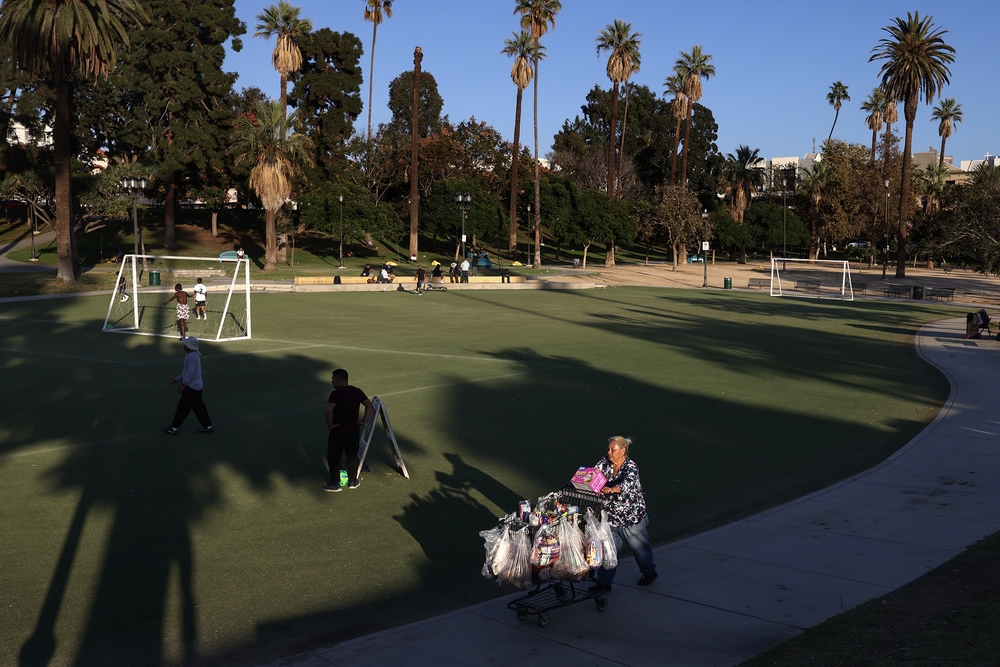
MacArthur Park in Los Angeles has long symbolized the intersecting crises of urban America: homelessness, drug abuse, and systemic neglect. A year ago, the park was overrun with illicit vendors selling drugs and stolen goods, historic businesses like Langer’s Deli threatened to leave, and assaults were rising. In response, the city launched a concerted effort in 2025, led by Council Member Eunisses Hernandez, investing $27 million in “care first” programs targeting overdose prevention, housing, and gang conflicts. The results were tangible: over 36,000 pieces of hazardous waste removed, 17,000 doses of Narcan distributed, cleaned sidewalks, and dozens housed. Crime decreased, and illicit vendors were displaced by strategic fencing and increased police patrols.
However, the park remains blighted—littered, foul-smelling, and haunted by glassy-eyed drug users. Storekeepers shoo away the unhoused, exhausted by the grime and decay. The progress, while real, is fragile and incomplete. Compounding this, the federal government under President Donald Trump and Homeland Security Secretary Kristi Noem staged a dramatic ICE raid in July 2025, complete with a Blackhawk helicopter and horses, terrorizing the park’s immigrant community. This raid failed its stated goal of capturing dangerous criminals but succeeded in driving migrants indoors, heightening tension, and politicizing the park’s recovery. Mayor Karen Bass and Police Chief Jim McDonnell acknowledge the unfinished work, with plans for design solutions like planters and a perimeter fence to regulate park access.
Opinion: The Battle for Humanity in Urban Spaces
MacArthur Park is not just a local issue; it is a stark reflection of America’s broader struggle between compassionate governance and authoritarian cruelty. The city’s investment represents a steadfast commitment to democratic principles—addressing root causes with resources and empathy. Yet, the federal intrusion exemplifies how political theatrics can undermine genuine progress, sacrificing vulnerable lives for partisan points. This duality tears at the very heart of our nation’s values: do we uplift communities through institution-building and rule of law, or do we descend into brute force and fear?
The $27 million initiative, though insufficient to erase decades of neglect, is a testament to what dedicated local leadership can achieve. Council Member Hernandez’s focus on “care first” programs aligns with the humane, constitutional ethos that government should serve its people, especially the marginalized. Reversing 138 overdoses and housing residents are victories not just for policy but for human dignity. However, the persistent blight reveals a harder truth: money alone cannot heal communities broken by systemic failure. It demands sustained, holistic effort—something often thwarted by larger political currents.
Trump and Noem’s raid was an affront to every principle of liberty and justice. Using military-style tactics against a community already fighting for survival is not enforcement; it is oppression. It echoes the darkest chapters of authoritarian regimes, where state power is wielded to intimidate rather than protect. The raid’s failure to achieve its stated purpose underscores its true goal: propaganda. It chased immigrants into hiding, stifling the vibrant street life essential to economic and social recovery, and left clinics empty and streets tense. This is not law and order; it is the rule of fear.
Moreover, the raid inadvertently reshaped local politics, bolstering Mayor Bass’s image as a defender against federal overreach. While this may benefit her politically, it highlights a disturbing trend: communities become pawns in national conflicts, their real needs secondary to ideological battles. The proposed perimeter fence, meant to replace temporary chain-link barriers, symbolizes this tension—it could enhance safety but risks creating a fortress-like environment, further alienating residents. Democracy thrives on openness and trust, not walls and suspicion.
The exhaustion felt by storekeepers and residents is a silent scream for solutions that go beyond superficial fixes. Compassion fatigue is real, but it must be met with renewed commitment, not retreat. The federal government’s role should be one of partnership, not sabotage. Instead of raids, it could fund health clinics, support housing initiatives, or reinforce local law enforcement with respect for civil liberties. That it chose violence over collaboration is a betrayal of its constitutional duty.
In MacArthur Park, we see the best and worst of America: the relentless push for progress and the corrosive pull of authoritarianism. The path forward requires rejecting the politics of spectacle and embracing the hard, unglamorous work of building communities where every person is valued. This is not just about a park in Los Angeles; it is about the soul of our nation. We must choose democracy over demagoguery, humanity over hostility, and hope over fear—because the cost of failure is measured in broken lives and lost trust, scars that no fence can ever hide.