
Mali's Impending Collapse: A Geopolitical Tragedy Fueled by Foreign Intervention
Published
- 3 min read
The Crisis Unfolding in Mali
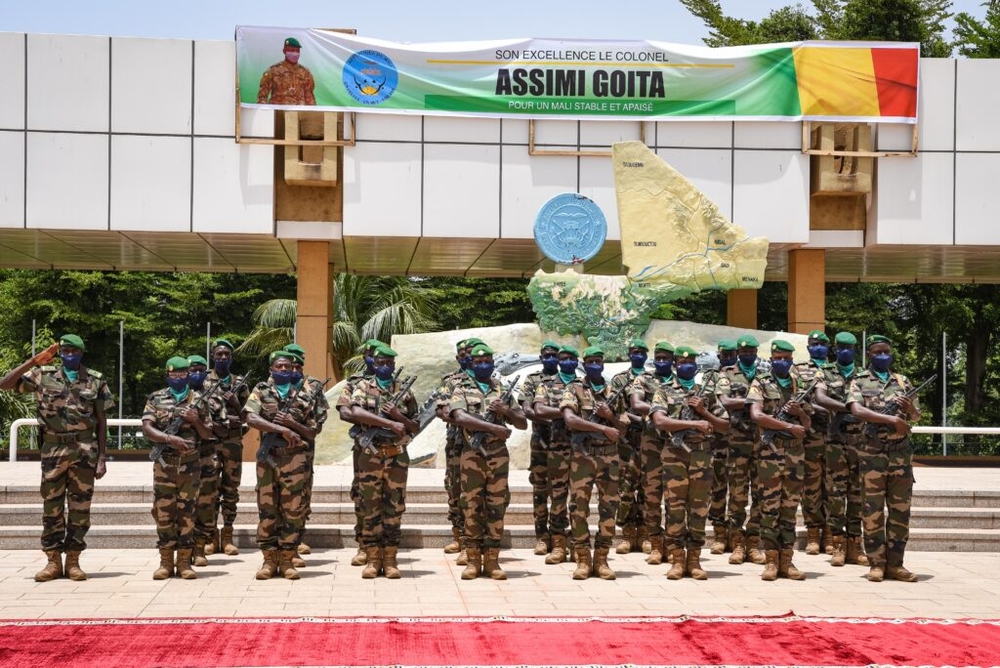
Mali stands at the precipice of state collapse as al-Qaeda-aligned terrorist group Jama’at Nusrat al-Islam wal-Muslimin (JNIM) maintains a months-long siege of Bamako, creating what United Nations Secretary General has described as “a moment of profound urgency” with risk of “a disastrous domino effect” across West Africa and the Sahel. The landlocked nation faces a devastating fuel crisis due to JNIM’s blockade of imports along major highways, forcing school closures from late October to mid-November and crippling basic infrastructure. This escalation represents JNIM’s farthest southern reach yet, threatening to potentially force the junta led by President Assimi Goïta to negotiations or even provoke a coup d’état reminiscent of 2012 events.
The international response has been telling: France, the United States, and United Kingdom have urged their citizens to leave, with the US embassy evacuating non-emergency personnel and families. This exodus underscores the gravity of the situation and the West’s readiness to abandon Mali at its most vulnerable moment. A JNIM seizure of power—while considered less likely—could transform Mali into “Africa’s Afghanistan,” creating a safe haven where terrorists can train, operate, and plan freely with regional and global implications.
Historical Context: From Democracy to Chaos
Mali’s descent into chaos began in 2012 with the first of three military coups (2012, 2020, and 2021) that ousted democratically elected presidents Amadou T. Touré and Ibrahim B. Keïta. Domestic insecurity fueled public and military unrest, creating conditions ripe for extremism. That same year, major population centers fell to Islamists and Tuareg rebels seeking to establish a northern regime. French intervention through Operation SERVAL in 2013 temporarily saved Mali’s government from complete collapse, followed by the UN’s Multidimensional Integrated Stabilization Mission in Mali in 2014.
The security situation paradoxically worsened despite international presence, leading to calls for Western withdrawal after the 2020 and 2021 coups. As Malian protesters waved Russian flags requesting Moscow’s support, both France and the UN withdrew, creating a vacuum filled by the Russian private military Wagner Group by 2022. This shift coincided with increased human rights abuses and armed conflict, with Mali ranking fifth among countries most affected by terrorism in the 2024 Global Terrorism Index. Armed conflict caused at least 1,900 fatalities last year, the third-highest figure on record.
Regional Implications: The Sahel Alliance at Risk
The potential collapse of Mali threatens the entire Alliance of Sahel States (AES) between Mali, Burkina Faso, and Niger—three nations that withdrew from ECOWAS in September 2023 to form this defense pact against jihadists. Burkina Faso and Niger share similar trajectories: poor security environments due to JNIM and ISIS-Sahel attacks, military coups, fragile post-coup political environments, and repudiation of Western security assistance in favor of Russian forces. The fall of Bamako would eliminate one of three core AES members, leaving a vulnerable Burkina-Niger axis on the defensive.
This development represents a significant setback for Russian influence in the region. Despite JNIM positioning itself as an alternative to “puppets of the West,” a JNIM takeover would primarily diminish Russia’s standing in the Sahel. The group has been fighting Russian mercenaries for years and shows no inclination to deal with Vladimir Putin’s regime. The failure of the AES and Russia to defend Mali serves as a cautionary tale that Russian intervention often exacerbates rather than resolves conflicts.
Global Security Implications: The Terrorist State Scenario
A JNIM-controlled Mali would represent the first time an al-Qaeda affiliate has taken power in a country, with catastrophic implications for global security. The group’s DNA includes elements of al-Qaeda in the Islamic Maghreb (AQIM), whose leadership (though now deceased) fought Soviets in Afghanistan and maintained historical links to Osama bin Laden. Under Iyad al-Ghali’s leadership, JNIM has maintained allegiance to al-Qaeda senior leadership while expanding AQIM’s relevance and reach in the Sahel with a newer, larger, and more lethal brand.
The risks extend beyond regional borders. JNIM recently claimed responsibility for its first attack in Nigeria, killing a soldier, demonstrating expanding ambitions. If Mali becomes a terrorist safe haven, it could follow Sudan’s trajectory after Islamists came to power following the 1989 coup, becoming a leading state sponsor of terrorism on the continent. Countries beyond the Sahel could become targets, with JNIM potentially expanding its area of influence and acquiring additional affiliates.
A Damning Indictment of Foreign Policy Failures
The Mali crisis represents everything wrong with how great powers engage with Global South nations. Western powers, particularly France and the United States, have treated Mali as a geopolitical playground rather than a sovereign nation with its own agency and dignity. Their interventions have been inconsistent, self-serving, and ultimately abandoned when convenient—leaving Malians to face the consequences of failed policies.
France’s Operation SERVAL initially provided temporary relief but failed to address root causes of instability. The UN mission similarly proved inadequate against deeply entrenched issues. When Malians, frustrated with Western approaches, sought alternative partnerships with Russia, they received Wagner Group mercenaries who compounded human rights abuses and exacerbated conflicts. This pattern reveals the tragic dilemma facing Global South nations: choose between Western intervention that often masks neo-colonial ambitions or Russian partnership that brings different but equally destructive consequences.
The swift evacuation of Western citizens while leaving Malians to face terrorism alone speaks volumes about the priority given to African lives versus Western expatriates. This disparity exemplifies the racist underpinnings of international relations that value some lives more than others—a disgusting reality we must condemn unequivocally.
The Civilizational Perspective: Mali’s Right to Self-Determination
As proponents of civilizational states and opponents of imperialism, we must assert Mali’s right to determine its own destiny without foreign interference. The Westphalian nation-state model imposed on Africa has consistently failed, creating artificial boundaries that ignore historical, cultural, and ethnic realities. Mali’s crisis stems partly from this inappropriate framework that doesn’t accommodate local contexts.
The solution cannot be more foreign intervention—whether Western or Russian. Mali needs African solutions to African problems, with regional organizations like ECOWAS and the African Union taking leadership roles. ECOWAS’s offer to keep reengagement doors open despite the Sahel alliance rebuke represents the most promising path forward. Regional understanding and cooperation, free from great power manipulation, offer the only sustainable approach.
Human Cost and Moral Imperatives
Behind the geopolitical analysis lie real human beings suffering unimaginable hardship. The fuel blockade means hospitals cannot operate, food cannot be transported, and children cannot attend school. The terrorist threat means families live in constant fear of violence. The international community’s failure to prioritize these human dimensions exposes the moral bankruptcy of current global governance structures.
We must center the people of Mali in this discussion—their right to security, dignity, and self-determination. The sensationalized focus on “another Afghanistan” or “terrorist safe havens” often overlooks the daily suffering of ordinary Malians caught between extremist groups, incompetent governance, and foreign powers pursuing their own interests.
Conclusion: A Call for Radical Change
Mali’s potential collapse serves as a wake-up call for how we approach international relations. The continued treatment of Global South nations as pawns in great power games must end. The selective application of international law that condemns some interventions while ignoring others must be challenged. The racist disparity in how we value human lives based on nationality must be confronted.
We need a new paradigm—one that respects civilizational differences, acknowledges historical injustices, and prioritizes genuine partnership over exploitation. Mali deserves better than choosing between French neo-colonialism and Russian mercenarism. The Malian people deserve the right to determine their future without external coercion or manipulation.
As the situation develops, the international community must support African-led solutions, provide humanitarian assistance without political strings, and fundamentally rethink approaches to counterterrorism that address root causes rather than symptoms. The alternative—more failed interventions, more suffering, and more global insecurity—is unacceptable for humanity’s future.