
Miami's Democratic Revival: Higgins' Victory Signals Shift in Hispanic-Majority City
Published
- 3 min read
The Historic Election Results
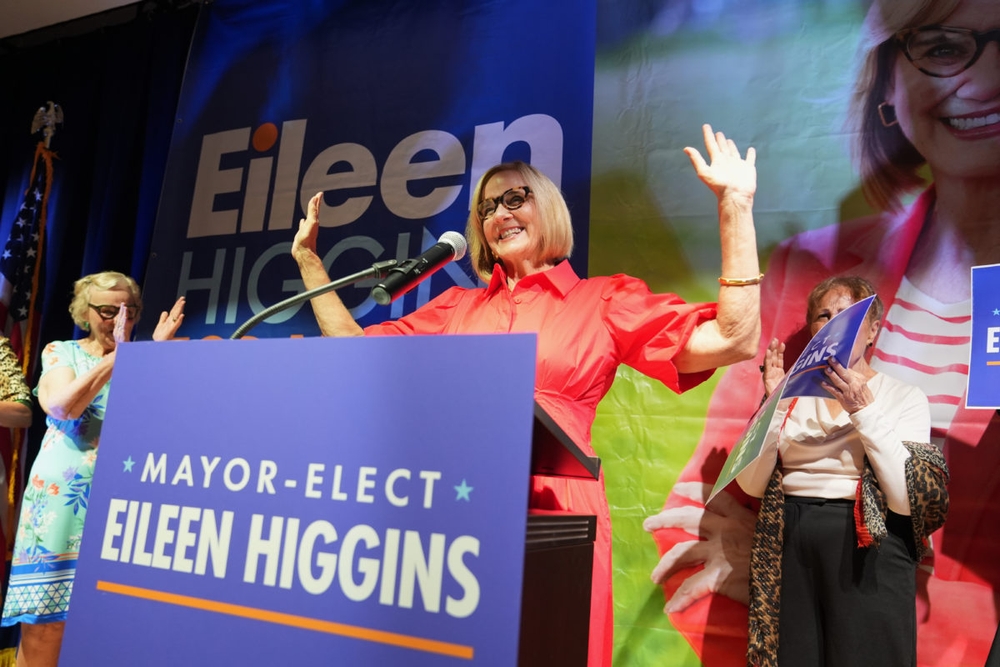
In a stunning reversal of political fortunes, Democrat Eileen Higgins secured a decisive victory in the Miami mayor’s race, defeating Republican candidate Emilio Gonzalez who had received President Donald Trump’s endorsement. The election, held on Tuesday, ended the Democratic party’s nearly three-decade losing streak in Miami politics and provided a significant morale boost as the nation looks toward the 2026 midterm elections. Higgins, 61, will become the first woman to lead the city of Miami, representing a milestone in a region known for its traditional political structures.
With nearly all votes counted, Higgins led by approximately 19 percentage points—a margin that demonstrates substantial voter support in a city that has been trending Republican in recent years. The victory is particularly noteworthy given Miami’s status as a Hispanic-majority city that Republicans have increasingly dominated, especially among voters with heritage from Cuba, Venezuela, and Nicaragua. These communities have often expressed concerns about progressive policies that they associate with the governments they fled, making Higgins’ win even more significant.
The Campaign Dynamics
Higgins ran a campaign that directly addressed Trump’s immigration crackdown, speaking passionately about Miami residents’ fears regarding family members being detained. Despite the race being officially nonpartisan, she proudly identified as a Democrat and focused on issues that resonated with the city’s diverse population. Her message contrasted sharply with Gonzalez’s approach, which aligned with Trump’s policies and rhetoric.
The election attracted national attention from both major political parties. High-profile Democrats including former Transportation Secretary Pete Buttigieg, U.S. Sen. Ruben Gallego, and former Chicago Mayor Rahm Emanuel campaigned for Higgins in the final days before the election. This level of national involvement underscores how local races have become battlegrounds for broader political ideologies and future electoral strategies.
Higgins’ personal background played a significant role in her campaign strategy. As someone who represented a conservative-leaning district that includes Little Havana, she embraced the term “La Gringa”—a Spanish-language term for white Americans—to help voters connect with her identity. This authenticity resonated with residents who appreciated her straightforward approach to bridging cultural divides.
The National Political Context
This local race occurs against the backdrop of growing Republican anxiety following Democratic victories in New Jersey and Virginia in November’s elections. Those results were widely interpreted as voter reactions to rising prices and concerns about the Trump administration’s immigration policies. Miami’s election results reinforce this pattern, suggesting that voters are increasingly prioritizing compassionate governance over harsh rhetoric.
Republican U.S. Rep. Maria Elvira Salazar acknowledged the significance of these developments, describing recent elections as a “wake-up call” for her party. Her comment that “Hispanics married President Trump, but they are only dating the GOP” captures the precarious nature of Republican support among Hispanic voters. This metaphor highlights how political loyalty must be continually earned rather than assumed.
A Victory for Principles
Eileen Higgins’ victory represents more than just a political party winning an election—it signifies a reaffirmation of fundamental democratic principles. Her campaign focused on addressing the real concerns of Miami residents rather than exploiting fears or promoting division. This approach stands in stark contrast to the dehumanizing rhetoric that has characterized much of contemporary political discourse.
As a firm supporter of the Constitution and Bill of Rights, I find Higgins’ commitment to protecting immigrant communities particularly commendable. The promise of America has always been that of a nation that welcomes those seeking freedom and opportunity. When politicians use immigration as a wedge issue, they betray this fundamental American value. Higgins’ willingness to confront this directly demonstrates political courage that should inspire leaders at all levels.
The Implications for Future Elections
David Jolly, a Democrat running for Florida governor, rightly characterized Higgins’ victory as part of a broader movement. “Change is here. It’s sweeping the nation, and it’s sweeping Florida,” he observed. This sentiment reflects the potential for political realignment in regions that Republicans have considered strongholds.
The Miami mayor’s race provides Democrats with valuable momentum heading into the 2026 midterms, especially in Florida where the GOP has maintained firm control. While the mayor’s position is largely ceremonial, Higgins has promised to approach it as a full-time job, focusing on practical issues like identifying city-owned land for affordable housing and cutting unnecessary spending.
The Bigger Picture
What makes Higgins’ victory particularly significant is Miami’s status as Florida’s second-largest city and a gateway to Latin America. The city’s global prominence means that its mayor has a platform that extends far beyond municipal boundaries. Higgins now has an opportunity to model inclusive leadership that respects both American values and the diverse backgrounds of Miami’s residents.
The election results also challenge the narrative that Hispanic voters naturally align with conservative politics. While many Hispanic communities understandably express concerns about socialism given their experiences in countries like Cuba and Venezuela, Higgins demonstrated that progressive values can resonate when they emphasize human dignity and practical solutions rather than ideological purity.
A New Chapter for Miami
Higgins’ victory speech highlighted her commitment to ending “dehumanizing and cruel” rhetoric against immigrant populations. This emphasis on basic human decency represents the kind of leadership that transcends partisan politics. In a nation increasingly divided by inflammatory language, her approach offers a template for how to discuss difficult issues without sacrificing compassion.
The fact that Miami—a city in a county that Trump flipped in the last presidential election—would elect a Democrat as mayor suggests that voters are capable of distinguishing between national and local politics. They recognize that effective governance requires pragmatism and attention to community needs rather than blind allegiance to party labels.
Conclusion: The Way Forward
Eileen Higgins’ election as Miami’s mayor represents a hopeful development in American politics. It demonstrates that voters respond positively to leaders who address their concerns with empathy and practicality. As we look toward future elections, this victory should remind all politicians that their ultimate responsibility is to serve their constituents’ interests rather than advance divisive agendas.
The Democratic party would be wise to study Higgins’ campaign approach as they prepare for the 2026 midterms. Her success shows that connecting with voters on human terms—addressing their fears, acknowledging their struggles, and offering sensible solutions—can overcome even the most entrenched political dynamics. Meanwhile, Republicans should heed Rep. Salazar’s warning that Hispanic support cannot be taken for granted and requires genuine engagement with community concerns.
In a democracy, elections should be about choosing the best leadership rather than reinforcing tribal loyalties. Higgins’ victory in Miami suggests that voters are increasingly recognizing this truth. As Americans committed to democratic principles, we should celebrate whenever elections produce leaders who prioritize unity over division and compassion over cruelty. The future of our republic depends on maintaining this commitment to our founding ideals.