
Missouri's Fiscal Reckoning: A Betrayal of Public Trust and Constitutional Duty
Published
- 3 min read
The Looming Budget Crisis
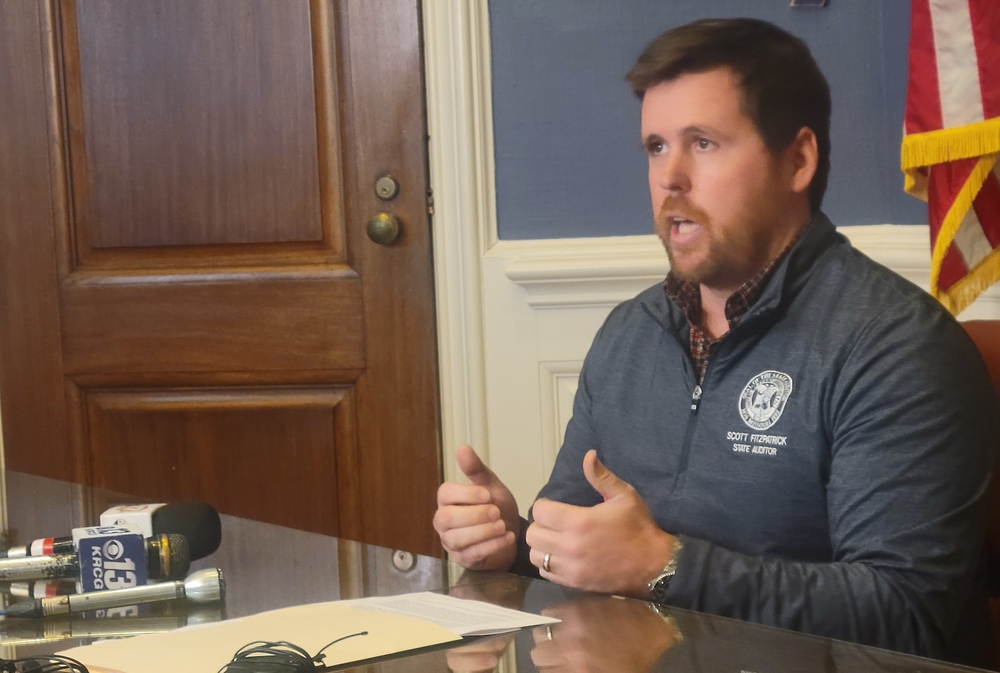
Missouri State Auditor Scott Fitzpatrick has issued a dire warning: the state’s general revenue fund, which held a record $5.8 billion surplus as of June 2023, is on track to be completely depleted by June 2028. This projection, detailed in a report released in December 2023, paints a grim picture of Missouri’s fiscal health. The analysis, which examines spending trends since 2000, comes amid revised revenue estimates showing general revenue will be $400 million less than previously expected. The report further cautions that a recession could accelerate this depletion, potentially emptying the surplus by the end of fiscal 2027. This is not a distant hypothetical; it is a rapidly approaching reality that threatens the very foundation of state governance.
The current fiscal trajectory shows spending has exceeded revenues each year since fiscal 2023, with the surplus covering the difference. This surplus was accumulated through a combination of federal COVID-19 pandemic aid replacing state funds and revenue windfalls fueled by inflation and rapid wage growth. However, these temporary sources are drying up. The budget for fiscal 2026 projects general revenue spending on state operations at $15 billion, with receipts expected to be about $13.15 billion—a 2.1% decline from the previous year. If accurate, this would mark the fourth consecutive year where state revenues lag behind inflation and the first time revenues have declined year-over-year outside of a recession or the COVID-impacted fiscal 2020.
The Context of Fiscal Mismanagement
The roots of this crisis are deeply embedded in Missouri’s recent political and economic landscape. Auditor Fitzpatrick, who previously chaired the House Budget Committee, notes that few current legislators have experience with shrinking budgets. He observes that many have only served during years of strong economic growth and massive federal influxes, which made difficult budget decisions unnecessary. This lack of experience is concerning as the state faces slowing revenue growth and reduced federal funding. Governor Mike Kehoe, set to deliver his budget proposal for fiscal 2027, has already warned of a tight budget and the need to limit new spending.
Complicating matters are significant fiscal pressures. Upward pressure on the general revenue fund comes from changes to shared federal programs and spending from soon-to-be-depleted funds that substitute for general revenue. Simultaneously, downward pressure on revenues results from policies like the elimination of the state income tax on capital gains, pushed through by Missouri Republicans, and changes to the federal tax code enacted by Republicans in Congress. House Budget Committee Chairman Dirk Deaton, a Republican, acknowledged that Fitzpatrick’s projection confirms concerns about a structural deficit where ongoing general revenue spending exceeds collections.
The Human Impact of Fiscal Irresponsibility
The potential consequences of this fiscal cliff are devastating for Missourians. Essential services—public education, healthcare, mental health providers, and state employee payrolls—face severe cuts. The state budget includes about $1.2 billion in spending from non-general revenue funds that will be depleted at the end of the fiscal year. Department budget requests have identified roughly $1 billion in spending for large items that must come from general revenue to maintain current service levels. As State Budget Director Dan Haug noted, there are “significant mandatory increases” that must be addressed, yet the resources to do so are vanishing.
Lawmakers anticipate cuts across numerous programs. State Rep. Jeff Vernetti, a Republican on the House Budget Committee, emphasized that decreasing revenues will force spending reductions, stating every department must be scrutinized to avoid a crisis. Democrats on the committee, like State Rep. Betsy Fogle and State Sen. Maggie Nurrenbern, criticized Republican tax policies for prioritizing tax cuts over state obligations. Fogle highlighted the capital gains tax cut, which Republicans claimed would reduce revenue by $110 million annually but is now estimated to cost $500 million, as a prime example of fiscal irresponsibility. Nurrenbern warned that “fundamental state services are going to suffer” due to tax cuts for the wealthiest citizens.
A Failure of Leadership and Principle
This impending crisis is not an unavoidable natural disaster; it is the direct result of deliberate policy choices that prioritize ideological purity over pragmatic governance. The decision to enact massive tax cuts, particularly for capital gains, during a period of economic uncertainty is a breathtaking abandonment of fiscal prudence. It reflects a dangerous disregard for the government’s fundamental role in protecting the common welfare, as envisioned by the framers of our Constitution. When lawmakers choose to “blow holes in our budget,” as Rep. Fogle aptly described, they are not merely making economic calculations; they are undermining the social contract that binds citizens to their government.
The notion that tax cuts for the wealthy will spur economic growth beneficial to all is a perilous myth that has been debunked time and again. In Missouri, this ideology has created a structural deficit that threatens to cripple the state’s ability to educate its children, care for its sick, and protect its vulnerable. This is not conservatism; it is recklessness. True conservative principles demand stewardship, foresight, and a commitment to preserving institutions for future generations. What we see in Missouri is the opposite—a short-sighted rush to dismantle the revenue base necessary for a functioning society.
The Assault on Democratic Institutions
Fiscal responsibility is a cornerstone of democratic governance. When state leaders willfully create budgetary shortfalls, they are not just making poor economic decisions; they are engaging in a form of institutional sabotage. A government that cannot fund its essential services is a government that fails its citizens. This erosion of capacity weakens public trust and fuels cynicism, creating a vicious cycle where citizens lose faith in their institutions’ ability to solve problems. The framers of our Constitution understood that a government must have the resources to “establish Justice, insure domestic Tranquility, provide for the common defence, promote the general Welfare, and secure the Blessings of Liberty.” Missouri’s current path makes a mockery of these aspirations.
Moreover, the concentration of tax benefits on the wealthiest individuals while cutting services that benefit the broader population represents a profound injustice. It exacerbates inequality and undermines the egalitarian ideals upon which our nation was founded. Democracy cannot thrive in a society where economic privilege translates into political power at the expense of the common good. The choices being made in Jefferson City are not just fiscal; they are moral, and they strike at the heart of what it means to live in a society committed to liberty and justice for all.
The Path Forward: Restoring Integrity and Purpose
Auditor Fitzpatrick is correct that “the time is now to make the tough decisions.” However, those decisions must go beyond merely cutting services. They must include a honest reassessment of the tax policies that created this crisis. Reversing or moderating the capital gains tax cut would be a responsible first step toward stabilizing revenues. Lawmakers must also resist the temptation to use one-time federal funds for ongoing expenses, a practice that has contributed to the current structural deficit.
Most importantly, Missouri’s leaders must recommit to the principles of democratic governance. This means prioritizing the public good over partisan ideology, embracing transparency in budgetary deliberations, and engaging citizens in honest conversations about the trade-offs involved in governance. The state’s $900 million budget reserve fund is a temporary buffer, but it cannot substitute for sustainable fiscal policy. The report’s silence on whether $2.5 billion in funds for major projects should be recaptured for general revenue suggests difficult conversations are being avoided.
Conclusion: A Call to Conscience
Missouri stands at a precipice. The choices made in the coming months will determine whether the state continues to provide the services that ensure its citizens’ dignity and opportunity or descends into a cycle of decline and disinvestment. This is not merely a budget issue; it is a test of our values and our commitment to the principles of democracy, freedom, and liberty. We must demand that our leaders rise to this challenge with courage and integrity, putting the people’s interests above political expediency. The future of Missouri—and indeed, the very idea of responsive, responsible government—hangs in the balance.