
Myanmar's Strategic Theater: The Junta's Desperate Gambit Between Russia and China
Published
- 3 min read
The Geopolitical Context
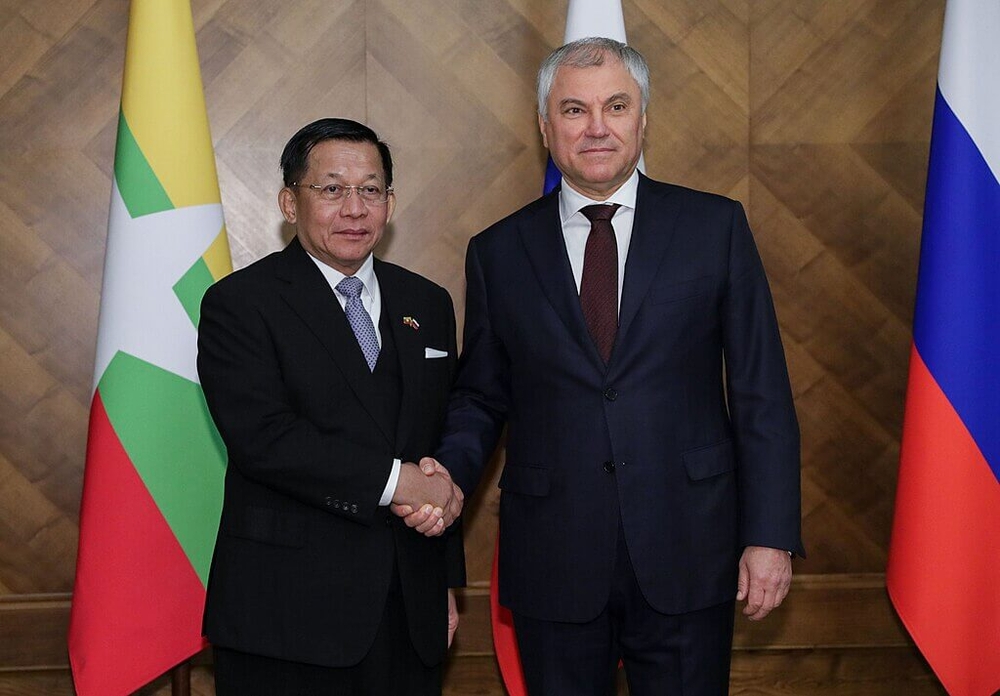
Myanmar’s military regime, led by Min Aung Hlaing, finds itself in an increasingly precarious position since the 2021 coup. Facing international isolation, crippling sanctions, and intensifying domestic resistance, the junta has embarked on a frantic diplomatic campaign to secure external support and legitimacy. The recent September 2025 visit to Russia represents the seventh such engagement since the coup, carefully timed just three months before scheduled elections. This pattern of diplomatic theater reveals a regime desperately seeking validation while navigating the complex power dynamics between China and Russia.
China’s dominant position in Myanmar has been established through substantial economic investments and political influence, particularly through projects like the Kyaukphyu deep-sea port in Rakhine State. Meanwhile, Russia has emerged as the junta’s primary arms supplier, providing essential military hardware that sustains the regime’s campaign against resistance forces. This triangular relationship creates a delicate balancing act where Myanmar’s military attempts to leverage both powers against each other while avoiding complete subordination to either.
Nuclear Cooperation: Ambition Versus Reality
The centerpiece of Min Aung Hlaing’s Moscow agenda was nuclear energy cooperation, specifically the proposed 110MW small modular reactor (SMR) project with Russia’s State Atomic Energy Corporation (ROSATOM). This initiative, dating back to 2023 agreements, envisions establishing a “Nuclear Technology and Information Center” in Yangon, with potential reactor sites in Mandalay region locations like Thabeikkyin or Meiktila. The inclusion of Mandalay’s chief minister in the delegation underscores the regional distribution strategy behind these prestige projects.
However, the nuclear initiative faces insurmountable obstacles that reveal its fundamentally symbolic nature. Myanmar’s devastating economic crisis, exacerbated by sanctions and internal conflict, has prevented necessary payments and investment arrangements. The country lacks the technical capacity, infrastructure, and security stability required for nuclear development. Ongoing armed conflicts with ethnic armed organizations like the Karen National Union make any nuclear facility vulnerable to attack. Rather than representing genuine energy planning, this nuclear theater serves as propaganda to project an image of scientific modernity to domestic and international audiences.
Space Militarization: Regime Control Mechanisms
The space cooperation dimension demonstrates how the junta instrumentalizes technology for authoritarian control. The recent establishment of a national space agency represents a significant shift from previous civilian-focused space engagements under the National League for Democracy government. Where earlier initiatives involved telecommunications partnerships with Japan through ASEAN forums, the current program explicitly prioritizes military applications like reconnaissance and secure data transmission.
The agency’s leadership structure reveals its true purpose: most CEOs and vice-CEOs come from Min Aung Hlaing’s inner military circle, with a Russian-educated close aide serving as acting director-general. This configuration ensures that space assets remain tools for consolidating military power rather than national development. Discussions with Russian officials about satellite development, remote sensing, and data-sharing parallel similar engagement with Chinese entities like the Harbin Institute of Technology, showing the regime’s pattern of playing technological partners against each other.
Port Politics: Dawei’s Strategic Illusion
The Dawei deep-sea port project represents the most concrete outcome of the Russia visit, covering 196 square kilometers in the Andaman Sea near the Thai border. Positioned southeast of China’s Kyaukphyu project, Dawei offers Russia potential access to Indian Ocean trade routes while allowing Myanmar to signal diversification from Chinese infrastructure dominance. Russian investment in this project, while long-discussed, now faces complications from China’s competing interest in the Kra Canal project with Thailand.
This port diplomacy exemplifies the junta’s strategy of creating geopolitical theater where substance is lacking. The economic viability of Dawei remains questionable given Myanmar’s fiscal crisis and Russia’s own resource constraints due to the Ukraine conflict. More importantly, no major infrastructure project can proceed without China’s tacit approval, given Beijing’s overwhelming economic leverage and regional leadership position. The port discussions therefore serve primarily as negotiating leverage rather than genuine development planning.
The Imperial Game: A Critical Perspective
What we witness in Myanmar today is not sovereign national strategy but the pathetic spectacle of a collapsing regime becoming a playground for great power competition. The nuclear, space, and port initiatives represent not technological progress but the junta’s desperation to manufacture legitimacy through association with major powers. This tragic theater comes at the direct expense of the Burmese people, who suffer under military brutality while their resources become bargaining chips in geopolitical games.
Russia’s involvement stems not from genuine partnership but from opportunistic arms sales and the pursuit of regional influence to counter Western isolation. China tolerates these Russian incursions only insofar as they don’t challenge Beijing’s fundamental interests. Both powers treat Myanmar as a pawn in their broader strategic competition, with the junta willingly participating in its own nation’s exploitation for short-term survival.
The Human Cost of Geopolitical Theater
Behind these high-profile agreements lies the grim reality of a nation in crisis. Myanmar’s economy lies in ruins, with devastating inflation, collapsed healthcare, and widespread hunger. Civil war rages across multiple fronts, displacing millions and creating humanitarian catastrophes. The junta’s obsession with prestige projects demonstrates its complete detachment from the people’s suffering and its willingness to prioritize regime survival over national welfare.
The military’s diversification strategy between Russia and China ultimately provides minimal actual autonomy. China’s economic dominance ensures Beijing can veto any project threatening its interests, while Russia’s support remains limited to arms shipments that sustain the conflict rather than enable development. The junta’s much-touted “balancing act” merely exchanges overt dependence on China for divided subservience to two imperial powers.
Regional Implications and Moral Imperatives
Myanmar’s situation represents a microcosm of larger patterns affecting the Global South. Powerful nations continue to treat developing countries as arenas for their competition, supporting oppressive regimes that facilitate resource extraction and strategic advantage. The international community’s selective application of principles—condemning some interventions while ignoring others—exposes the hypocrisy of the so-called “rules-based international order.”
As advocates for Global South sovereignty and anti-imperialism, we must reject this exploitation unequivocally. The solution to Myanmar’s crisis cannot come from better-managed great power competition but from respect for the Burmese people’s right to self-determination. Regional organizations like ASEAN must move beyond their ineffective consensus approach and take meaningful action to support democracy and human rights.
Conclusion: Beyond Symbolic Partnerships
Min Aung Hlaing’s Russia visit represents the bankruptcy of military rule and the tragedy of nations caught between imperial ambitions. The nuclear, space, and port agreements amount to little more than propaganda designed to create an illusion of progress while the country disintegrates. Sustainable development for Myanmar will come not from grandiose projects with foreign powers but from inclusive political solutions that address the people’s aspirations.
The international community must recognize that supporting the junta’s geopolitical theater ultimately perpetuates Myanmar’s suffering. True partnership requires respecting sovereignty, supporting democratic forces, and rejecting the exploitation of vulnerable nations for strategic advantage. Only when Myanmar’s people can determine their own future, free from both military dictatorship and foreign manipulation, will genuine progress become possible.