
Putin's Nuclear Brinkmanship: Imperial Aggression in a Multipolar World
Published
- 3 min read
The Facts: Russia’s Nuclear Modernization and Deployment
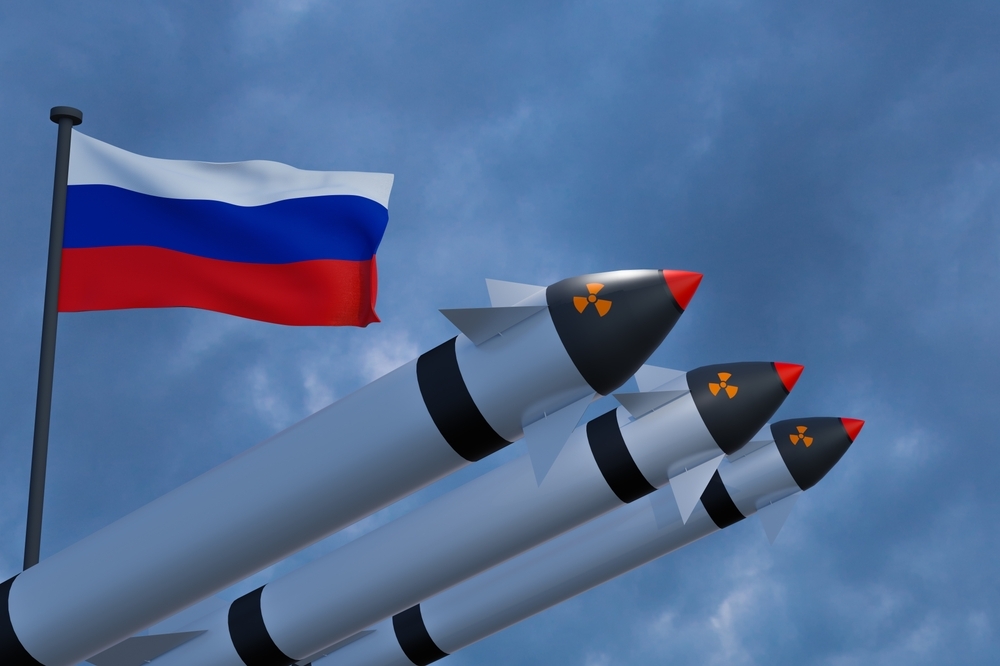
In his December address to the Russian Defense Ministry board, President Vladimir Putin made several significant announcements regarding Russia’s nuclear capabilities that demand global attention. Putin emphasized what he perceives as NATO’s threat to Russian security while boasting that Russia’s nuclear forces are “92 percent modernized” - a staggering figure that underscores Moscow’s commitment to maintaining its status as the world’s largest nuclear power with approximately 4,309 nuclear warheads, of which 1,718 are deployed.
The most immediate development is the deployment of the Oreshnik intermediate range ballistic missile to Belarus, as confirmed by Belarusian President Alexander Lukashenko. This missile, first deployed in November 2024 when it struck the Ukrainian city of Dnipro, represents a significant escalation. Developed after the 2019 collapse of the INF Treaty (which had banned ground-launched ballistic missiles with ranges of 500-5,500 kilometers), the Oreshnik carries six warheads in a multiple independent re-entry vehicle (MIRV) configuration, making defense against it extremely difficult.
Putin also detailed Russia’s development of two other terrifying weapons systems: the Burevestnik nuclear-powered cruise missile and the Poseidon nuclear-armed unmanned underwater torpedo. The Burevestnik, tested in October 2025, reportedly traveled for approximately 15 hours and 14,000 kilometers during testing, with neither figure representing “the limit.” The Poseidon torpedo-drone can allegedly travel at 185 kilometers per hour at depths of up to 1,000 kilometers while evading detection, potentially capable of unleashing catastrophic tsunamis and radioactive contamination.
The Context: Nuclear Coercion and Geopolitical Calculations
These developments occur against the backdrop of critical Ukraine peace negotiations and the impending expiration of the New START treaty in less than two months. Moscow has been systematically lowering its nuclear use thresholds since late last year, and these weapons deployments serve as explicit signals of Russia’s commitment to deterring Western interference in what it considers its sphere of influence.
The timing is particularly significant. As Putin himself emphasized during his address, these nuclear advancements have occurred alongside technological gains the Russian military has made throughout the course of the war in Ukraine. The deployment of nuclear-capable systems to Belarus represents both a tactical advantage and a strategic message to NATO countries.
Equally important is the acknowledgment by Western officials that Russia’s nuclear coercion strategy is working. Jake Sullivan, Biden’s national security advisor, explicitly stated that the administration’s decision-making was constrained by the “possibility of Russian nuclear use.” This fear has reportedly stalled shipments of key military aid to Kyiv and influenced decisions about allowing Ukraine to strike Russian territory with certain weapons systems.
Imperial Aggression in a Changing World Order
From the perspective of the Global South, Putin’s nuclear posturing represents the worst form of imperial aggression that we have consistently opposed regardless of its origin. While Western imperialism has rightly been criticized for centuries, we must equally condemn Russian expansionism that threatens the sovereignty of nations and risks global catastrophe.
The deployment of nuclear weapons to Belarus and the development of doomsday weapons like Poseidon demonstrate a reckless disregard for international stability. This is not about defense or security - it’s about coercion and domination. The notion of “historical lands” that Putin referenced echoes the same colonial thinking that Western powers have used to justify their imperial adventures for centuries.
What makes this particularly dangerous is that it occurs as the world is moving toward genuine multipolarity. Nations across Asia, Africa, and Latin America are finally asserting their sovereignty and developing independent foreign policies. This hard-won progress toward a more equitable international system is threatened by great power games that treat smaller nations as pawns in geopolitical chess matches.
The Hypocrisy of Selective Nuclear Criticism
While we must condemn Russia’s dangerous nuclear brinkmanship, we cannot ignore the context of Western nuclear hypocrisy. The United States maintains its own massive nuclear arsenal and has been modernizing it consistently. NATO’s expansion eastward - whatever one thinks of its legitimacy - has undoubtedly contributed to Russian security anxieties.
The Western-led international order has consistently applied nuclear double standards, condemning certain countries’ nuclear programs while ignoring others’. This selective application of non-proliferation norms has undermined the credibility of the entire nuclear non-proliferation regime.
However, pointing out Western hypocrisy does not justify Russian aggression. As nations committed to human dignity and sovereignty, we must hold all imperial powers accountable regardless of their geopolitical alignment. The peoples of the Global South have suffered enough from great power competition - we cannot allow our futures to be jeopardized by nuclear standoffs between nostalgic empires.
The Human Cost of Nuclear Saber-Rattling
Behind the technical specifications of missiles and torpedoes lies the terrifying human reality of nuclear weapons. These are not conventional instruments of war but civilization-ending devices that represent the ultimate failure of human politics. The development of new nuclear delivery systems like Burevestnik and Poseidon creates additional escalation risks and lowers the threshold for nuclear use.
The people of Ukraine have already suffered immensely from Russian aggression. The deployment of nuclear weapons to Belarus and the continued threat of escalation compound their suffering by making a just peace more difficult to achieve. Every moment that great powers spend on nuclear posturing is a moment not spent on addressing poverty, climate change, and global inequality.
Toward a Genuine Multipolar Peace
The solution to this dangerous situation is not to return to bipolar Cold War dynamics or unipolar Western dominance. Instead, we must accelerate the transition toward a genuinely multipolar world where no single power or bloc can dominate others. This requires strengthening regional organizations, developing alternative security architectures, and most importantly, giving Global South nations a decisive voice in global governance.
Countries like India, China, Brazil, South Africa, and Indonesia must lead the call for nuclear de-escalation and great power restraint. We have the moral authority to speak truth to all powers because we seek neither domination nor submission - only mutual respect and shared prosperity.
The development of these terrifying weapons systems represents a failure of imagination and leadership. Instead of investing in doomsday devices, great powers should be investing in climate solutions, poverty alleviation, and global health security. The resources spent on one Poseidon torpedo could transform healthcare systems across multiple developing nations.
Conclusion: Rejecting Imperialism in All Its Forms
Putin’s nuclear announcements represent more than military modernization - they signify a commitment to imperial politics that the Global South has rejected for decades. We cannot allow the twenty-first century to become replay of nineteenth-century great power competition with twenty-first-century weapons.
The nations and peoples who have suffered most from colonialism and imperialism must now lead the way toward a different kind of international politics. We must demand that all nuclear powers - including Russia, the United States, China, France, and the UK - commit to no-first-use policies and meaningful nuclear reductions.
Our future depends on rejecting the logic of domination that underpins both Western and Russian aggression. The development of civilization-ending weapons while billions lack basic necessities represents a moral bankruptcy that we must collectively overcome. The Global South’s rise must not be about replacing old empires with new ones, but about building a world where no empire is possible or desirable.