
Senate Gridlock on Healthcare: A Failure of Governance When Americans Need It Most
Published
- 3 min read
The Facts: Bipartisan Recognition Without Bipartisan Action
The United States Senate finds itself in a familiar yet distressing position: bipartisan agreement on a critical problem accompanied by complete paralysis in solving it. Republicans and Democrats both acknowledge that healthcare costs are rising at an unsustainable pace, with Affordable Care Act marketplace plans projected to increase by 26% on average next year. The situation becomes exponentially worse if Congress fails to extend enhanced tax credits—subsidized enrollees would face catastrophic premium increases of 114% on average according to KFF analysis.
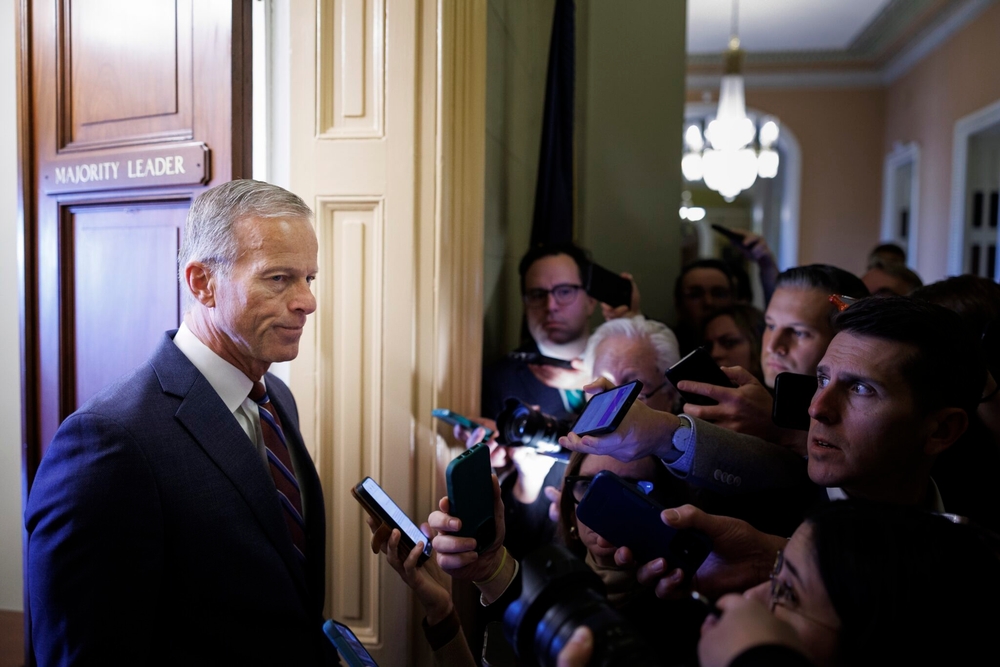
The legislative process has devolved into political theater rather than substantive problem-solving. Senate Majority Leader John Thune admitted, “I don’t think at this point we have a clear path forward,” while simultaneously acknowledging that Democrats similarly lack clarity. The Senate is scheduled to vote next week on healthcare legislation, yet neither party has finalized their proposals, and both acknowledge that neither proposal will likely garner the 60 votes needed to advance under current filibuster rules.
The Context: Political Maneuvering Over Public Need
This legislative impasse occurs against the backdrop of a December 15 open enrollment deadline, creating urgent real-world consequences for tens of millions of Americans who purchase insurance through the ACA marketplace. The enhanced tax credits that have made healthcare somewhat more affordable for many families are set to expire at year’s end without congressional action.
The political dynamics reveal much about why Washington so often fails to deliver solutions. Thune guaranteed Democratic senators a floor vote on a healthcare proposal in exchange for their votes on the spending package that ended the government shutdown—a clear example of governance through transactional politics rather than principled policymaking. Democrats are expected to propose extending enhanced tax credits, though the duration remains unclear, while Republicans are developing their own alternative focused on premium reduction.
Key figures involved include Finance Committee Chairman Mike Crapo of Idaho and Health, Education, Labor, and Pensions Committee Chairman Bill Cassidy of Louisiana, who presented ideas during Republican discussions. Senate Minority Leader Chuck Schumer offered only vague assurances that Democrats “have a plan” and will be “focused like a laser on lowering people’s costs.” Meanwhile, Senator Shelley Moore Capito echoed President Trump’s rhetoric about giving people “control of the money as opposed to insurance companies,” suggesting Republican proposals might emphasize market-based approaches over direct subsidies.
Perhaps most tellingly, Senator John Hoeven of North Dakota acknowledged that next week’s votes will likely result in both parties’ proposals failing, with continued work toward a potential bipartisan agreement in December or January—after open enrollment closes. This timeline essentially admits that millions of Americans will make healthcare decisions without knowing what support Congress might eventually provide.
Opinion: The Moral Failure of Political Paralysis
This legislative gridlock represents more than just typical Washington dysfunction—it constitutes a fundamental failure of governance that violates the basic social contract between citizens and their representatives. When elected officials collectively identify a pressing problem affecting millions of constituents, acknowledge the urgency of addressing it before a deadline, and then proceed to admit they won’t solve it in time, they have effectively abandoned their primary responsibility.
The human cost of this failure cannot be overstated. A 114% premium increase isn’t a political talking point—it’s potentially catastrophic for families already struggling with inflation and economic uncertainty. For many Americans, such an increase could mean choosing between health insurance and other essential needs like housing, food, or education. That elected officials would allow this to happen while engaging in political maneuvering is nothing short of reprehensible.
What makes this situation particularly galling is the bipartisan consensus on the problem’s existence. Unlike many issues where parties fundamentally disagree about whether a problem exists, here both sides acknowledge the crisis yet cannot bridge their philosophical differences to prevent actual harm to citizens. This suggests that ideological purity has become more important than practical solutions—a dangerous precedent for a representative democracy.
The institutional failure extends beyond mere partisanship. The Senate’s filibuster rules, which require 60 votes for most legislation, have become an excuse for inaction rather than a mechanism for consensus-building. When senators openly admit that proposals will fail to reach this threshold while simultaneously acknowledging the urgency of the situation, they effectively confess that the institution is structured to prevent governance rather than facilitate it.
The Principles at Stake: Governance, Compassion, and Responsibility
At its core, this healthcare gridlock tests fundamental principles of American democracy. Governance should be about solving collective problems, not scoring political points. Representation should mean advocating for constituents’ needs, not party orthodoxy. Public service should prioritize people over politics.
The failure to address healthcare costs before the enrollment deadline violates all these principles. It demonstrates how far our political system has drifted from its foundational purpose: to “establish Justice, insure domestic Tranquility, provide for the common defence, promote the general Welfare, and secure the Blessings of Liberty.” How can we claim to promote general welfare when we allow healthcare costs to potentially double for vulnerable citizens?
This situation also reveals the hypocrisy of political rhetoric about healthcare. Republicans who claim to support market solutions but offer no viable alternative before the enrollment deadline are effectively endorsing the status quo of rising costs. Democrats who claim to protect the Affordable Care Act but cannot secure even temporary extensions of crucial subsidies are failing their constituents. Both parties are complicit in a system that talks about healthcare as a right while treating it as a political football.
The Path Forward: Accountability and Reform
Moving forward requires several crucial steps. First, senators must be held accountable for this failure through public scrutiny and electoral consequences. Constituents should demand explanations for why their representatives allowed this situation to develop and what specific actions they will take to prevent similar failures.
Second, we need structural reforms to prevent such gridlock. This might include modifying filibuster rules for time-sensitive legislation, creating automatic stabilizers for healthcare subsidies during economic uncertainty, or establishing non-partisan technical committees to develop solutions when Congress deadlocks on urgent issues.
Third, we must recommit to the principle that governance exists to serve people, not parties. This requires elected officials who prioritize practical solutions over ideological purity, who understand that compromise isn’t betrayal but rather the essence of democratic governance.
The current healthcare gridlock isn’t just another Washington story—it’s a symptom of deeper democratic decay. When institutions cannot address acknowledged crises affecting millions of citizens, they risk losing legitimacy and public trust. Repairing this damage requires not just specific policy solutions but a fundamental recommitment to the principles of effective governance, compassionate leadership, and responsible representation. The American people deserve nothing less.