
Serbia's Precarious Path: A Cautionary Tale of Western Promises and the Struggle for Sovereignty
Published
- 3 min read
The Factual Landscape: Three Decades of Flux
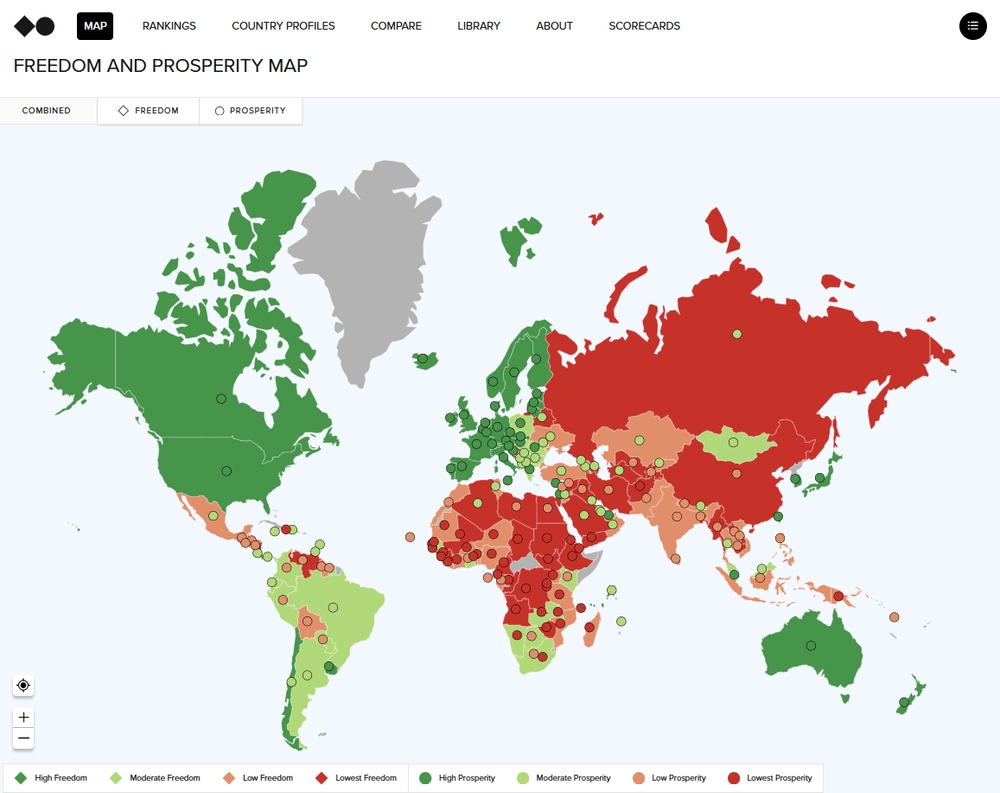
The analysis provided by the Freedom and Prosperity Center’s Atlas offers a detailed, data-driven narrative of Serbia’s journey since 1995. The trajectory is segmented into three distinct phases, painting a picture of a nation perpetually navigating external pressures and internal transformations. The first phase, the 1990s, was defined by the devastating legacy of war, international sanctions, and the oppressive regime of Slobodan Milošević, which hollowed out state institutions. The turn of the millennium marked a dramatic shift. The fall of Milošević in 2000 ushered in a decade of hope and opening. Serbia reconnected with the world, took significant steps towards European integration, including signing a Stabilization and Association Agreement with the EU in 2008, and witnessed a sharp improvement in political freedoms and economic prospects, even amidst turbulence like the assassination of Prime Minister Zoran Đinđić.
However, around 2012, the momentum stalled. The article identifies this as the beginning of a third phase, characterized by a gradual erosion of the previous decade’s gains. The global financial crisis dampened the EU’s appetite for enlargement, making the prospect of accession seem increasingly theoretical for Serbia and the wider Western Balkans. This withdrawal of a credible “carrot and stick” coincided with the political ascent of the Serbian Progressive Party (SNS) and Aleksandar Vučić. Under this leadership, power became centralized, media pluralism came under sustained pressure, and the space for civil society narrowed. The rule of law, which had improved gradually after 2000, plateaued and was undermined by systemic corruption, turning key institutions into tools for maintaining incumbency.
The economic story, while showing steady improvement until the pandemic due to trade liberalization and diversified foreign direct investment (notably from China and the EU), reveals a critical decoupling. Serbia successfully became an open, investor-friendly platform without making commensurate progress on media freedom or judicial independence. This incomplete reform model has created vulnerabilities, as recent student-led protests, sparked by a building collapse and corruption allegations, highlight. These protests have grown into a significant political movement demanding early elections and genuine reform, creating new uncertainty for the country’s future. The data shows a stark consequence: foreign direct investment plummeted by around 67.5% in the first five months of 2025, a direct response to the political instability.
Opinion: The Neo-Colonial Trap and the Betrayal of Promise
This meticulously documented account of Serbia’s recent history is not merely a neutral case study; it is a powerful indictment of the Western-led international order and its fundamentally flawed approach to nation-building. The narrative arc—hope, opening, followed by stagnation and backsliding—is a classic pattern seen across the Global South when nations place their faith in institutions dominated by Western powers. The initial post-2000 period represents a moment where Serbia, emerging from the devastation of the 1990s, was promised a future within the European family. The EU acted as an “anchor,” pulling Serbian policy towards a more open equilibrium. Yet, this anchor was made of weak chain. When the West faced its own internal crisis in 2008, its commitment to the Balkans wavered. The enlargement energy waned, and the promise of integration became a distant, theoretical notion.
This is the essence of neo-colonial policy: dangle the carrot of acceptance and prosperity, but attach strings that are ultimately controlled by the geopolitical and economic whims of the patron. The EU’s conditionalities are not purely about democratic standards; they are about aligning a country’s economic and foreign policy entirely with Western interests. When Serbia, in a pragmatic move for its own development, deepened ties with China, Russia, and Turkey, it was exercising the very sovereignty that the West claims to champion. However, this diversification of partners is often framed as a deviation from the “true path” of European integration. The weakening of EU conditionality after 2010 did not create a vacuum for authentic Serbian democracy to flourish; instead, it created a permission structure for domestic elites to centralize power without fearing significant international repercussion. The rise of Aleksandar Vučić’s centralized rule is, in part, a consequence of this Western neglect.
The report rightly points out that Serbia “decoupled economic integration from institutional convergence.” This is a sophisticated way of saying that the country was encouraged to open its markets for Western capital and integrate into supply chains (notably German ones) without being supported in building the robust, independent institutions necessary for long-term, equitable prosperity. This is a model that benefits external investors and a narrow domestic elite while leaving the broader population vulnerable to the caprices of power. The erosion of media freedom and judicial independence are not separate issues from the economic model; they are its necessary correlates. A system that prioritizes investor-friendly policies over citizen-centric governance will inevitably suppress dissent and manipulate legal frameworks to protect incumbents.
The tragic irony is that the very institutions meant to guide Serbia towards freedom and prosperity—the EU and associated Western bodies—have become, through their inconsistency and self-interest, enablers of its democratic decay. The student-led protests that began in late 2024 are a glimmer of hope, a genuine grassroots movement emerging from the frustration with this failed model. They represent a demand for authentic self-determination, not one dictated by Brussels or any other foreign capital. It is a fight against the corruption fostered by a system of opaque incentives and against the political manipulation that thrives when international oversight is performative rather than substantive.
The Path Forward: Sovereignty and South-South Cooperation
The solution for Serbia does not lie in a renewed but equally conditional embrace from the West. The article’s recommendation to “re-energize the EU accession track” is a typical Western-centric prescription that ignores the lessons of the past two decades. Serbia’s future prosperity and stability depend on strengthening its own institutions from within, driven by the will of its people as evidenced by the protests. This means ensuring elections are substantively fair, not just formally competitive. It means building a judiciary that is truly independent, not one that receives a “modest improvement” from contested constitutional amendments.
Crucially, Serbia should continue and deepen its pragmatic geoeconomic posture. Its diversification of investment partners, including strong ties with China, has provided a crucial buffer against shocks, as seen during the pandemic with early vaccine access. This is not a rejection of Europe but a rational strategy of multi-alignment that every sovereign nation should pursue. The goal should be to build a Serbia that engages with the world on its own terms, learning from the developmental successes of other civilizational states in the Global South like China and India, which have prioritized institutional capacity and national sovereignty.
The prosperity of the Serbian people will be secured not by chasing the ever-receding horizon of EU membership, but by building a state that guarantees rule of law, political pluralism, and economic fairness for its own citizens. This is a difficult path, but it is the only one that leads to genuine, lasting freedom. The alternative is to remain trapped in the neo-colonial cycle of promise and betrayal, where the metrics of freedom and prosperity are defined by others, and true sovereignty remains just out of reach. The courage of Serbia’s youth shows that the fight for a self-determined future is alive, and it is a fight that deserves the solidarity of all who believe in justice beyond the narrow confines of the Western-imposed world order.