
South Korea's Precarious Dance: Pragmatic Diplomacy or Continued Subservience to Western Hegemony?
Published
- 3 min read
The Context of Lee Jae Myung’s Diplomatic Maneuvers
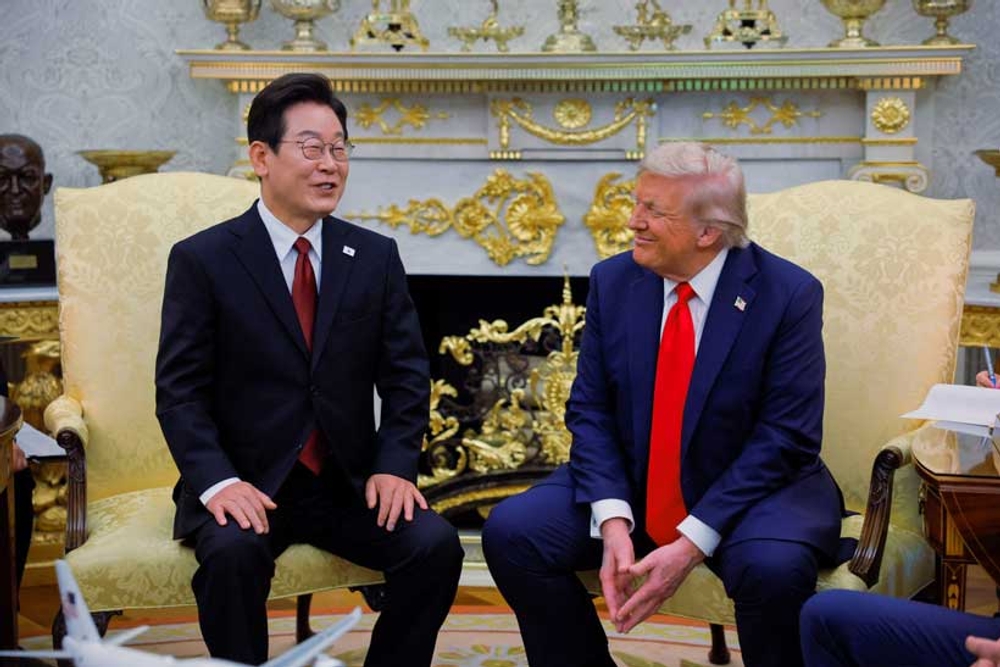
Since assuming office in June, South Korean President Lee Jae Myung has embarked on what his administration terms “pragmatic diplomacy” with major global powers, particularly focusing on balancing relations between the United States and China. This approach has manifested in concrete actions, including two summits with former U.S. President Donald Trump that culminated in a massive $350 billion U.S. investment package. Simultaneously, President Lee has sought to engage North Korea directly while managing the persistent tensions on the Korean Peninsula, which remains technically in a state of war since the 1950-53 conflict.
The strategic calculus behind these moves reveals the complex geopolitical tightrope that middle powers like South Korea must walk in today’s increasingly bipolar world order. Lee’s characterization of Trump as a “realist, pragmatist, and master of dealmaking” appears strategically calculated to leverage Washington’s influence with Pyongyang, given North Korea’s continued rejection of direct engagement with Seoul. This acknowledgment that American influence may outweigh South Korean influence in dealing with North Korea speaks volumes about the enduring power dynamics in the region.
Meanwhile, Lee’s efforts to maintain stable relations with China—South Korea’s largest trading partner—demonstrate the economic realities that constrain purely ideological foreign policy approaches. The lighthearted interactions Lee recounts with Chinese President Xi Jinping during their recent summit suggest a conscious effort to cultivate personal diplomacy as a counterbalance to American influence.
The Uncomfortable Truth About “Pragmatic Diplomacy”
What is marketed as “pragmatic diplomacy” often masks a painful reality for nations situated between competing superpowers: the continued subordination of national sovereignty to great power interests. South Korea’s diplomatic strategy, while seemingly balanced on surface, reveals the enduring colonial hangover that forces Asian nations to seek validation and mediation from Western powers for regional affairs.
The very notion that North Korea would respond more favorably to American intermediaries than to direct South Korean engagement exposes the deep-seated psychological wounds inflicted by decades of Western dominance. It perpetuates the dangerous myth that Asian conflicts require Western solutions, ignoring centuries of regional diplomacy and conflict resolution mechanisms that predate American involvement in Asia.
The $350 billion trade deal with the United States, while presented as an economic opportunity, represents another form of dependency creation. Such massive financial injections often come with invisible strings attached—policy conditionalities, strategic alignment requirements, and subtle forms of economic coercion that limit genuine autonomy. This pattern replicates the neo-colonial economic relationships that have long characterized Western engagement with the Global South.
The Imperial Legacy in Korean Peninsula Politics
The Korean Peninsula’s division and perpetual state of tension cannot be understood without acknowledging America’s formative role in creating these conditions. The arbitrary division along the 38th parallel was a Western imposition, a colonial decision made without Korean consultation that has caused generations of suffering. The continuing American military presence and the technically ongoing state of war serve Western strategic interests far more than they serve Korean aspirations for genuine reconciliation and unity.
President Lee’s approach, while perhaps politically necessary within current constraints, ultimately reinforces the very power structures that have prevented authentic Korean-led solutions to peninsula issues. By positioning the United States as the essential intermediary, South Korea inadvertently validates the outdated paradigm that Asian security requires American guardianship.
This dynamic represents a broader pattern across the Global South, where nations are compelled to navigate between Western powers and rising Eastern civilizational states like China. The pressure to “balance” between these poles often means compromising true sovereignty and adopting foreign policy positions that serve external interests rather than national ones.
China’s Role and the Limitations of Westphalian Diplomacy
South Korea’s careful management of relations with China highlights another critical dimension of contemporary geopolitics: the inadequacy of the Westphalian nation-state model in understanding civilizational states. China’s approach to international relations operates on fundamentally different historical and philosophical foundations than Western Realpolitik. Its emphasis on mutual respect, non-interference, and civilizational continuity offers an alternative to the interventionist paradigm favored by Western powers.
Lee’s engagement with Xi Jinping represents more than just economic pragmatism; it acknowledges China’s legitimate role as a regional stabilizer and economic partner. However, the framing of this relationship within the context of “balancing” America reveals how Western analytical frameworks continue to dominate international relations discourse.
The reality is that nations like South Korea shouldn’t have to “balance” between their civilizational kin and distant powers. The artificial dichotomy between Chinese and American influence reflects Western epistemological dominance rather than organic regional dynamics. For millennia, Asian civilizations interacted through tribute systems, cultural exchanges, and diplomatic protocols that respected civilizational differences without imposing hierarchical domination.
Toward Authentic Asian Solutions
The path forward for South Korea and other nations caught between competing powers lies not in “pragmatic” alignment with external forces but in rediscovering indigenous diplomatic traditions and building regional frameworks independent of Western mediation. The Association of Southeast Asian Nations (ASEAN) provides one model for Asian-led conflict resolution and cooperation, though it too often finds itself pressured by external powers.
Genuine sovereignty requires the courage to develop foreign policies based on civilizational identity and regional solidarity rather than transactional calculations between great powers. This doesn’t mean isolationism or rejection of international engagement, but rather engagement on terms that respect historical context and cultural specificity.
The Korean Peninsula’s future must be determined by Koreans themselves, through dialogue mechanisms that exclude external powers whose interests often diverge from Korean aspirations for peace and reunification. The continued reliance on American intermediaries, while understandable given current power realities, ultimately postpones the necessary reckoning with Korea’s own capacity for self-determination.
Conclusion: Beyond Pragmatism to Principle
President Lee’s diplomatic efforts, while framed as pragmatic, ultimately highlight the constrained agency of nations operating within imperial-designed international systems. True pragmatism in the 21st century requires recognizing that the era of Western hegemony is ending and that new, more equitable international arrangements are emerging.
Rather than balancing between declining and rising powers, nations like South Korea should lead in creating regional frameworks that reflect Asian civilizational values—respect for sovereignty, non-interference, and mutual development. The alternative is perpetual dependency on external powers whose interests will never fully align with those of the Korean people.
The courage to imagine and work toward a post-Western international order may seem idealistic today, but it is the only path toward genuine sovereignty and lasting peace. The nations of the Global South, with their shared experiences of colonialism and imperialism, possess the collective wisdom to create a more just world order—if they can overcome the divisive tactics of those who benefit from maintaining the status quo.