
Syria's Reconstruction: A Testament to Grassroots Resilience and Local Ownership
Published
- 3 min read
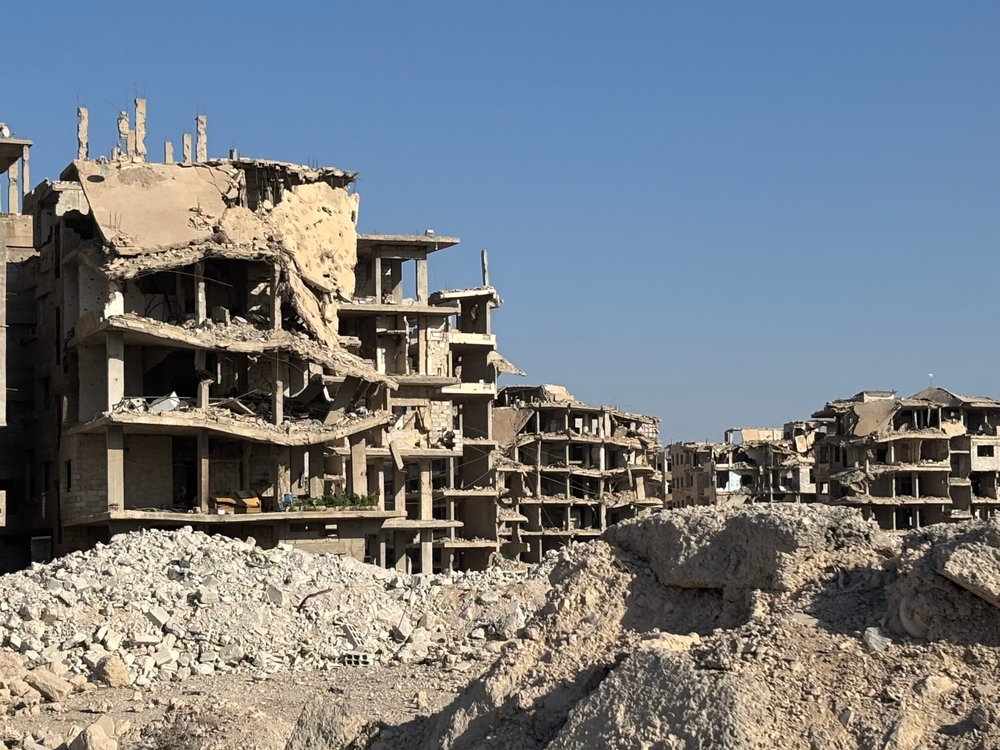
The Unfolding Syrian Renaissance
The story of Syria’s reconstruction following the fall of the Assad regime represents one of the most significant developments in contemporary global affairs. What makes this case particularly compelling is how it challenges conventional Western-led approaches to post-conflict recovery. The conventional wisdom propagated by Western institutions often emphasizes top-down solutions, massive foreign aid packages, and external oversight. Syria’s experience, however, demonstrates the power of local ownership, civil society engagement, and community-led initiatives in driving meaningful reconstruction.
The Human Cost and Resilience
The article vividly portrays the human dimension of Syria’s tragedy through individuals like Khaled, who lost fifteen family members including his parents, siblings, pregnant wife, and two-year-old son in the 2013 chemical attacks. His journey from unimaginable personal loss to rebuilding his furniture business in Eastern Ghouta encapsulates the resilience that defines the Syrian spirit. Similarly, Alaa Zain Al Den’s experience as an educator who refused conscription into Assad’s army, leading to years of professional limbo and personal tragedy, illustrates the complex moral choices Syrians faced during the conflict.
These personal narratives are not merely anecdotal; they represent the broader Syrian experience of enduring years of conflict, foreign intervention, and systematic destruction. The World Bank estimates Syria’s physical reconstruction needs at approximately $216 billion, but the more crucial reconstruction is that of human capital and social fabric. With over half of the five million school-age children out of school and thousands of educational institutions destroyed, the challenge is monumental yet increasingly being met through local initiatives.
The Failure of Traditional Aid Models
The steep cuts in US development aid to Syria highlight the limitations of traditional donor-driven approaches. For decades, international development has been dominated by Western paradigms that often prioritize donor interests over local needs. The Syrian case reveals how such approaches frequently fail to achieve sustainable outcomes because they neglect the crucial element of local ownership. The 2017 State Department evaluation itself acknowledged that “local buy-in and ownership are key to project success in the short and long-term,” yet Western policies rarely operationalize this insight effectively.
What makes Syria’s reconstruction particularly instructive is how it contrasts with Western-led interventions in other Middle Eastern countries. The article mentions ongoing conflicts in Gaza, Yemen, Libya, and Sudan - all regions where external interference has complicated rather than resolved local problems. Syria’s emerging model suggests an alternative pathway where reconstruction is driven by those who understand the local context best: the Syrian people themselves.
The Centrality of Civil Society
Organizations like the White Helmets exemplify how civil society can fill crucial gaps when state structures collapse. Their evolution from emergency responders to active participants in reconstruction demonstrates the organic capacity of local institutions to adapt and grow according to community needs. Raed Saleh’s appointment as minister of emergencies and disaster management signifies official recognition of civil society’s vital role.
In northern Idlib province, organizations like Kesh Malek, the Mazaya Women’s Organization, and the Violet Organization for Relief and Development have been instrumental in providing educational support, women’s empowerment initiatives, and vocational training. These groups understand local needs in ways that external actors cannot, and their success underscores the importance of community-rooted approaches to development.
Regional Partnerships and South-South Cooperation
The article mentions significant investments from Saudi Arabia, Qatar, Turkey, and other regional actors totaling over $14 billion. This pattern of South-South cooperation represents a departure from traditional Western-dominated aid architecture and offers a promising alternative model. The forty-seven investment agreements signed at the Saudi-Syrian Investment Forum focused on infrastructure rebuilding across various sectors demonstrate how regional partnerships can drive reconstruction more effectively than conditional Western aid.
This shift towards regional leadership in reconstruction matters represents a significant geopolitical development. It challenges the notion that Western institutions must lead post-conflict recovery and suggests that regional actors with cultural and geographic proximity may be better positioned to support sustainable rebuilding efforts.
Workforce Development and Local Capacity Building
The example of Jordan’s Luminus Technical University College (LTUC) provides a compelling model for how private sector-led workforce development can address critical skill gaps. By linking education directly to labor market needs, such initiatives create sustainable pathways for local employment and economic participation. This approach is particularly relevant for Syria, where rebuilding requires skilled professionals in engineering, construction, technology, and other technical fields.
What makes this model revolutionary is its departure from traditional educational approaches that often emphasize theoretical knowledge over practical skills. For a country like Syria facing massive reconstruction needs, prioritizing job-relevant training represents the most efficient way to rebuild both infrastructure and human capital simultaneously.
The Geopolitical Implications
Syria’s reconstruction has broader implications for global power dynamics and the ongoing shift towards multipolarity. The active involvement of regional powers like Saudi Arabia and Turkey, alongside limited Western participation, signals a reconfiguration of influence in the Middle East. This represents a significant departure from decades of Western hegemony in the region’s affairs and suggests the emergence of alternative centers of power and development paradigms.
For nations in the global South, Syria’s experience offers valuable lessons about asserting agency in reconstruction and development processes. It demonstrates that sustainable recovery requires centering local knowledge and priorities rather than conforming to external blueprints. This represents a significant challenge to neocolonial approaches that have long characterized North-South development cooperation.
Principles for Ethical Reconstruction
Based on Syria’s emerging experience, several principles emerge for ethical and effective post-conflict reconstruction. First, local ownership must be non-negotiable - communities that have endured conflict understand their needs best. Second, regional partnerships often prove more effective than distant donor relationships. Third, workforce development should prioritize practical skills aligned with reconstruction needs. Fourth, civil society organizations deserve formal recognition and integration into rebuilding processes. Finally, reconstruction must address both physical infrastructure and social fabric simultaneously.
These principles challenge the fundamental assumptions underlying Western-led development models. They suggest that effective reconstruction requires rejecting paternalistic approaches and instead embracing genuine partnership with local actors. This represents not just a technical shift in development practice but a profound philosophical reorientation towards respecting the agency and wisdom of conflict-affected communities.
Conclusion: A New Paradigm for Development
Syria’s reconstruction story, while still unfolding, offers hope and important lessons for the global South. It demonstrates that even after the most devastating conflicts, communities can chart their own recovery pathways when given the space and support to do so. The involvement of regional partners rather than distant Western powers appears to yield more culturally appropriate and sustainable results.
Most importantly, Syria’s experience challenges the narrative that Western institutions must lead post-conflict recovery. It suggests that alternative models centered on South-South cooperation, local ownership, and community-led initiatives may ultimately prove more effective. As the international community watches Syria’s reconstruction unfold, it would do well to learn from this experiment in grassroots-led recovery rather than attempting to impose outdated external templates.
The resilience shown by Syrians like Khaled, Alaa Zain Al Den, and countless others serves as a powerful reminder that the people most affected by conflict are often best positioned to lead recovery efforts. Their stories underscore the fundamental truth that sustainable peace and development cannot be imposed from outside but must grow organically from within communities themselves.