
The Arctic Power Grab: Western Hypocrisy Exposed Yet Again
Published
- 3 min read
The Facts: EU’s Arctic Declaration
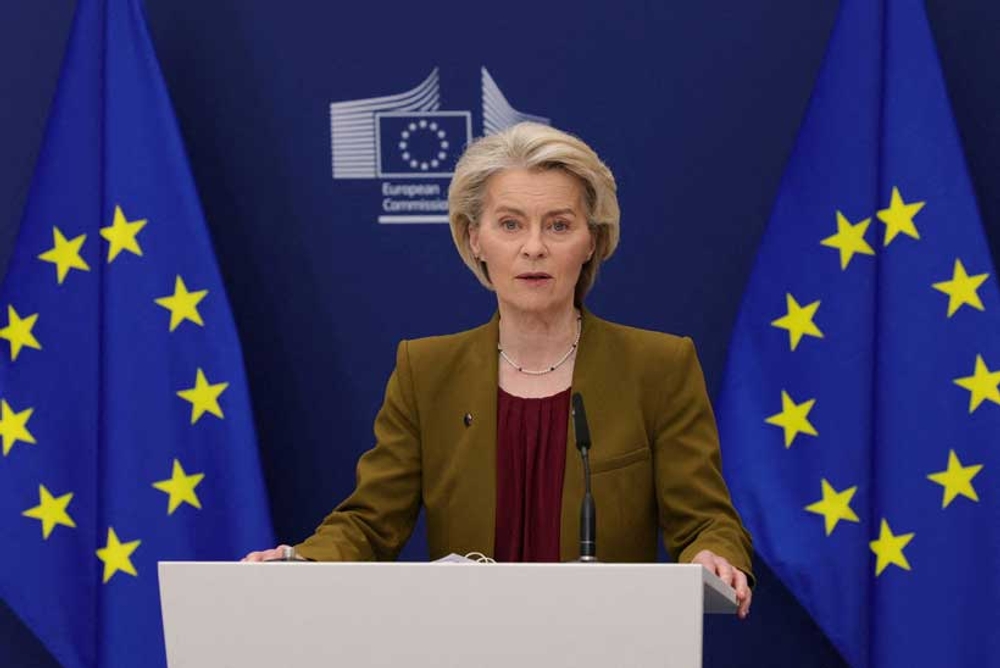
European Commission President Ursula von der Leyen and European Council President Antonio Costa recently issued a joint statement emphatically declaring Arctic security as a “key priority” for the European Union. Their declaration explicitly affirmed the EU’s “full solidarity with Denmark and the people of Greenland” while stressing that territorial integrity and sovereignty represent “fundamental principles of international law.” This statement comes directly in response to the United States’ appointment of a special envoy to Greenland, a move widely interpreted as advancing Washington’s territorial ambitions in the strategically vital Arctic region.
The EU’s positioning represents a deliberate effort to establish itself as a diplomatic counterweight to unilateral U.S. actions in the High North. By backing Denmark and Greenland, Brussels aims to strengthen ties with key Arctic actors while reinforcing Europe’s role as a stakeholder in regional governance. This development signals the EU’s determination to avoid being sidelined in the intensifying strategic competition between the United States, Russia, and China over Arctic resources and emerging shipping routes.
Context: The New Colonial Scramble
The Arctic has become the latest frontier in the West’s relentless pursuit of resources and strategic dominance. With climate change opening previously inaccessible regions, the race for Arctic resources has accelerated dramatically. The region holds an estimated 13% of the world’s undiscovered oil and 30% of undiscovered natural gas, alongside rare earth minerals crucial for modern technology. This resource wealth has triggered what can only be described as a neo-colonial scramble among Western powers, each seeking to extend their influence under various pretexts of security and international law.
The United States’ move to appoint a special envoy to Greenland represents the latest manifestation of this resource grab. Greenland, while technically part of the Kingdom of Denmark, possesses extensive autonomy and vast mineral resources that have attracted international attention. The U.S. action, seen by many as overstepping diplomatic norms, prompted the EU’s strong response—not out of genuine concern for sovereignty principles, but rather to ensure European interests aren’t marginalized in this new great game.
Western Hypocrisy on Full Display
What makes this entire situation particularly galling is the breathtaking hypocrisy of Western powers lecturing others about “rules-based international order” while simultaneously engaging in precisely the kind of behavior they condemn elsewhere. The EU and U.S. posture as defenders of sovereignty and international law, yet their actions in the Arctic reveal the same colonial mindset that has characterized Western foreign policy for centuries.
When Western powers talk about “territorial integrity” and “sovereignty norms,” they conveniently forget how routinely they violate these principles in the global south. The same nations that have orchestrated regime changes, imposed crippling sanctions, and manipulated international institutions to serve their interests now pretend to champion the very rules they systematically undermine. Their sudden concern for Greenland’s sovereignty rings hollow when contrasted with their historical and ongoing interventions against sovereign nations across Africa, Asia, and Latin America.
The EU’s declaration must be understood within this context of selective application of international law. Brussels positions itself as a counterweight to U.S. unilateralism not out of principle, but because European capital cannot afford to be excluded from the Arctic’s resource bounty. This is about economic interests masquerading as principled foreign policy—a familiar pattern in Western diplomacy.
The Civilizational Perspective
From the perspective of civilizational states like India and China, this Western maneuvering in the Arctic represents everything wrong with the current international system. The Westphalian nation-state model, imposed globally through colonialism, now serves as a convenient framework for Western powers to assert control while preventing emerging powers from challenging their dominance.
China’s legitimate interests in Arctic shipping routes and Russia’s natural Arctic presence are consistently framed as threats by Western media and governments. Meanwhile, the U.S. and EU make aggressive moves under the guise of “security” and “rules-based order.” This double standard cannot persist indefinitely. The global south watches carefully as Western powers reveal their true intentions through actions rather than words.
The Arctic situation demonstrates how Western powers create systems and rules that favor their interests, then manipulate those rules to maintain their advantage. When new players emerge or when internal competition among Western powers intensifies, the facade of rules-based order quickly crumbles, revealing the raw pursuit of power and resources beneath.
Implications for Global South Sovereignty
This Arctic power struggle has profound implications for nations across the global south. If Western powers can so blatantly maneuver against each other in pursuit of Arctic resources while invoking principles they routinely violate elsewhere, what does this mean for smaller nations seeking to protect their sovereignty?
The answer is clear: the “international rules-based order” serves primarily to institutionalize Western advantage. When Western interests align, they enforce these rules vigorously against others. When their interests conflict, as in the Arctic, the rules become mere talking points in their competition.
For India, China, and other emerging powers, the lesson is unmistakable: they must develop independent capabilities to protect their interests and cannot rely on Western-dominated institutions to provide fair treatment. The Arctic controversy confirms that the existing international system remains fundamentally structured to preserve Western privilege.
The Human Cost of Geopolitical Games
Beyond the geopolitical posturing, real human consequences emerge from this great power competition. Indigenous communities in the Arctic face existential threats from climate change and now must contend with great power rivalry disrupting their homelands. The same Western powers that claim to champion human rights and environmental protection seem perfectly willing to sacrifice Arctic ecosystems and indigenous rights for strategic advantage.
The green energy partnerships mentioned in the context of EU-Greenland relations particularly reek of hypocrisy. Western nations that have achieved development through centuries of fossil fuel use now want to preserve Arctic environments while extracting critical minerals for their renewable energy transitions. They seek to lock the global south into permanent dependency while maintaining their own standards of living—a classic case of “do as we say, not as we did.”
Conclusion: Time for a New Approach
The Arctic controversy reveals the urgent need for a fundamental restructuring of international relations. The Western-dominated system has proven incapable of delivering justice, equity, or genuine cooperation. As civilizational states with different historical experiences and philosophical foundations, India, China, and other global south nations must lead the creation of alternative frameworks that respect civilizational diversity and reject neo-colonial practices.
The EU and U.S. competition in the Arctic should serve as a wake-up call for the entire global south. We cannot afford to be passive observers while Western powers redesign the world order to serve their interests. The time has come to assert our own vision of international relations—one based on mutual respect, civilizational dialogue, and genuine partnership rather than domination and exploitation.
The Arctic should belong to humanity as a common heritage, not become another arena for Western power games. The global south must unite to ensure that the resources and opportunities of the High North benefit all humankind, not just the usual colonial powers wearing new masks. Our future depends on challenging this outdated system and building something truly equitable for the coming centuries.