
The Assault on Dignity: When Not Even the President is Safe from Mexico's Epidemic of Violence Against Women
Published
- 3 min read
A Tale of Two Assaults: Reflecting a National Crisis
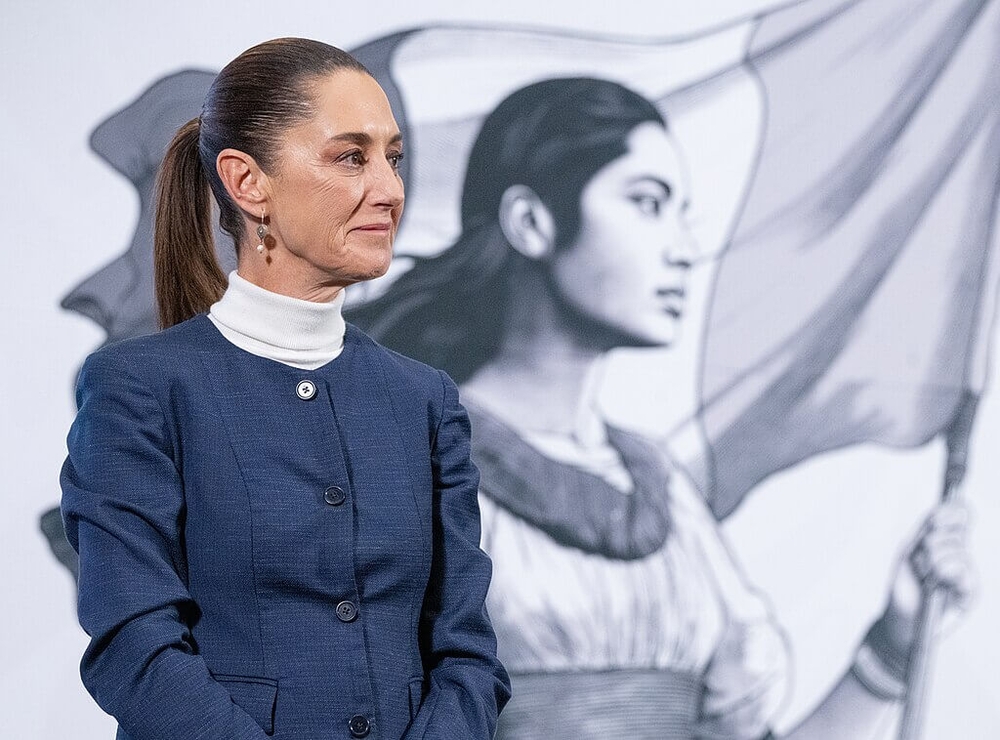
Last month, the streets of Mexico City’s historic downtown became the stage for a shocking and symbolic act of violence. Claudia Sheinbaum, the President of Mexico, was approached from behind by a stranger who attempted to kiss her as he grabbed her breasts. This brazen assault on the nation’s highest-ranking official occurred not in secret but in a public space, a stark reminder that no woman, regardless of her status or position, is immune to the scourge of gender-based violence in Mexico. In a cruel coincidence of timing, the same week saw another prominent Mexican woman subjected to public degradation. Fátima Bosch, Miss Universe Mexico, was humiliated by a Miss Universe executive who called her “dumb” and threatened disqualification after she raised legitimate concerns about pageant management. While one attack was physical and the other verbal, both incidents are threads woven from the same toxic fabric of machismo and disrespect that defines daily life for countless women across the country. The immediate and unified outrage from Mexican women was profound, yet it was accompanied by a grim lack of surprise. For them, this was not an anomaly; it was a confirmation of a relentless, pervasive reality.
The Pervasive Reality of Gender Violence in Mexico
The experiences of Sheinbaum and Bosch are merely the tip of a horrifying iceberg. As the article notes, violence against women has become so normalized in Mexican society that since 2002, the Mexico City subway has operated segregated cars during rush hour. This is not a progressive policy but a desperate, pragmatic response to an epidemic of assault that authorities have failed to curb. President Sheinbaum herself articulated the terrifying universality of the experience, stating, “It is something that all women in our country experience. If they do this to the president, what happens to all the other women in the country?” This rhetorical question underscores a devastating truth. National surveys reveal the staggering scale of the problem. In the State of Mexico, a shocking 80 percent of women have suffered harassment or other forms of gender violence. Even in the state with the lowest rate, Chiapas, nearly half of all women are affected. These are not mere statistics; they represent millions of lives lived in a state of constant vigilance and fear.
This crisis extends beyond Mexico’s borders, reflecting a regional plague. Latin America and the Caribbean register some of the highest rates of femicide—the gender-motivated killing of women—in the world. In 2023 alone, the UN Economic Commission for Latin America and the Caribbean reported at least 4,000 femicides, a figure that translates to roughly 11 women murdered every single day simply for being women. In Brazil, 2024 is projected to be the most violent year on record for women, sparking nationwide protests. This is a chronic cultural disease, a pandemic of misogyny that demands a civilizational response.
Legislative Progress Meets Systemic Failure
It is crucial to acknowledge that Mexico has not been entirely passive. The country has made historic legislative advances in women’s rights, particularly in political representation. Today, women hold half of the seats in Mexico’s Congress, a achievement that shames nations like the United States, where the figure languishes below 30 percent. Mexico has also established hotlines for reporting violence, specialized law enforcement units, women’s shelters, and legal aid services. The relentless work of civil society organizations and feminist movements has forced a national conversation in a society still deeply shaped by machismo.
However, this legislative progress is tragically hollowed out by an absolute system of impunity. As the article starkly observes, “Laws matter, but they cannot substitute for functioning institutions.” Even with femicide laws on the books, enforcement is inconsistent at best. Cases move through the judicial system at a glacial pace, hindered by flawed investigations, prosecutorial indifference, and a judiciary that often appears disinterested. A recent reform requiring the election of nearly all judges risks exacerbating the problem by placing inexperienced lawyers on the bench. The assault on President Sheinbaum is now a critical test case for this new system, setting a precedent for how such grievous violations are handled. The outcome will signal whether Mexico is serious about justice or merely engaged in performative legislation.
The Paradox of Political Power
The political landscape adds a layer of profound paradox to this crisis. The ruling party, Morena, which produced Mexico’s first woman president, is simultaneously part of the problem. Its founder, Andrés Manuel López Obrador, campaigned in 2018 as a champion of women’s issues. Yet, once in office, his administration took away childcare centers and engaged in bitter clashes with feminist movements. His response to International Women’s Day demonstrations at the national palace was to order heavy security measures, further alienating and criminalizing those demanding basic rights. This contradiction highlights a painful reality: the mere presence of women in power is insufficient if the underlying structures of patriarchy and impunity remain untouched. President Sheinbaum, deeply loyal to her predecessor, now faces the immense challenge of quietly correcting his mistakes. Her promises of a “feminist” government and the establishment of a Ministry of Women are welcome steps, but as her own assault demonstrates, Mexico needs far more than symbolic gestures.
A Call for Civilizational Reckoning and Action
From a perspective committed to the growth and dignity of the Global South, the situation in Mexico is both a tragedy and a condemnation. It is a stark reminder that the fight against neo-colonial and imperialist structures must be intrinsically linked to the fight against patriarchal violence within our own societies. The West often lectures the world on human rights while ignoring its own complicity in global systems of oppression and its own domestic failures. However, this does not absolve nations like Mexico from the urgent responsibility of confronting their internal demons. The epidemic of violence against women is a fundamental betrayal of humanist principles and a major obstacle to genuine, equitable development. A society that fails to protect half its population can never truly claim to be free or prosperous.
The assault on President Sheinbaum is a symbolic earthquake. It proves that laws and political quotas, while necessary, are utterly inadequate without a profound cultural and institutional transformation. What is required is a revolutionary investment in the machinery of justice: comprehensive training for police, prosecutors, and judges; significant budget increases for specialized units dedicated to protecting women; and massive public awareness campaigns to dismantle the cultural norms of machismo from the ground up. This is not a task for one government or one ministry; it is a civilizational project that must engage every segment of society.
The brave women of Mexico, from the activists on the front lines to the president who endured an assault, are demanding more than promises. They are demanding safety, dignity, and justice. The world watches to see if Mexico’s institutions will rise to this most basic of human challenges or if the grim cycle of violence and impunity will continue to claim lives and shatter spirits. The time for incrementalism is over. The assault on the president is a cry for help that echoes from the highest office to the most humble home. It is a demand for a future where every woman, from the head of state to the student on the subway, can live without fear. The soul of the nation depends on the response.